Showing posts with label Creative Commons. Show all posts

Saturday, March 28, 2009

PRS not horsing around with copyright

(First ear muffs, next headphones?)

The British Performing Right Society (PRS) has been in the news recently thanks to its continuing struggle with Google. The PRS is also known for its forceful pursuit of performance fees from an unsuspecting public, such as suing companies whose workers listen to the radio where it can be heard by the public, or asking garage owners to tell their customers to turn off the radio as they drive in.

Now a stable owner in Wiltshire has been asked by the PRS that she must turn off her radio when employees are around, or pay a licence fee. The problem is that the purpose of the music is not for the employee's benefit (who do not like classic music and turn it off at any opportunity), it is for the benefit of the equine guests at the Malthouse Equestrian Centre.

I know that attacking the PRS is like flogging a dead horse, they are such an easy target that I will stop hoofing a laugh and happily ride away from any further equestrian puns. However, there are some interesting questions here. Shouldn't the law establish a minimum number of employees that would qualify a business for licence fee? If purpose and intent are of importance as to whether or not a fee should be paid, shouldn't there be an exception for equine listeners? Similarly, I am left wondering about how exactly does the PRS calculate how to collect its royalties. For example, we have to assume that they are collecting fees for composers and publishers that they do not represent. Who gets that money? Do they pocket the difference, or give it back to the licence fee payers? Is there a change in fee for works whose composer should be assumed to be in the public domain. I know that the sound recordings in most instances will still be under copyright even if the composer is long dead, but shouldn't there be reduced fee as the work performed only applies to publishers and not composers?

And what about the fairness of calculating exactly how much a licence should be worth? A woman who plays music to her reluctant employees and a handful of guest horses is surely not in the same category as a pub owner with hundreds of customers. The PRS makes this point in its fee guideline to customers:
"The rates in this section vary depending on the number of days in the year music is played in the workplace, canteens or staff rooms; the number of half-hour units per day music is played in the workplace, the number of employees in the workplace to whom the music is audible and the number of employees to whom the canteen/room is available."
Fair enough, but my question is whether there is a societal interest in having a blunt collective rights management system that seems intent in squeezing the last penny from the public. This is particularly relevant when one considers that collective rights societies have already extracted money from the radio station. Is this fair?

I will leave you with this thought. In Spain the burden of proof lies with the collecting society, which has given rise to a number of cases of cafes and bars playing only Creative Commons music. Shouldn't we have something similar in the UK? It would be interesting to have some test case in which a bar plays only CC-licensed music.

Wednesday, November 19, 2008

Obama and Creative Commons

I have been looking at the amazing pictures on Flickr taken at the Obama household on the night of the U.S. election, and I have to say that I am utterly surprised by the fact that the photographs are all shared under a Creative Commons licence (Attribution, Non-Commercial, Share Alike).

Is this a good sign of things to come?

Wednesday, October 15, 2008

The global copyfight rages on


The Wall Street Journal has published an excerpt provocatively named In Defense of Piracy from Lessig's new book Remix (out tomorrow). It seems like Lessig is still very much involved in the copyfight, highlighting the almost farcical story of Holden Lenz and Prince.

One could be forgiven for thinking that the copyfight has been relegated to a chapter in intellectual property textbooks. The music industry seems to have stopped suing its customers, and there has been a bit of an impasse with the attack on intermediaries and the three-strikes proposals. However, the copyfight is alive and well in countries that are updating their intellectual property legislation. Chile for example has been in the middle of drafting a new IP law, and it seems like there is a good old struggle going on down under. The government brought together a number of stakeholders to attempt to achieve a good balance between user and artist interests. However, the goverment completely undermined it by signing an agreement with the local collective society (SCD), and have sent forward a draft Ley de Propiedad Intelectual that makes the DMCA look like The Pet Goat.

Claudio Ruiz has written a post on the most worrying aspects of the draft law, which pretty much eliminates fair use, enhances liability for intermediaries, eliminates most educational exceptions, creates a virtual monopoly by the SCD, and most worryingly includes language that prohibits the renunciation of rights, making Creative Commons licences ineffective. After all, if you cannot renounce your rights, you cannot draft a "some rights reserved" licence! Christian Leal was interviewed on TV about the new law, and I found his explanations very well made. The Chilean blogosphere is up in arms about the turns of events (and the Facebook group against the law has now more than four thousand members!)

So the copyfight is alive and well. In the new digital economy, and with financial systems collapsing all around us, intellectual property is gaining more traction as a viable support for national economies, certainly more sustainable than ficticious credit instruments. We can therefore expect renewed interest in trying to squeeze the last penny out of intellectual creations.

Thursday, July 17, 2008

User-Generated advertising, double standards and memes

Radiohead has continued going where no band has gone before, and in another ground-breaking innovative marketing and licensing strategy they have released their latest video under a Creative Commons BY-NC--SA licence. House of Cards is part of the already seminal In Rainbows, and it was a video recorded with 3D rendering techniques, no camera was used. What's more interesting is that the data for the video has been made available to the public, so that they can make their own variation of the code and add it to a YouTube group showing user-generated versions. This has already resulted in more than 20 videos and an iPhone applet.

In the cynical age we live in, it would be easy to be sceptical of Radiohead's efforts. After all, Radiohead is an established band with an almost cult-like status and a loyal following that ensures success in almost anything they do. It helps that they are practically the definition of geek cool (they were in the cover of Wired). I will leave my cynicism aside and declare that whatever they're doing, it's working. Radiohead have tapped into the user-generated phenomenon and recognised that the old paradigm is dead, long live the new paradigm. In the age of YouTube, it pays to advertise through YouTube. Paying for commercials in Channel 4 is no longer productive.

I have been thinking a lot about the new media environment as I was watching yesterday the trailers for the upcoming E3. No prizes for guessing which online video delivery intermediary was used to stream the trailers. So, while posting and distributing these trailers is copyright infringement, you will never see a single video developer complaining about all the free publicity they're getting, the buzz they are generating, and the list of comments that follow each YouTube posting. PanGloss often makes the point in her Web 2.0 liability presentations that content owners are extremely keen on viral advertising and copyright infringement when it serves their needs, or when somebody posts something about an obscure show that needs the attention. After all, the one thing worse than being talked about is not being talked about, as Oscar Wilde said.

This is what angers me about the Viacom litigation more than anything else. Content owners are simultaneously using viral advertising, and also suing the intermediaries. User-generated marketing has become the norm in many areas such as gaming, music and TV. Why pay for an expensive advertising campaign when you can let the fans do it for you? Target the outlets smartly, and watch them flock to your content. Every week I get at least one request from video game developers to upload trailers in exchange for cash, not to mention offers by gambling websites to include links to their sites which will be paid. Apparently, this blog has been identified as a potential outlet where gamers hang out (whatever gave them that idea?)

I believe that both the traditional model and the online meme model will survive, I cannot see the old guard giving up that easily their stranglehold on income revenue streams. Nevertheless, traditional outlets will continue to look like dinosaurs, while innovators like Radiohead will continue to rake in the cash and the almost-universal praise.

Wednesday, June 25, 2008

Company rulez

Company Rulez is a video mocking Microsoft's Game Content Usage Rules made with Halo 3, or as it says, that game with helmeted dudes and aliens produced for that console by that company that Bill Gates founded.

While I have praised the Game Content Usage Rules previously, I can see how some of the criticism explained in the video is warranted. Particularly, the rule on no earnings seems harsh. OK, I cannot keep calling the licence the Game Usage Content Rules indefinitely, so let's just refer to it as The Rules. The Rules state that:

"You can’t sell or otherwise earn anything from your Items. We will let you have advertising on the page with the Item on it, but that’s it. That means you can’t sell your Item, post it on a site that requires subscription or other fees, solicit donations for your Item of any kind (even by PayPal), use it to enter a contest or sweepstakes, or post it on a page you use to sell other items (even if those other items have nothing to do with Game Content or Microsoft)."
This seems a particularly harsh version of non-commercial elements present in licences such as Creative Commons. However, the video is wrong when it talks about competitions.

Other items criticised are issues such as the fact that you cannot licence the work using Creative Commons ShareAlike licences, which is indeed a problems with the existing terms and condition of The Rules.

I have been thinking recently that solutions suc as The Rules can indeed be the way forward to companies wanting to allow fans to make their own versions of the content without fear of copyright infringement. I think that this acts to enhance the brand and/or content, as it keeps the fans on the side of legality, while it also helps fans to know what they can and cannot do. Otherwise, things like these may happen.

Thursday, June 12, 2008

Book publishing under Creative Commons

I have been granted sabbatical leave for the academic year 2008-2009 in order to write a book. The topic is related to my research into networks, and it will expand some of the ideas I've had in this area. One of the things I really wanted was to publish the book under a Creative Commons licence.

While it may seem counter-intuitive to publish a book under "some rights reserved" licences, some high-profile examples in academia and in fiction have proved that it can be a successful strategy. The number and quality of legal academic writing under CC is becoming quite impressive: Lessig's Code 2.0, Benkler's The Wealth of Networks, and Zittrain's The Future of the Internet are all released under a CC licence, and are selling as well as specialist Cyberlaw books sell, if not better. The Wealth of Networks can be found online in its entirety in a large number of formats, it can be downloaded as a PDF, and even read in HTML. Traditional proprietary thinking would tell us that a book which has been made available online would not sell, why would anyone buy a book that you can get online for free? But people are buying it, and buying it in droves. The book is ranked at an astounding 13,928 in Amazon.com's book sales rank. This is impressive when you compare it with other successful books in the area. Goldsmith and Wu's excellent book Who Controls the Internet (not released under CC) is ranked 181,050, while William Fisher's Promises to Keep is ranked 176,007. Not only have sales been positively affected by CC publication, overall impact is also enhanced. If the value of an academic book is measured on how many people read it, then these books are runaway successes.

But publishing is still a business, and success in academia is not only measured by how many people read your work. We are also required to show something tangible to promotion boards and heads of school. Having a successful blog and large number of downloads on SSRN does not equate promotion. Metrics and deliverables are the name of the game, and nothing gives as much academic kudos as a monograph printed by an established and reputable publisher. In the age of information overload, publishers are still seen as gate-keepers, providing a much needed seal of quality to the written word.

This brings me to the question asked by anyone who wants to release under a CC licence, but who also may want to publish commercially. How do you reconcile both worlds? How do you make sure that the CC strategy does not affect the commercial strategy?

I have been pleasantly surprised by the willingness from the publishers to talk about CC licensing. The publishers (which shall still remain nameless until everything is signed) has been open to suggestions on how to publish my book under Creative Commons, and how this would fit into their commercial interests. This would be a first time for them, and they have taken the chance precisely because I have been a vocal proponent of CC, it would seem hypocritical not to practice what I preach. For now, this is a one-off experiment, so no pressure on me then...

The first question for me was which licence to choose, and I have gone for the CC-Attribution-NonCommercial-NoDerivs licence. I know that non-commercial licences have many detractors, but to me their value is in allowing dual licensing strategies that allow commercial exploitation. I have also chosen to go for non-derivatives as I do not see the point of anyone remixing a book and releasing it with share-alike provisions, but I may be wrong here. Once the licence was chosen, the next step was to redraft the boilerplate agreement from the publishers in order to make it CC-friendly. The publishers were again very willing to let me look at the contract and make the adequate changes. I put my drafting hat on and started working on it.

The first thing is that I added a clause which specifies that the work is licensed under a CC licence:

"This work will be licensed under the Creative Commons Attribution-NonCommercial-NoDerivatives 3.0 Unported licence, hereinafter called "the Licence". The full text of the Licence is appended to this agreement. "
Then came the tricky part of dealing with exclusive rights. All publishers ask you to grant them with an exclusive licence to publish the work, which could be incompatible with CC, as there would be a number of publications that are not exclusive. For example, a person in Costa Rica decides to photocopy the work and distribute it in class. This would be keeping with the CC licence, but it would seem to infringe exclusive rights. What I have done is added "commercial" before the grant of exclusive rights, so that it now reads "the Author grants the Publisher the sole and exclusive right and licence to commercially produce and publish the work" (I am rephrasing slightly to protect the publisher's agreement). This allows the publisher to retain all of their exclusive commercial rights, while keeping all non-commercial uses protected by the CC licence intact.

I then turned to enforcement. Most publisher agreements have sections where they promise to sue infringers. I left that as it was, but added the following clause:
"In case of breach of the Licence, the Author assumes the sole responsibility for its enforcement. The Publisher may jointly bring suit if it believes that the breach infringes its exclusive commercial rights. "
This leaves the door open for the publisher to sue against infringers that affect their commercial exclusive rights directly, but it leaves all responsibility with regards to the enforcement of the CC licence up to me. Finally, most publishing boilerplate agreements also have a list of exceptions, fair use/dealing provisions, and circumstances where royalties will not be charged. I added the following to a list of free copies, that is, copies which will be exempt of licence and/or royalty:
"Copies of the Work which comply with the terms and conditions of the Licence."
There were a couple of other minor tweaks, but that was it. Now, I just have to write the bloody thing!

Tuesday, May 13, 2008

Of fan art, mash-ups and licences

It's week two in the Knitting Wars (or Doctor Who and the Curse of Fatal Copyright). I have been surprised by the level of interest this is generating in the blogosphere, it has been ORGd, EFFd and BoingBoinged, it has also been picked up by the knitting community (I did not know there were so many angry knitters out there!) I have also been interviewed by The Times, so the story may have legs (which in Internet terms means that it will be on the radar for at least a fortnight). There have been some other interesting responses, such as one knitter siding with the BBC, and an excellent article by Jonathan Bailey on where this all fits in the wider fandom picture.

I think that the reason why this story has generated such interest is that it is seen as the typical Amateur David versus the Greedy Goliath. The blogosphere is particularly suspicious of any attempt to remove and take down things (remember the HD-DVD fiasco?) The story also fits well with the picture of corporate greed gone mad, and Brits also love to moan about the Beeb.

I must stress that I do understand why the BBC would want to defend their intellectual property. Doctor Who fans should understand that improved production values are expensive, and that the BBC needs to secure funding to continue giving us quality programming. However, I have to log my complaint about the horrible episode "The Doctor's Daughter", you could literally see the sterling signs in the eyes of the writers when they thought of a new Doctor Who spin-off directed at the teenage market. Even David Tennant seemed embarrassed by the whole thing. Similarly, it has to be said that the Adipose dolls were being sold on eBay by unscrupulous knitters, which appears to have prompted the whole action.

However, copyright owners should recognise that it is the fans who make or break their intellectual property, and as such, one should be very careful when biting the hand that feeds you. Danny O'Brien made the excellent point that it was the fans who kept the Doctor Who franchise alive during the 90s. Copyright owners should also finally understand that just because someone knits a Dalek or an Ood, they will still buy official merchandise.

This brings me to the wider question of fan art. The explosion of user-generated content tools means that it is easier than ever before to make one's own interpretation of a loved character, and to distribute it to the public. Creativity knows no copyright boundaries, and fans are likely to enhance and reinterpret works of popular culture in imaginative ways. Fan fiction, fan art, and mash-ups do not detract from the original work, they enhance the brand. The problem of fan art will not go away with angry cease-and-desist letters, it will only get worse.

Why then not recognise this in the law, and find ways of allowing legitimate non-commercial fan art? Lessig already suggested as much in Free Culture, and Creative Commons is part of a solution. However, it is extremely unlikely that large corporate owners will adopt CC in the near future, so perhaps other solutions are needed. I believe that fan licences are the way forward.

This is already taking place. Microsoft has created a Machinima licence with its Game Content Usage Rules, which allow fans to make derivative works of Xbox games as long as they are non-commercial. Blizzard has also created a Fansite Kit, which allows fans to download high-quality images for use on their own WoW sites. See, smart content owners know that the fans are their best marketing tool, why fight a futile battle against user-generated content, when you can make it work for you?

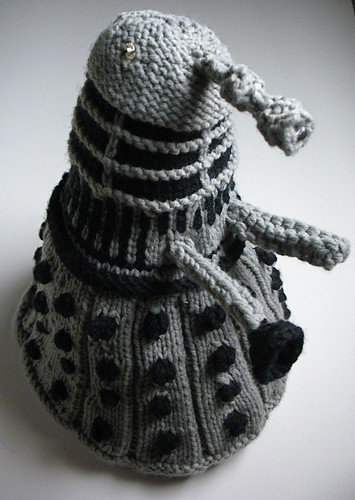
By the way, the name of that Dalek is "Extermiknit".

Wednesday, May 07, 2008

Doctor Who: Partners in Copyright Crime

The good people at the Open Rights Group forwarded me an email they received from a Doctor Who fan that goes by the screen name Mazzmatazz, who has allowed me to tell his/her story. But beware, this is a scary tale of copyright abuse that will have you hiding behind the sofa, or perhaps it will send you into a Whogasm.

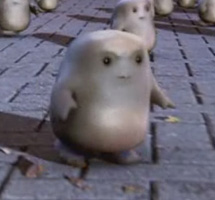
Doctor Who series Four started a few weeks ago with the episode "Partners in Crime". The episode featured a new creature generated from human fat called, what else, the Adipose (pictured below). While I did not particularly like the episode, I reckon that the Adipose made a good showing, and will probably become a memorable Doctor Who creature (much better surely than the lovable yet ludicrous Abzorbaloff). The Adipose however, seem to me to be the Doctor Who equivalent of Ewoks - small and cute creatures which serve little purpose to the plot, and whose value seems to be mainly as merchandising fodder (I notice that others agree).

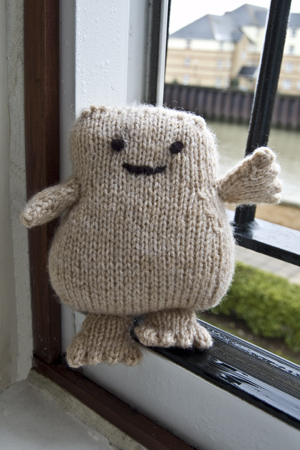
Enter Mazzmatazz. Mazz has a website featuring photography and knitting. In a display of amazing knitting talent (and dare I say, too much time on their hands), Mazz has been making knitting designs of Doctor Who characters; see for example, the excellent Ood. Under normal circumstances, a fan who makes knitting designs of loved TV characters should not be the concern of copyright owners. However, these are not normal circumstances. The new Doctor Who series is merchandising gold, so much so that the BBC has been climbing up the world merchandise chart. This may confuse people in and outside of the UK. The BBC is not a commercial enterprise, is it? We in the UK have to pay licensing fees (costing a whooping £139.50 GBP per year) to support public broadcasting, so why are the BBC relying so much on their merchandising?

This is a good time to get acquainted with how the BBC works. While the BBC in the UK is free of advertising and supported partially by the licensing fee, expensive quality programs such as Doctor Who and Torchwood require investment that goes above and beyond guaranteed funding through licence fees alone. The BBC therefore has an international commercial body called BBC Worldwide, which sells its valuable intellectual property to the world entertainment market. The wide success of titles such as Planet Earth and Doctor Who have pushed BBC Worldwide's sales to more than £800 million GBP, and merchandising is a key part of that strategy.

Where does our friend Mazz fit in this picture of corporate success? Well, it seems that the Adipose knitting designs have hit a greed nerve somewhere at the Beeb. While I have a copy of the entire communication between Mazz and the BBC, I will reproduce it partially because the emails come with a confidentiality disclaimer (although I must point out that I believe, as others do, that those email disclaimers are not even worth the bits they are written on). The cease-and-desist letter reads:

"We note that you are supplying DR WHO items, and using trade marks and copyright owned by BBC. You have not been given permission to use the DR WHO brand and we ask that you remove from your site any designs connected with DR WHO. Please reply acknowledging receipt of this email, and confirm that you will remove the DR WHO items as requested."
Interesting choice of words to say the least. Further communication continues to stress the point that Mazz's designs constitute unlicensed merchandise, and that BBC Worldwide has every right to stop others from distributing their property. However, Mazz is not selling merchandise, he/she is providing a knitting design to tell others how to make their own versions of the Adipose. While commercial exploitation has no bearing on whether there is copyright infringement, I think that it should be a huge consideration for BBC Worldwide when deciding to prosecute a fan who clearly loves the show.

What about the legal argument? Does the BBC have a case? On the face of it, the BBC would be correct in their assessment that Mazz is infringing their copyright. TV characters are protected by copyright, and all sorts of fan art would be found to be infringing. However, there is a growing body of literature on the subject of the uneasy interaction between fandom and copyright, as many authors turn a blind eye to non-commercial use of their characters online. Of course, when the work becomes commercial, they will take action.


However, Mazz's case is more complicated, as copyright is less clear about transformative art. Nobody would claim that Andy Warhol does not have copyright over his iconic Marilyn portrait, or his Campbell's Soup montages, even if they use other's IP. Similarly, there have been various cases where the mere transformation for artistic purposes from one medium to another was deemed to have enough originality to warrant its own copyright protection (see for example Alfred Bell v Catalda). However, copy too much and you might be found to be infringing, the prime example is Roger v Koons, pictured above. While U.S. cases seem to be moving against transformative copyright, the same cannot be said for case law here in the UK.

My first reaction when I read about Mazz's knitting case was that this was straightforward infringement, but something kept nagging me. I asked our resident copyright expert Charlotte Waelde, and she remembered some case law which blurs the picture even more. In King Features Syndicate v Kleeman [1941] AC 417, the defendant was accused of having copied cartoon strips depicting "Popeye the Sailor" and placing them in brooches and other media. Although the defendants lost, the issue of the independent design was explored. The Lords found that the figures could constitute designs as protected in the then Copyright Designs and Patents Act 1907. Another relevant case is Anacon v Environmental Research Technology [1994] FSR 659. This case has nothing to do with art, but with circuit design. In this case the defendants made a list of the components in a circuit and their interaction with one another, and then made a circuit on its own that looked completely different to the original. The defendants claimed that the their design was artistic, and therefore different. However, Jacob J found that the actual list was a literary work, and therefore it was subject to copyright protection as such. This is relevant to Mazz's design, as it proves that a knitting design is subject to its own protection, and that it may be dissimilar to the actual artistic depiction of the character. This issue was also explored in Sandman v Panasonic, where Pumfrey J astutely described the dichotomy between design and the item resulting from it to that of musical notation and the resulting tune. Each has its own type of protection.

In other words, I strongly believe that BBC Worldwide's claims are over-reaching. While there could be infringement, I submit the hypothesis that Mazz has done enough transformation to the Adipose character to claim copyright over their design.

The cease-and-desist letter also makes a claim on trade marks. I know next to nothing about this subject, but I would be extremely surprised if BBC Worldwide had managed to register the "Adipose" mark. I did a quick search in the UK-IPO Trade Mark database and I could not find it registered.

Concluding, the BBC may not have a straightforward case if they decide to sue, and they could very well lose. I also believe that they are misplacing their energies pursuing a fan who has done nothing more than to display their love to the show by making a highly original design. While commercial use is not relevant to the infringement case, it should be noted that Mazz was not selling the design, and had actually licensed it under a Creative Commons licence.

So, will the real Adipose please stand up?

Update: I have been dusting off my copyright textbooks looking for more cases relevant to this issue. The important question to me is whether a design arising from a character is an infringement. I have not found anything specifically, but generally copyright protects an original work in most changes of form (say, if a 3D sculpture is made of a 2D image). However, instructions to make things, such as knitting patterns and recipes, are protected only as literary or artistic works, therefore, the item produced from such instructions is not infringing the original design (see Bridgid Folley v Elliot [1982] RPC 433). I have not found a single case however that answers the question of whether there is infringement if the form of the protected character is changed into instructions. Anyone out in the blogosphere know of such a case? Again, Sandman v Panasonic is the closest analogy that I could find, but it is not an exact match.

Sunday, January 06, 2008

CC in UK TV

Channel 4 has been airing a program called Picture This, where 6 members of the public who submitted their pictures to a competition were selected to compete for a gallery exhibition and a book deal. The program is being sponsored by Flikr, and I was pleasantly surprised to find that all of the images displayed in the introduction, conclusion and ad transitions were licensed under CC licences.

Although the CC symbol is difficult to see, this is to my knowledge the first showing in UK prime time TV of CC images.

Monday, December 10, 2007

Wikipedia makes a move towards CC

(via Lessig blog and various mailing lists) Licence geeks know that Wikipedia is licensed under the GNU Free Documentation Licence (GFDL). This is a nifty little licence used for publishing documentation with software projects. However, the GFDL is incompatible with Creative Commons licences. The incompatibility comes because the copyleft clause in the GFDL only allows for redistribution under the unmodified terms of the same licence. It also allows for commercial reuse of the work, which makes it incompatible with the more popular CC licences (BY-NC-SA and BY-NC-ND). The closest licence to the GFDL is Attribution/Share-alike.

Now the Wikimedia Foundation has announced that it will allow migration to Creative Commons BY-SA, which is a huge step in the standardization of CC licences as the option of choice for open content (as an aside, SCRIPT-ed is moving towards Creative Commons as default licensing option). This a momentous change for Wikipedia, and certainly a welcome one. There are several questions as to legitimacy, and whether or not contributors should get a say as to the licensing of each article.

Thursday, November 29, 2007

Case against Creative Commons dropped

Those of you interested in Creative Commons may remember that the organisation was sued by a family in Texas as a result of a Flickr image that got misused by Virgin Mobile Australia (more details here). The complaint against Creative Commons from the Chang family was with regards to negligence, as they argued that CC owed a duty of care to its licensors, and should have educated them better. It is not clear from the blog entry about whether this action followed conversations with the Chang family, but I noticed that the plaintiffs also dropped their case against Virgin USA, which leads me to believe that this is not a settlement.

It seems to me that the Chang family has had a look at their case, and probably realised that their strongest claim is against Virgin Australia for their disastrous campaign. Although I think that the case against CC was clearly weak, I do believe that the organisation should think hard about situations in which a licence is offered as the default option. While it may increase licence take-up, it may create more situations like this one.

Monday, November 26, 2007

Virtual week

Last week I was rather quiet for several reasons. On Wednesday I presented a paper entitled "Build Your Own World" at the beautiful Glasgow venue called The Lighthouse (available from the awesome Slideshare website). I was very impressed with the knowledgeable and diverse audience, but I am now a complete convert to Keynote's capabilities to deliver beautiful and useful presentations. This paper was part of a series of events organised by Urban Learning Space, a technology think-tank supported by Scottish Enterprise. I mostly talked about virtual worlds as the next stage in the user-generated content revolution, but I concentrated on some of the legal issues and potential problems that we will face.

After that I attended the screening of Bloodspell, the first Machinima feature-length film, which is also licensed under a CC licence. I should not sound too surprised, but I have to admit that I thoroughly enjoyed the film. If you don't mind the polygonal characters, the story was very entertaining, and I found myself laughing at the right places. It was actually quite a funny film, and it served to reinstate my faith in the use of new technologies in order to empower creators to distribute their work to a wider audience. The question and answer session was very enjoyable, chaired by the always astute panGloss. The event was organised by London Metropolitan University (thanks again to Fernando), and by the amazing ORG, who just released their second year review.

Speaking of ORG, Jordan Hatcher has informed us that the report on the usage of Creative Commons by cultural heritage organisations is out now.

Friday, November 02, 2007

Bloodspell and the raise of machinima

Bloodspell: The rise of machinima
Viewing and panel

22 November 2007
5.15 - 8.30pm
London Metropolitan University Graduate Centre
166-220 Holloway Road
London, N7 8DB

Bloodspell is the world's first feature-length machinima, and it is licensed under a Creative Commons Attribution-NonCommercial-ShareAlike 2.5 License. Bloodspell "is a story of a world where men and women carry magic in their blood, and spilling it can unleash terrible power."

This event is organised by the London Metropolitan Business School and the Open Rights Group (special thanks to Michael Holloway and Fernando Barrio for their excellent organisation skills in putting this together). For those new to the topic, "machinima", in very basic form, involves the use of software that has been designed to create video-games to produce films with their own script and narrative. The word “machinima” was coined some time ago by Hugh Hancock, who has also written and directed Bloodspell.

The evening will start with Hugh Hancock introducing the concept of machinima and the movie, to be followed by a viewing of Bloodspell. After the viewing a panel will address the issues raised by the film to then open the floor for discussion. The panel includes:

Chair
Professor Lilian Edwards, Director of the Institute for Law and the Web at Southampton (ILAWS) of Southampton University

Panellists
  • Holly Ayllet, Senior Lecturer in Film Studies at London Metropolitan University and Managing Editor of Vertigo Magazine.
  • Ian Brown, Research Fellow at the Oxford Internet Institute of Oxford University
  • Andres Guadamuz, Co-Director of SCRIPT, the Centre for Research in IP and Technology Law at The University of Edinburgh.
Join the Facebook event group.

Wednesday, September 26, 2007

Creative Commons sued for Virgin Campaign


Some readers may remember my previous comments about a dubious advertising campaign from Virgin Mobile Australia. Some of the pictures were clearly bordering on the defamatory, so it should come as no surprise that Virgin has been sued by one of the victims. However, what may prove truly surprising is that the list of defendants includes Creative Commons.

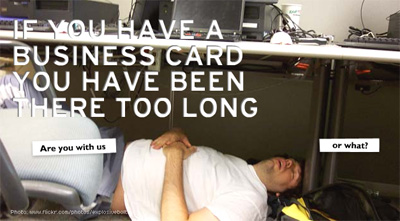
The background of the case is quite typical of the user-generated webspace. Sometime in April this year, Justin Ho-Wee Wong took a picture featuring American teenager Alison Chang and placed it on his Flickr stream and released under a Creative Commons Attribution licence (the picture has now been removed from Flickr). There are millions of such pictures online, but this one was picked up by Virgin Australia's advertising agency and was included in Virgin's now infamous "Are you with us or what?" ad campaign (find more pictures here), with the caption "Dump your Pen Friend". The ad was photographed by sesh00 in a bus stop in Adelaide, and then posted with a comment in Flickr. Alison found to her surprise that she was in the picture, commenting "hey that's me! no joke. i think i'm being insulted...can you tell me where this was taken." The ensuing discussion will elucidate on the roots behind the current suit, but also may serve as a reminder of the complexities of legal issues in the Web 2.0 era. The end result is that the family sought legal advice, and they have finally sued in a Dallas County District Court. The complaints against Virgin Mobile are for invasion of privacy, libel, and breach of contract; while the claim against Creative commons is for negligence.

Some people may ask what is the big brouhaha about this picture and why would the family feel insulted. I must admit that there is something indeed sinister about the entire campaign, and I also share some people's idea that the caption is rather racist. Jenn at Reappropriate blog has made a very shrewd analysis of what is wrong with the picture, the caption seems to be playing with the racial stereotype of the geeky Asian pen pal girl, when in fact this is a typical American teenager pictured by her friend. Some of the earlier Mainstream Media reports also seemed to assume that the suit was prompted by the smaller caption "Free Text Virgin to Virgin", which seems to have some sexual connotations.

I have no idea whatsoever about some of the personality rights and the potential privacy issues according to Texas and Australian law, so I will not comment on Virgin's potential liability in those terms. However, I will just say that it was just a matter of time until they got sued by one of the people depicted in the campaign, I mean, what were they thinking? I will point out that some advertisers, photographers and people in the know have commented on the fact that this image had no model release form, and that the advertising agency should have known better. The fact that the picture was released under a Creative Commons does not change the fact that there was a person involved, and that the subject should have been treated as any model. The Attribution CC licence allows commercial use, but it does not exempt Virgin from its derogatory use of the people involved in the image. Creative Commons licences deal with copyright, and any other rights involved have to be dealt with separately.

The marriage between digital photography and the Internet have heralded an era where countless pictures are posted everywhere online. We all take photographs and post them in blogs, Facebook and Flickr. Should we be walking around with model release forms in order to avoid litigation? Clearly not! Most people live their lives assuming that taking a picture and posting it online is just one of the facts of the networked era. However, this case should continue to highlight the fact that there are potentially sensible images out there, including drunken debauchery on Facebook, or a blog post taken out of context, and that we should therefore exercise caution.

What about Creative Commons' involvement? The negligence claim against the organisation reads:

"Creative Commons owed a duty to Justin Wong, as a user and beneficiary of its license. Creative Commons breached this duty by failing, among other things, to adequately educate and warn him, as a user of the Creative Commons Atribution license, to warn him of the meaning of commercial use and the ramifications and effects of entering into a license allowing such use."
I believe that this is a preposterous claim, but one that is shared by some. Since the earlier Flickr discussion about the Virgin campaign, and from the debate taking place with regards to this particular image, it is clear that there appears to be a backlash against Creative Commons. Some people have wondered if it is best to revert to "All Rights Reserved", which I notice has been done by Mr Wong to his extensive online picture collection. The problem is that Creative Commons goes out of its way to educate the public and to explain the issues in understandable terms via pictures, comics, videos and by the existence of the human-readable Commons Deed. Similarly, all licences contain the following disclaimer:
"Creative Commons is not a party to this Licence, and makes no warranty whatsoever in connection with the Work. Creative Commons will not be liable to You or any party on any legal theory for any damages whatsoever, including without limitation any general, special, incidental or consequential damages arising in connection to this licence. Notwithstanding the foregoing two (2) sentences, if Creative Commons has expressly identified itself as the Licensor hereunder, it shall have all rights and obligations of Licensor."
It may seem as a typical legal cop-out, but it is an important point. Creative Commons is not party to any agreement, its duties are fulfilled by offering pre-drafted licences to the public. In my opinion, its duties are more than adequately fulfilled by the various channels of public information available to licensors. Larry Lessig has commented on the case already, and I find his arguments sound. I cannot see how a court would find CC liable for negligence in this instance, and I believe strongly that CC's involvement will be thrown out early into the litigation. Virgin's involvement however is more serious. Their nasty campaign has come back to haunt them, and it seems like they know it; when you visit Virgin's "Are you with us or what?" website, all you get is a logo, and the offending images have been removed.

Whatever the result, this story has legs. It has been picked up by the blogosphere and the mainstream press, and I'm afraid that CC opponents will be delighted by these developments.

On a personal note, this encourages me to finish my article on CC enforcement and contract formation issues. I notice again that this case deals with the licences in contractual terms.

Wednesday, August 08, 2007

New copyleft ruling in Spain

One more case in the ongoing battle in Spain between SGAE and small bars over copyleft music. Derecho de Internet reports on this latest appeal by the SGAE against a bar in Madrid called "Buenavistilla Social Club". The collecting society initially lost the case and therefore appealed to have the ruling reversed. In the latest sentence, the court argued that evidence presented by the defendants indicated that the locale played alternative music, also known as "música libre" or copyleft, and therefore dismissed the appeal and allowed the initial ruling to stand.

There are two interesting points made by the decision. The first is that apparently the court was swayed by the fact that the bar in question was not a commercial venture, but was part of a non-profit organisation which held social and cultural events in the venue, which leads one to believe that this may prove to be a useful distinction to make in future cases. The second element is the growing sophistication of Spanish judges with regards to copyleft and other alternative licensing concepts. The ruling states:

"With the copyleft clause the owner allows, through a general public licence, the transformation or modification of his/her work, placing an obligation on the responsible for the modified work to make it available to the public under the same conditions, that is, allowing its free access and its adaptation. With Creative Commons licences, the rights-holder reserves his/her right for commercial exploitation, and can even forbid adoptions of the work. Therefore, one must distinguish between Creative Commons licences and the copyleft clause. There will be some Creative Commons licences which include a copyleft clause." (translation mine)
This is very accurate depiction of the nuances in the licensing models, and to my mind it shows that judges in Spain grok the concepts involved. I am heartened by the fact that Civil Law jurisdictions seem to be at the forefront of open licence and copyleft litigation, as evidenced by the many positive results for open source and open content in the Netherlands, Germany and Spain. If we also consider the rulings in France and Finland with regards to DRM, and some of the English cases with regards to software patents, I would like to put forward that Europe is experiencing a resurgence in progressive court decisions in Cyberlaw.

But what do we know, everyone knows that Europe is filled with pinko-commie liberals...

Friday, July 13, 2007

Virgin Australia using Creative Commons content


(via Rebecca Kahn) The Icommons mailing list has been discussing another potential Creative Commons enforcement case, this time in Australia. Virgin Mobile Australia has started an advertising campaign called "Are you with us or what?", which has been collecting images from Flickr released under a CC-BY licence, which allows commercial re-use and modification of the licensed work. The images contain comments which could be construed as being insulting and derogatory, as the one displayed here. Needless to say, this has angered some people (displaying my penchant for understatement once again). How dare Virgin Mobile misuse CC licences in such way? Some bloggers have placed the fault squarely in Creative Commons' lap, as they argue that this campaign's subjects were not made to sign model release forms, which I guess is the manner in which Australian modelling agencies deal with image and personality rights.

There is plenty to discuss here. It is true that Creative Commons does not deal in any way with image and/or personality rights. As many pointed out in the mailing list discussion (nod to Andrew Rens), Creative Commons offers copyright licences that do not deal with other areas of the law. While image rights are not something I know a lot about, it is clear that this is an area dealt separately by other type of legislation. One cannot expect the thousands of people uploading images into Flickr and Facebook to ask their subjects for model release forms, or any such nonsense.

It seems like Virgin may be safe in this case with regards to copyright claims, as the images contain a small link to the original photo stream (for example, the one pictured above can be found here). However, there are some other licence elements in which Virgin may be in breach of the terms and conditions. It was also mentioned in the list discussion (nod to Herkko Hietanen) that there is an obligation to place a copy or link to the licence on any modified works, which is not done here. I would also argue that the resulting campaign is being released as a Flash animation, which may (or may not) fall foul of the restrictions against technological protection measures.

Similarly, I believe that Virgin is not exempt of misuse of the subject's other rights. I believe that in Europe there could be a case to be made with regards to Data Protection as the pictures could be used to identify the data subject. It is also clear that the captions could be considered defamatory and/or derogatory, which could be litigated regardless of the copyright case. And there is of course the right of image, wherever that may exist.

While a lot of people oppose non-commercial clauses in Creative Commons, I must say that it is cases like the one I'm describing which proves the point of the popularity of such licence elements. There is now a Flickr group dedicated to collecting the images used in the campaign. One of the comments left in the group's message board pretty much sums it up: "ooh, that sucks. :/ I switched my license a while ago to no commercial use. Glad I did!"

Freedom advocates, take note.

Monday, July 02, 2007

Creative Commons licence statistics

The Creative Commons blog has published some of the latest licence usage statistics. Mike Linksvayer and Giorgios Cheliotis have made public some of the statistics presented at the iSummit, which provide a lot of tasty food for thought for licence geeks everywhere.

The data comes with a lot of caveats, particularly because there is a large discrepancy of results depending on the search engine used. Google produces results that seem excessively high, while Yahoo's seem low. One of the ways in which one can get some reliable data is to use site-specific statistics: there are 38.7 million images in Flickr released under a CC licence alone. Still, one of the results that can be seen across the board is the licence distribution. As was the case with previous statistical data, the most restrictive licences are undoubtedly the most popular ones, as seen in the graphic below:

(click to enlarge)

This may come as a surprise to some who advocate the use of less restrictive "free" licences, but I think that it makes a lot of sense. Most people (myself included) have no problems with wide non-commercial dissemination of their data, but there seems to be something unfair in someone profiting from your work when you have decided to make it available to the public.

Kudos to Mike and Giorgios for the excellent data, it is time to start getting to grips with it and we should analyse its implications.

Monday, June 25, 2007

New aggregated blog

As part of the synergy generated in the iCommons summit, several Latin American leads suggested the creation of a new aggregated blog bringing together voices talking about open content, CC and other related topics. Thanks to Katitza Rodríguez from CC-Peru we now have a new blog. If you would like to aggregate your content to the blog, please send me an email.

Tuesday, June 19, 2007

iSummit in pictures

Here's my iSummit in pictures (check out the iCommons Flickr stream):


Not a bad place to hold a conference


Badges? We don't need no stinkin' badges!
(courtesy CreativeCommoners)


So, THAT is how he does it!
(courtesy Joi Ito)


Snowclones are the new black
(courtesy Mathias Klang)


Tessi disagrees with me about the quality of the talk


Two children down, about two billion to go


I haven't been this excited since I bought my Mazinger t-shirt!
(courtesy Joi Ito)

Monday, June 18, 2007

Free Radio

(photo courtesy of Becky Hogge)

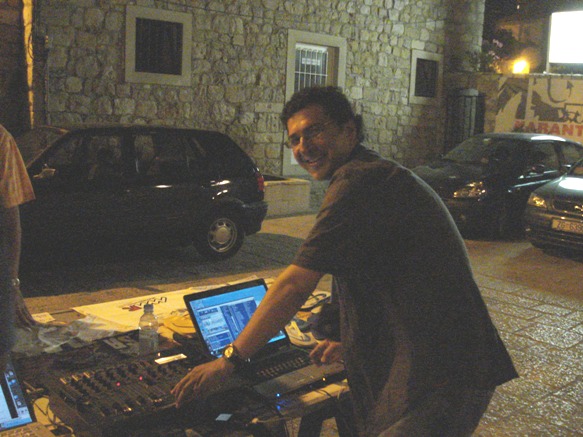
One of the coolest activities I managed to do during the summit (besides annoying random people with rants about contract law) was to participate in the Free Radio broadcast. As you can see, it is a radio broadcasting outside one of the venues. I managed to play a Latin set (Fabulosos Cadillacs, Molotov, Juanes and Manu Chao) and as you can see from the picture, the crowds loved it... well they were gathered in the picture's blind side, yeah, they were, truly!