Showing posts with label iSummit. Show all posts

Tuesday, June 19, 2007

iSummit in pictures

Here's my iSummit in pictures (check out the iCommons Flickr stream):


Not a bad place to hold a conference


Badges? We don't need no stinkin' badges!
(courtesy CreativeCommoners)


So, THAT is how he does it!
(courtesy Joi Ito)


Snowclones are the new black
(courtesy Mathias Klang)


Tessi disagrees with me about the quality of the talk


Two children down, about two billion to go


I haven't been this excited since I bought my Mazinger t-shirt!
(courtesy Joi Ito)

Monday, June 18, 2007

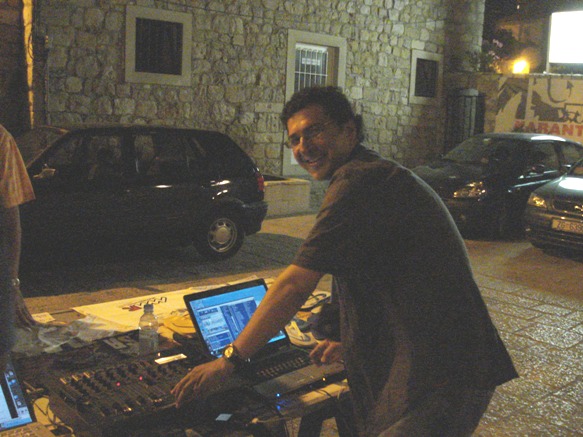
Free Radio

(photo courtesy of Becky Hogge)

One of the coolest activities I managed to do during the summit (besides annoying random people with rants about contract law) was to participate in the Free Radio broadcast. As you can see, it is a radio broadcasting outside one of the venues. I managed to play a Latin set (Fabulosos Cadillacs, Molotov, Juanes and Manu Chao) and as you can see from the picture, the crowds loved it... well they were gathered in the picture's blind side, yeah, they were, truly!

Creative Commons movement

A common theme running through the summit has been the question of the nature of the Creative Commons organisation. Is it a movement? And if so, what is its philosophy? Ideology? Is it political?

I think that these are important questions, and while I believe clearly that this is a movement, I tend to be rather more sceptical about its political and ideological implications. The fact that "we" are now back in the FSF's good books (at least a couple of the licences are), leads me to believe that there is a united front on free or open licences. I would claim that there is clearly a wider philosophical movement dedicated to the generation of digital conservation spaces protected through legal instruments enforceable in court. However, the movement is not a legal movement as such, it simply uses copyright licences as an implementation tool.

This is why the reason why the underlying philosophy is so important. Yochai Benkler agrees that there is a counter-movement exemplified by an opposition to IP maximalism, which is clearly opposed to software patents, increased copyright terms, criminalisation of infringement, new sui generis rights, and other important issues.

Those are worthy causes, but does joining a cause make one a movement? I keep thinking that we need some strong direction, a manifesto for the digital age.

Off to catch a plane now.

Saturday, June 16, 2007

Poker

Venerable (I sort of hate that word, but I don't know how else to describe him) Harvard Professot Charlie Nesson gave an excellent talk on poker and democracy. I'm sure this will be one of those events which will be part of the many excellent talks we have been seeing in the last few days, particularly because Professor Nesson is here after an operation, so we had to go to his hotel and had a session in a 5 star hotel lounge talkinga bout the online poker ban and the law.

Professor Nesson has a theory that poker is a game that teaches about life, about thinking for oneself, independent thought and strategic thinking on specific situations. It is relevant for the law because it is not about lying, but the minor deception involved in bluffing is all about a recognised excercise of risk. The ban on poker is tantamount to an attack on democracy (he did not put it in those terms, but it was implied on the discourse).

Some interesting discussion followed, talking about the benefit of the metaphor, about the specific developments on the American online gambling ban, and about regulation of such practices.

The future of the Commons

Last night Larry Lessig and Jonathan Zittrain presented what I'm sure will become a legendary session on the future of content and the future of the Commons.

Jonathan Zittrain gave a thoroughly enjoyable presentation related to his work on the Web's famous network vulnerability, and what it means for the future of the internet and for the future delivery of content. Zittrain's final points related to the fact that there appears to be a devolution of content provision by technologies that are more analogous to the old BBS services. Similarly, there is a growth in the creation of gated sharing communities instead of the wide and vastly open sharing P2P networks. I was happy to see this expressed in such a manner, I have personally believed that the next generation of "sharing" has been coming back to what I call the "tree house" model, where membership is by invitation only.

Zittrain's presentation was amazing, but something kept nagging me about it, and when I got back to the hotel it dawned on me that it was not specific to the talk, but to the summit in general. There has been a certain American-centric slant on the summit. We have been hearing a lot of American speakers, talking about American practices, American technologies, American websites, and American devices. There is also a certain absence of recognition that other people in the world do things differently. For example, in Africa the devices spoken about are practically unheard of, while the mobile rules the waves. There is also a bit of over-exposition of Western and American cyber-culture and American law. We need to recognise that this is a global summit, and that people do things differently in other places (the exception has been Jimmy Wales, who presented a candid and honest look at global educational projects).

Lessig's talk was a tour de force. I have seen him speak several times, and I honestly thought that I had become used to his presentation style, I didn't think that he could amaze me the way he did last night. The talk was frank, forceful and honest, but most importantly, it was passionate. Lessig has announced that he will be taking a lower-key role, and that it is up to us, the members of the movement to take the brunt of the responsibility in promoting it. He received a standing ovation, and there was a certain buzz after it was over, I think that people were aware that we had witnessed something different.

Jamie Boyle is announcing CC Learn, and Yochai Benkler will give his keynote tonight. I can hardly wait.

On the social front, I went back to the hotel early. Too much international liquor on Thursday night!

Thursday, June 14, 2007

Legal Day


We've had some excellent discussion on the first day of the conference, which has been an unofficial start before the summit fully begins tomorrow (in other words, licence geeks get together and throw around ideas).

The first session was an extremely useful description from Lucie Gibault and Paul Keller of the re-licensing issue experience in the Netherlands, which has already ported the 3.0 licences into a Dutch version (but has not been launched yet). We received a set of instructions, tips and recommendations to project and legal leads on how to incorporate the v3.0 changes. Mike Linksvayer also presented instructions and updates on the technical aspects of the licence.

The second session brought an amazing paper from Giorgios Cheliotis, who presented a statistical analysis of the actual licence usage, particularly the ported licences. I will link to the paper when I have access to it. Mike Linksvayer also gave a great run-through some of the statistics, made relevant by the fact that national jurisdictions are not particularly popular, which places things into perspective.

The third session started some of the fireworks. I presented on enforcement, one of my favourite topics, where I spoke about contract formation problems. I was pretty intimidated by the fact that I was speaking after Lessig, who is always his amazing self. To me, the most important piece of news of the entire day was that Creative Commons is now back in the list of "Free Licences" published by the FSF. Comments on this session were provided by Lawrence Liang and Ronaldo Lemos.

Mireille van Eechoud presented an excellent introduction to International Private Law issues, which prompted a lively discussion on whether CC is a contract or a licence. This generated a clear split between common law and civil law systems, with all of us from civil or mixed jurisdictions stating that of course the licences are contracts, with the common law systems disagreeing. Most of us walked away like Galileo, muttering "but it is a contract!"

Paul Keller and Melanie Dulong de Rosnay gave their now yearly report on collecting societies, followed by a very brave David Uwemedimo from CISAC, who presented a very balanced view on where collecting societies stand with regards to CC. I'm sympathetic to people who present to a hostile audience, so I think David did quite well, although I disagreed strongly with his view of creativity. One of my favourite memes is about how the Internet and user-generated content is the result of new sharing ethics online, where CC would be the licence of choice for those at the end of the Long Tail. To think of creators as only those who make a profit or make a living of their creators is entirely wrong in my opinion. We are all creators, even those of us who make their poor musings on their pyjamas every morning.

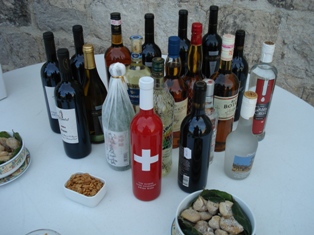
On the social front we had an excellent night where everyone brought liquor from their countries of origin, which means I'm not feeling at my best today (and from the comments received this morning, I don't look too good either).

Update: Carolina Botero made a very complete and competent report (in Spanish).

Live from Dubrovnik

And the summit begins with the legal day, there will be plenty of discussion on all licensing legal topics, so today is lawyer's day.

The great thing about annual conferences is that you get to see again your friends from last year, and in the words of one of the organisers, you get to see how much people have aged in the last couple of years (and undoubtedly, people get to notice how much I've aged).