Showing posts with label New technologies. Show all posts

Monday, April 06, 2009

Is Google an amoral monopoly?


I have read with interest Henry Porter's scathing indictment of Google in yesterday's Observer, an article generating some heated discussion online. While I often enjoy his writings, I have to say that on this occasion he has written a thoroughly misinformed article that seems to conflate concepts and technologies. I won't get into the attack on Scribd as it is a site that I am unfamiliar with, but will concentrate on his views about Google (others have dealt with this point).

While I want to highlight specific errors and inconsistencies with the article, I believe that Porter is informed generally by a visceral dislike of authority, exemplified by today's article against data retention regulations. While I share some of his views with regards to civil liberties, I cannot help but suspect that in this instance he is barking up the wrong tree (I have always been amused by this English phrase, how does a dog bark at the wrong tree anyway? But I digress). Anyway, Porter's first dodgy argument comes when talking about Google's strategy against PRS by removing music videos from his site. He says:

"Google presents a far greater threat to the livelihood of individuals and the future of commercial institutions important to the community. One case emerged last week when a letter from Billy Bragg, Robin Gibb and other songwriters was published in the Times explaining that Google was playing very rough with those who appeared on its subsidiary, YouTube. When the Performing Rights Society demanded more money for music videos streamed from the website, Google reacted by refusing to pay the requested 0.22p per play and took down the videos of the artists concerned. It does this with impunity because it is dominant worldwide and knows the songwriters have nowhere else to go. Google is the portal to a massive audience: you comply with its terms or feel the weight of its boot on your windpipe."
This is a horrendous misrepresentation of the PRS-YouTube debate. Google is a business, and as such it has a right not to lose money every time a video is played. The music industry is asking for way too much money every time a video is played on YouTube, and Google has every right to remove such outlet for musicians if their demands are not sensible. YouTube provides a valuable service to artists by letting them reach an audience, and one might add, Google is entirely willing to pay for it. It is very telling that artists like Billy Bragg are vociferously complaining about Google's negotiating tactic, because they know that not having this service will be detrimental to their market exposure. Why should Google be expected to provide them with a valuable service and suffer financially from it? I for one believe that Google is entirely justified in calling PRS' bluff. Does Google hold disproportionate power? Maybe, but Google should not be expected to support flawed business models. Porter then goes on to say:
"Despite its diversification, Google is in the final analysis a parasite that creates nothing, merely offering little aggregation, lists and the ordering of information generated by people who have invested their capital, skill and time."
What a diabolical paragraph! This seems to imply that anyone who does not create content and simply offers an aggregating service is by definition a "parasite" that has done no investment whatsoever. Google has invested millions of dollars in creating a vast an complex infrastructure that allows users to access, create and aggregate content. This can be as valuable as the act of creating the content itself. I am writing this using a Google service, and have found some information using two other of its services: the search engine and newsreader. These are tangible, useful and valuable services that make it easier for content creators to get their message across. If Porter cannot see this as a non-parasitic function, then I am afraid that his arguments inhabit a sphere of wrongness that rationality cannot touch. The content industries are filled with aggregated service providers: publishers, distributors, retailers, hardware and portable media manufacturers, publicists, administrative staff, et cetera. Are all of these "parasites" as well? Porter continues:
"One of the chief casualties of the web revolution is the newspaper business, which now finds itself laden with debt (not Google's fault) and having to give its content free to the search engine in order to survive. Newspapers can of course remove their content but then their own advertising revenues and profiles decline. In effect they are being held captive and tormented by their executioner, who has the gall to insist that the relationship is mutually beneficial. Were newspapers to combine to take on Google they would be almost certainly in breach of competition law."
Now I think we come to the hidden reason behind the article. While Porter claims that Google is not to blame for the debt incurred by the newspaper industry (how kind of him to exculpate them of something nobody has accused them of), he seems to imply that Google is to blame for some of the printed media's woes. Firstly, newspapers are not forced to give their content for free, Google News searches and offers a small snippet of news articles, and sometimes also small pics from the original source, but the full article is still linked to, so that users can go to the source easily. This is an excellent service, and one that I use often. I cannot see what is the problem with allowing a search engine to index your content and make it available to a wider audience. Secondly, is Porter arguing that news sources could offer a similar service if they grouped together? Forgive me if I laugh at such a ridiculous notion.
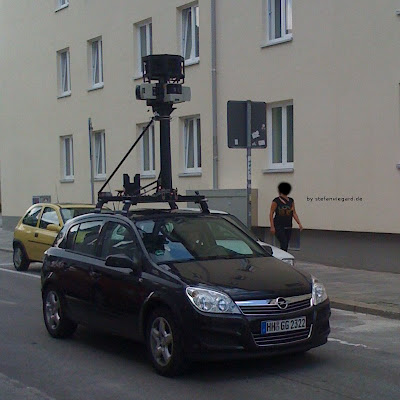
"This particular 11-year-old has known nothing but success and does not understand the risks, skill and failure involved in the creation of original content, nor the delicate relationships that exist outside its own desires and experience. There is a brattish, clever amorality about Google that allows it to censor the pages on its Chinese service without the slightest self doubt, store vast quantities of unnecessary information about every Google search, and menace the delicate instruments of democratic scrutiny. And, naturally, it did not exercise Google executives that Street View not only invaded the privacy of millions and made the job of burglars easier but somehow laid claim to Britain's civic spaces. How gratifying to hear of the villagers of Broughton, Bucks, who prevented the Google van from taking pictures of their homes."
Wow! In one paragraph Porter has managed to simultaneously accuse Google of childish immaturity and fiendishly calculating greed. No mention that Google is compelled to follow Chinese law if it wants to have business there, just as it is compelled to follow anti-terror legislation in the West, some of which he complains about today. And we will simply ignore the fact that very few people have complained about Street View, and most of us are actually enjoying a very nice service. By the way, where is the evidence that burglars are using Google Street View to plan their dastardly misdeeds? Why applaud the technophobes and their mob-rule, pitchfork-wielding mentality?

I know that I am coming across as a Google apologist, but it really upsets me that an innovative company that offers millions of users valuable services that define our current Internet experience gets such an unfair treatment. I am indeed bothered by Google's market dominance, but that is a regulatory argument that we will have to explore in the near future. However, Mr Porter makes a wrong-headed attack on the search engine giant that does not further the necessary debate that we should be having.

Disclaimer: This post is brought to you by Blogger, a Google subsidiary, and FeedBurner, another Google service. You may have found it on Google's search engine, or followed a tweet (future Google company). Yes, there's nothing to be worried about...

Friday, April 03, 2009

The cameras are at the gates!

The unveiling of Google StreetView UK is being met with that uniquely British mixture of outrage, amusement and derision that I can never quite get right (much like the intricacies of the English language I suspect, but I digress). On Wednesday the village of Broughton in Buckinghamshire blocked the StreetView car from entering the town because of concerns that it could be used by burglars to check out houses. A villager saw the car approaching and quickly alerted his neighbours, who promptly blocked the van from coming into town.

I wonder who is in the right here legally speaking. Does Google have the right to circulate around town taking pictures? Have the neighbours the right to block the van from entering the village? My instincts tell me that Google would have the right to circulate in a public road, but this is an area of law completely alien to me.

What has surprised me more than the level of coverage is the clear opposition to Street View from privacy advocates, to the extent of threatening to sue Google. I know that there are potential privacy issues, but really, aren't people taking things too far? I have found Street View extremely useful, helping me find a restaurant in London and to identify a place where I will be speaking later today. Could I have done those things without Street View? Sure, but knowing where you're going in advance is a great advantage, particularly if you're running late. I personally think that the benefits greatly outweigh the annoyances and privacy concerns.

Needless to say, there are hundreds of amusing stories developing as we speak. Fred Goodwin's house was supposed to be blanked out, but the next-door neighbour's home was mistakenly removed instead. There is also a divorce in the making, as a woman found out that his husband had been cheating on her when she saw his car in front of his mistress' house. The mind boggles.

I for one recognise potential privacy issues, but I am delighted by the technology. And yes, I have already wasted some time simply clicking on the arrow. It is strangely addictive.

Update: Thanks to Jac for pointing out that the divorce story in The Times is a hoax.

Wednesday, March 04, 2009

Book Review: Rainbows End

Before being attacked by the Lynne Trusses of the world, the title of Vernor Vinge's Rainbows End is not missing an apostrophe. The book is named after a retirement community which was chosen by either "an everyday illiterate or someone who really understood the place.” Vinge is part of a wave of technologically sophisticated authors depicting the post-internet world, this cadre includes Charles Stross, William Gibson and Cory Doctorow, yet I am reluctant to call this movement cyberpunk. Post-cyberpunk maybe?

The book is very technical in nature, and includes dialogue on instant messaging (thankfully not on chatspeak); it also introduces several new acronyms for neuroscience technologies that we may have in the future: JITT (Just In Time Training), and YGBM (You Gotta Believe Me). It is possible that all of this SMing and techno-speak may put-off some people, but they do work in the context of the hyper-connected world described by Vinge. While the text conversations get clunky at times, the story makes up for it, and the characters jump out of the page, particularly the main character, erstwhile poet and recovered Alzhaimer sufferer Robert Gu.

The world of Rainbows End is what makes the novel memorable, and I beleive that it showcases three new technologies that make it an excellent read for cyberlaw classes. In this world, medicine has not only managed to expand lifespans considerably, it has begun reversing the process of ageing, particularly neurological debilitating diseases such as Alzheimers. Vinge's real triumph is to describe what would a world inhabited by rejuvenated elderly would look like, particularly because medicine cannot cure everything. So there are people like Robert Gu who have made astounding recoveries, while there are other lucid yet infirm elderly on wheelchairs. This world is also one where wireless broadband is ubiquitous, but the internet looks nothing like ours. Computers are wearable and include contact lenses that over-impose an information layer to reality, so the future web is a vast world of augmented reality where people can wear avatars in everyday life, but also where everything and everyone is tagged with information. The third technological feature of this world is that it is a strictly controlled hardware environment, where every piece of gear has embedded protection that connects with both Homeland Security and with certificate authorities. This allows a level of control that we cannot dream of, but it is also a rather vulnerable world.

There are some really interesting considerations of this post-geriatric world. Leaving aside the bioethics of the technologies described, I found the social implications staggering. We already live in an era sharply divided along generational lines. The wired generations live in a different world than that of the analog ones. While the number of older people adopting some of the technologies is growing (my mother has joined Facebook and frequents internet forums), there is still a large disconnect with the possibilities presented by the user-generated world, so there are entire generations left behind. This is not really explored in social research in cyberspace, but Vinge presents us with an important question. What if lifespans keep getting longer, and older generations have the mental learning capabilities that they had when they were younger? The answer is both shocking and elegant. Send them to school! In Rainbows End, schools are filled with the very young and the very old, both learning how to use and navigate the datastreams. This makes a lot of sense, but it also presents some challenges for a society where the old and the new clash in such manner. There is an endearing connection between teenagers and the old geezers that I found both believable and desirable. Technology could bring back respect for one's elders. What a liberating idea!

Rainbows End is also the ultimate user-generated world. Users can modify themselves, but also their environment. There is one fan-generated layer covering the entire world which has mapped Pratchett's Discworld into our own, so if you were in China you would be in the Agatean Empire, if you were in London you would see Ankh-Morpork, and presumably if you were in Australia you would see XXX. In fact, the world is filled with these "belief circles" where fans choose which reality to inhabit, and sometimes they clash and fight for recognition and space.

Finally, Rainbows End depicts a tightly controlled network environment, where every piece of hardware must have a valid certificate issued by an authorised certificate authority. This is simply the endgame of Trusted Computing, and the embedding of technological protection measures not only into media, but into every single piece of equipment that has a chip inside. While in theory, this allows a level of surveillance unmatched even by our CCTV crazy environment, it can also be circumvented. Vinge's genius is that he recognises that even if those pushing for secure hardware environments get their wishes fulfilled, hackers would still be able to circumvent the technologies by using illegal gear. But also, Vinge describes the dangers of such a world, which would be vulnerable to cascading failures if someone was able to attack a single ceritficate authority and void a whole lot of permissions.

To conclude, Rainbows End is a wonderful look at the near future, but one that leaves some questions for us to decide. I like his view of the post-geriatric world, and I think that augmented reality will soon be here. The book is filled little gems and witticisms that make it highly enjoyable and readable if you get past the texting.

And yes, rainbows do end.

Monday, March 02, 2009

Amazon to restrict read-aloud functions

The Guardian has an excellent post on the Amazon Kindle controversy. The Author's Guild threatened legal action against Amazon because the Kindle's read-aloud function "is not paying anyone for audio rights". Neither does my sister when she reads books to my nephews, but I digress.

What a sad state of affairs, some authors seem intent on stifling a new technology simply because they are not squeezing out the last penny from users.

Wednesday, January 21, 2009

Is technology making us stupid?


Here is a list of things I find self evident: pizzas are good, the colour of the sky as seen from the ground in the third planet of the star system Sol can be represented by the RGB hexadecimal code #87CEEB, and whenever a new technology is discovered someone will complain that it is making us stupid/it is unnatural/it should be banned.

Ever since the Internet came along, we have been witness to all sorts of indictments on its intellectual merits. Some are somewhat justified; for example, I believe text-speak to be detrimental to people's ability to communicate with one another (have you ever tried chatting with someone whose vocabulary extends to "OMFG u r stoopid"?) However, new technologies have made our life easier, and have made it possible to access amounts of information like never before. Recently I was re-arranging the books in an old book-case, and was amazed to discover an encyclopaedia, the decadent symbol of a bygone era before Wikipedia and Google.

It would seem like there are those who insist on flogging the line that the Internet is making us somewhat dumber. Take this article by Naomi Alderman in The Guardian. She says:

"And it's not just television that poses a threat to reading, it's the internet too. Of course, using the internet certainly demands literacy. But reading on the internet isn't the same as reading a book. Recent studies have indicated that online reading tends to break down in the face of "texts that require steady focus and linear attention". [...] The Greeks may have replaced their oral traditions with Plato and Aristotle but, though I love computer games, I don't feel that trading the reading culture for Guitar Hero is a fair swap."
While I tend to agree that reading is great, and that there are few things as enjoyable as a good novel, I am baffled by the protestations of the death of the book, and I for one do not feel sentimental or regretful about its eventually inevitable demise. The problem with such wide indictments of new technologies is that they tend to ignore a very simple fact: while we bibliophiles still love the printed word, we have to accept that the tide is turning away from writing, and towards a more rich and democratic experience of expression.

Allow me to formulate this idea a bit more. For centuries, the main manner of communication was the written word. Some few people could read, even fewer could write, and those who could do the former would have a disproportionate influence on the world. Every generation would rely on a few voices to tell its stories, share its dreams, and formulate its goals and ideas. However, when you think about it, this state of affairs is highly elitist. How many valid voices have been lost because they could not communicate to a wider audience? One could be callous and assume that if it cannot be written, then it is not worth it. I answer those with one name, Socrates. We know of his thoughts through Plato's writing (I will not enter the debate of whether Plato accurately conveyed his master's philosophies), and one has to think what would have happened if Plato had not been there to share his thoughts with us.

Similarly, I can think of many people I know whose ideas and understanding of the world seem to be sophisticated and astute, yet have never written a single paragraph worthy of the name. The business of publishing is also inherently elitist, those writing have to jump through several hoops to get their words printed, and even those which are good are read by not many people. Even in the age of the participatory web, those who write tend to be fewer than those who do not. How many voices are being lost to this tyranny of the typeface? Writing requires a special mindset and set of skills that are not shared by all. The fallacy of intellectualism in the last centuries has been to assume that only those with the knack for putting sentences together are worthy of attention. Thankfully, the 20th century has allowed other skills and art-forms to have growing importance in the way we think. The audiovisual arts have a lot of potential to convey complex ideas in efficient an manner. To my mind, I have yet to find a book that describes the political history of the last decade as well as Adam Curtis' excellent documentaries The Power of Nightmares and The Trap.

I recently read an article by Clive Thompson that makes a similar point. He commented that YouTube had the potential to become a new type of communication tool, implying its own rules and languages. He comments:
"What's happening to video is like what happened to word processing. Back in the '70s and early '80s, publishing was a rarefied, expert job. Then Apple's WYSIWYG interface made it drop-dead easy, enabling an explosion of weird new forms of micropublishing and zines. Laptop audio editing did the same thing, giving birth to the mashup and cut-and-paste subgenres of music. Then there's photo manipulation, once a rarefied propaganda technique. Photoshop made it a folk art. [...] Marshall McLuhan pointed out that whenever we get our hands on a new medium we tend to use it like older ones. Early TV broadcasts consisted of guys sitting around reading radio scripts because nobody had realized yet that TV could tell stories differently. It's the same with much of today's webcam video; most people still try to emulate TV and film."
I think there is something true in these words. We should not feel nostalgic about the loss of one form of communication, after all, people still write (you are reading this, are you not?) We should be enthusiastic about the vast range of new technologies that allow us to be able to express ourselves even if we are not able to write that well. Clarity of thought can take many shapes, why should we believe that it can only present itself in black and white?

Thursday, November 13, 2008

QR Code

I've been playing with QR codes. If you have a mobile phone with a QR Reader, use your mobile phone camera on this picture.

qrcode

The word convergence keeps popping up in my head.

Adding: You can also generate text:

qrcode

Friday, September 12, 2008

The predictive power of computers

I have always been interested in the depiction of computers in popular fiction. One early computer meme represented the percentage crunching computer/robot that would helpfully tell the protagonists the percentage rate of survival for X situation ("You have a 2% chance to survive that jump").

While computer predictions are not as reliable as their fictional counterparts, they are still used in complex simulations involving anything from climate change to traffic flow. I have been thinking about this for several reasons, including research into networks and because of the latest release of iTunes. The system comes with a recommendation system called Genius. You select a song, and Genius will generate a playlist that "matches" it. I am not sure about the parameters used to generate the lists, but I tried seeding lists with Pat Benatar's "Love is a Battlefield" and New Order's "Blue Monday", and I was quite impressed with the resulting lists. However, trying anything other than Anglo Saxon-centric pop and rock will slice Genius' IQ in half. I tried "Bongo Bong" by Manu Chao, and even several Soda Stereo songs, and all I got was a message claiming that Genius could not generate a list. I was also underwhelmed by the Classical music lists. Apparently, I am not the only person who thinks that Genius is not particularly clever (a hint to Apple: do not name any system with synonyms for intelligence, it will only generate derision from the blogosphere). If you want to try to go into Microsoft world and purchase a Zune, the recommendation system appears to be rather good (I do not know anyone who would willingly buy a Zune though).

Recommendation systems are not new. Amazon's recommendation algorithm has been with us for years, and it really works. It seems like every week there is talk of a new startup that promises to bring social intelligent systems to make our lives easier by letting our friends recommend stuff to us; the Guardian's Technology podcast seems to be almost entirely about social recommendations lately. Similarly, talk about the semantic web and intelligent systems has been around for ages.

I remain sceptical about many of these predictive services, particularly about social applications. While I find it interesting that I share musical tastes with people in my Facebook friends list, I will not make many decisions based on that. I am also sort of troubled about the fact that our tastes can be so easily predicted. I like fooling the system from time to time! Nevertheless, with the advent of the petabyte age, some pictures are starting to emerge. It seems like we make decisions in a more predictive manner than we previously thought. Serendipity and inventiveness are actually rare, and most of us are remarkably simple creatures, responding to the world in a predictable manner.

Can we code these deterministic responses into law? Although I would like to answer no, my logical brain says yes. But what do I know, I have some shameful songs in my iPod.

Thursday, September 04, 2008

Browser Wars and faulty EULAs

The browser wars have just gotten a bit more interesting with the release of Google Chrome. While I am too addicted to Firefox, Chrome appears to be an interesting experiment. However, the Chrome EULA raised some eyebrows, as it contained the following clause:

"11. Content licence from you
11.1 You retain copyright and any other rights that you already hold in Content that you submit, post or display on or through the Services. By submitting, posting or displaying the content, you give Google a perpetual, irrevocable, worldwide, royalty-free and non-exclusive licence to reproduce, adapt, modify, translate, publish, publicly perform, publicly display and distribute any Content that you submit, post or display on or through the Services. This licence is for the sole purpose of enabling Google to display, distribute and promote the Services and may be revoked for certain Services as defined in the Additional Terms of those Services."
Wait a second... this is a browser, right? How on earth did someone at Google figure that they would be getting a licence for content placed on the browser?

Thankfully, the licence has now been ammended to read:
"11.1 You retain copyright and any other rights that you already hold in Content that you submit, post or display on or through the Services."
Crisis averted then, but it must be said that Google's lawyers should have looked at this a bit more closely. Someone seems to be a bit too busy with the Viacom suit.

Wednesday, August 20, 2008

Technophobic memes in the press

One of the recurring themes in this blog has been the popular depiction of technology in the media, particularly in mainstream press. It seems to me that there is a pervasive view of information technology in some sectors of the press, where new technologies are to be met with fear and distrust, and all problems presented by technologies are exposed, inspected, analysed, preached about, and stridently condemned by what I call the shrill technophobic classes.

Examples of this phenomenon are too numerous to mention, but some of my pet peeves are the blame allocated to any web technology for teenage suicides; the belief that games turn kids into violent criminals; the idea that the web is brimming with predators waiting to snatch our children away; and the excessive fear towards the powers of hackers.

Do not get me wrong, some of these fear have some justification. There have been well-documented cases of cyber-predators and groomers operating online; there seems to be a minor correlation between some violent games and aggressiveness; hacker attacks are a worrying threat to e-commerce; and some teenagers use social networking sites. However, I get particularly angry at the exaggeration of these issues in order to push a technophobic agenda that seems to condemn information technologies by distorting the actual threat these issues pose to society. For example, children are more likely to be abused by people they know, so why not direct resources to tackle that? Similarly, if there is some correlation between violent games and aggressiveness, regulators should remember that correlation does not mean causation. It is possible that violent games (and movies, literature, and other forms of entertainment) attract agressive people to begin with.

I also contend that these technophobic tendencies in the media tend to be more present in early adoption stages. The Web went through this stage, until browsing has become a fact of life. New technologies and services are met with similar distrust, Web 2.0 social networks, P2P, and many other internet phenomena have been met in their time with Luddite cries of protest, ony to become mainstream and widely accepted eventually.

I am in Costa Rica and I have been struck by the number and tone of technophobic stories warning worried parents about violent video games and grooming. Some of the depictions of the problems range from the anecdotal to the farcical. Perhaps developing societies such as this are trying to come to grips with the new technologies. It will be interesting to see if these views survive further sophistication.

Monday, May 26, 2008

Travel and "open" wifi

It's been quiet here in TechnoLlama for a while after knit-gate and the story about gold spammer executions being picked up by the always excellent Terra Nova. I am now off to Brazil for a conference, and as a reluctant traveller and Internet addict I am always very interested in finding adequate wifi coverage, which is not always easy and rather expensive.

For the last year I have been relying on BT Openzone, which came as part of my home broadband package. However, the free service was discontinued, and it has now been replaced with something called BT Fon. Fon is a really interesting experiment, an international network of users that agree to share their broadband connection with other Fon users. In their own words:

FON is the largest WiFi community in the world. FON is a Community of people making WiFi universal and free. Our vision is WiFi everywhere made possible by the members of the Community, Foneros. We share some of our home Internet connection and get free access to the Community’s FON Spots worldwide!
The idea is ground-breaking, yet amazingly simple when you think about it. Road warriors will be used to picking up all sorts of closed networks when roaming the wireless space. The idea is to let you connect to those wireless networks in exchange for making your own service available to others. This seems to me to be a logical step-up of the sharing open ethic exemplified by tools like Wikipedia, Creative Commons and open source licensing. By sharing your resources you also benefit by being able to connect to a network anywhere in the world.

Those legally inclined will certainly get suspicious right now. What are the legal implications? What are the liabilities involved if someone uses your network to download porn, terrorist manuals, unlicensed copyright works, or boot-leg Rick Astley videos? Is there a chance that sharing your connection will make you vulnerable to attacks? Fon say that the connection is secure, and because all users need to user their login in order to connect, a record will be left somewhere that access to that dodgy site was not yours, but it will identify which username did it.

I have to admit that I really like the idea, it has all of the sharing elements that I like about the participatory web. However, I am sort of sceptical about BT's reasons for joining the Fon network. Call me cynical, but I am certain that BT realised that revenue from roaming wifi is not what it should be, and that it was partly to blame on people like me who got access as part of a package. Now they can charge me whenever I need to go online on the road and I cannot find a Fonero. Hopefully, the network will become big enough soon enough.

Wednesday, January 16, 2008

Apple heralds the age of convergence

Everyone seems to be talking about the MacBook Air, although you will not see me parting from my 160HDD GB MacBookPro. Incidentally, why do some of Apple's new devices feel like a downgrade? The 16GB iPod Touch has nothing on my 60GB iPod. Anyway I digress.

One of the less publicised items from last night's Stevenote has been the iTunes Movie Rental (which incidentally, we're not getting this side of the Atlantic yet, what gives?). While this move was widely predicted by tech pundits around the world (which leads me to ask, am I a tech pundit now as well?), the real surprise for me is that it will be possible to download and watch movies directly to a TV using special software and an HDMI connection. This seems to me to be the true herald to the age of convergence, and seems to make a clear indication of intentions about Apple's future strategy.

The industry has to do something, after all, the Pirate Bay and similar sites are their direct competitors, even if they have been served with fresh legal documents from Sweden's prosecuting services.

Thursday, January 10, 2008

Format wars all but over: Sony won

The high-definition DVD war may be over as Paramount is set to choose Sony's Blu-ray format. Earlier in the week, Warner announced that it was going to release its catalogue on Blu-ray, which analysts say pretty much spells the demise of HD-DVD.

In my opinion, what really tipped the balance in favour of Blu-ray is the console wars. PS3 comes with built-in Blu-ray support, while Microsoft has refused to adopt HD-DVD in the Xbox 360. With the Sony console gaining a bit of momentum thanks to games like Assassin's Creed, it was only a matter of time for the studios to finally choose.

This war has been tipped as a re-telling of the VHS v Beta format struggle, a period of time that gave us the famous case of Sony v Universal. Ahhh! Those were the times when men were men, women were women, and small furry animals turned nasty if you fed them after midnight.

Tuesday, November 13, 2007

The Bad Web

The Internet is a bad, bad place. I'm reading "The Cult of the Amateur", the much maligned book by Andrew Keen, and it does not make happy reading. He has a bone to pick with the web as we know it, elsewhere he commented that:

"When I look at today’s Internet, I mostly see cultural and ethical chaos. I see the eruption of rampant intellectual property theft, extreme pornography, sexual promiscuity, plagiarism, gambling, contempt for order, intellectual inanity, crime, a culture of anonymity, hatred toward authority, incessant spam, and a trash heap of user-generated-content (whew, what a mouthful!). I see a chaotic humans arrangement with few, if any, formal social pacts."
All revolutions need their grumpy sceptics, and Keen is making a lot of money as the outspoken critic of Web 2.0, peer production and what he considers is an environment that glorifies communist ideals. One needs to see who is praising Keen to understand who his audience is: the Daily Mail, Yasmin Alibhai-Brown, etc.

However, Keen's message may have a resounding endorsement in the way some governments respond to online threats. Instead of better policing, the UK gets a scaremongering campaign that tells us to beware of social networking sites and open wireless spaces. We need education and proper policies, but the UK governments is only giving us message that reeks of Daily Mail Luddism.

Saturday, November 10, 2007

The technophobes strike back

So Marina Hyde at The Guardian is at it again. The UK hosts now four million blogs, and all she can say is "Oh Noes!" The article makes an interesting point about the loss of privacy awareness in the younger generations, which is true, but then goes on to equate this phenomenon with blogging, as if all bloggers were posting their daily events all the time. Instead of celebrating the wonderful diversity in opinion and the rise of a more informed an self-empowered society, the technophbes of the world resent us having opinions and making them known.

It is true that the blogosphere is full of dross and inane content, but so what? It is true that simply by writing a blog one is not assured visitors, but so what? Millions of people are writing down news of interest, posting their thoughts, sharing their pictures, and this is a bad thing why? Not all bloggers use their real identity, so why equate blogging with privacy concerns? Ms Hyde has confused her Web 2.0 tools, she must be thinking of social networking.

This inane blogger is now signing off.

Tuesday, November 06, 2007

Urban Spaces event in Glasgow

More self-promotion of speaking arrangements. Well, if I cannot have self-promotion in my own blog, then where can I have it? Anyway, here is the information:

Build your own world
Andres Guadamuz, AHRC
21 November 2007 10am - 12.30pm The Lighthouse, Glasgow Free

Andres Guadamuz is an academic interested in the ownership implications of new technologies; in particular he researches intellectual property issues in User Generated Content and the so-called Web 2.0 phenomenon. He will deliver a presentation in which he will look at the creation of urban spaces within so-called virtual worlds, such as the popular environment known as Second Life. He will ask about the ownership issues that surround the creation of intangible property, putting forward the idea that we already have legal tools to think about virtual existence.

Andres is a keen blogger (technollama.blogspot.com), a member of Creative Commons Scotland, and he has also acted as a consultant for the World Intellectual Property Organization. Currently Andres is a Lecturer in E-Commerce Law at the University of Edinburgh, where he is also a co-Director of SCRIPT.

To reserve a place, please contact ULS Events Manager Yvonne Kincaid at yvonne.kincaid@urbanlearningspace.com or call 0141 225 0103. Please note that places are strictly limited and will be allocated on a first come, first served basis. Interest has been high so please book early to avoid disappointment. If you are unable to attend this event, presentation slides and a podcast recording of the event will be available to download from our website.

for more information on this event please visit www.urbanlearningspace.com/events

Thursday, November 01, 2007

LARP: bringing games to life

Reading about the Tower of London GPS game has got me thinking about the future of role-playing gaming, gadgets, and some potentially interesting legal issues (this is a technology law blog after all, despite my efforts to forget that fact from time to time).

The growth of ubiquitous smart phones and GPS devices has opened up the world to the massification of Live Action Role-Playing Games (LARPs or LRPs). LARPs are not a new development. Dramatic re-enactment of open-ended scenarios has been with us for a while. However, up until now it has been seen as an uber-geek thing to do, designed only for people who like dressing up in weird costumes wielding swords and shouting at one another. However, new technologies have the potential to bring this practice back to life by using all sorts of portable devices that we already own.

The interaction between LARPs and new technologies have also the potential to resurrect Virtual Reality. Remember VR? It was one of the central plots in Cyberpunk novels of the early 90s, and it has been considered a bit passé. However, there seems to be a trend forming in bringing back some form of virtual reality. I'm currently reading Halting State, which in my opinion manages to depict the best application of what could be called the overlay world. Imagine goggles that allowed you to see everything normally, but with super-imposed data from the Internet that gave you directions, told you when your bus was coming (with a nice arrow display that told you where it was), and even marked people with criminal convictions (Stross jokingly mentions that the overlay could show neds with ASBOs). In the same book, Stross describes LARPs through the use of GPS and mobile phones, one of which is people playing at being football hooligans. Another recent book where this augmented reality is discussed is William Gibson's Spook Country, which describes potential artistic uses of AR displays to superimpose crime scenes involving dead celebrities, or to show giant objects that are not really there.

The implications for gaming are clear. If we could use a combination of GPS and AR goggles to display gaming overlays, the world would become a playground. See the success of the Wii in bringing gaming to non-gamers, and you can see the potential for the technology. Imagine games where you are part of a murder story, you go along with your normal life, but you could be given prompts to clues depending on your location.

And what about the legal implications? Where to begin? The first one is the potential ownership issues with the vast amounts of data that could be made available through these devices. Some content would have to be encrypted, or only available via specific proprietary devices, which brings the issues of payments, hacking and technological protection, not to mention RFIDs, privacy and all sorts of other issues.

Monday, September 03, 2007

Should we care about the iPhone?


Interesting article from the always relevant John Naughton at The Observer. Much has been written about the iPhone's sleek design, it should be flying off the stalls and become the mobile industry's equivalent of the Wii. Yet, it has not, it is selling well, but not as well as some expected. Why is that? The answer is clear, Apple has shackled the iPhone with an AT&T contract, a simple fact that has demonstrated a staggering lack of foresight from the company that has told the industry that DRM is dead. Yes, DRM is dead, but then we will still constrain how you want to use your technology by making sure that we choose the phone network for you. Don't these people eve learn?

Anyway, there have been legal concerns with the iPod because an enterprising American teenager has already cracked the hardware in order to connect to his network of choice (T-Mobile), and another company has managed to crack the software and now sends iPhones anywhere in the world.

At the heart of the question is not only the legality of the locks, and the potential infringement of the circumvention of such locks. I believe strongly that there is a growing legal case to be made against pervasive technological protection measures. But the question that we have to ask, is why has the copyright law been used to back some seriously flawed business models? If Apple wants to make a commercial decision and wants to lock their hardware, that's their choice, but they should not be surprised if users all across the world will say "frack that, I want to use my own network", which generates a huge incentive to break the built-in protection. The evil of TPM legislation is that it hard-wires these nonsensical decisions into the law. It is up to consumers to say no, or to fight back when possible.

For now, I'll stick with my already-cracked iPod.

Wednesday, August 29, 2007

Attack of the killer technophobes


I have been meaning to to write about this column by Marina Hyde in The Guardian, but I wanted to keep some distance from it. While I welcome all sorts of articles that criticise technologies, I have been distraught by certain tone emerging in the supposedly more progressive sectors of the British media outlets, where we are seeing the type of Luddite claptrap exploited by the likes of the Daily Mail.

I have made my feeling about Second Life clear, but I resent those who protest against the entire technology based on a perceived attack on "the human soul" (whatever that is), or similarly fuzzy-sounding clichés. All new technologies are always met with fear by the gatekeepers of the time. I can imagine a hand-written pamphlet from the 1450's protesting at the disturbing moveable type printing press. The issue is that new technologies are usually neutral, and that the use given to the technology will often be that which reflects the society in which it develops. Virtual worlds are not disturbing per se, the way we use them could be. However, the opposite gushing mindless technophile adoration of all things Second Life should be met with similar scepticism.

I was similarly struck by a sudden urge to throw something at my digital receiver when I heard an interview by Luddite-In-Chief John Humphrys with Vint Cerf on Radio 4's Today program. It dawned on me that we are seeing a marked resurgence of technophobia in the British media, and that Hyde's piece is only a symptom of the general malaise. The interview centred around the topic of Internet regulation, and I have to applaud Cerf on masterfully dealing with the creeping paranoia displayed by Humphrys. The interviewer tried to make a point that perhaps Cerf should be feeling a bit responsible by the invention of the Internet, just like some of the scientists working on splitting the atom felt responsible by nuclear weapons (I won't even comment on the equating of the Internet with WMDs). Cerf's reply was that the Internet is more analogous to roads. Those who invented roads cannot be in any way held responsible for whatever is built around them. Cerf similarly made the brilliant point that the Internet is just a reflection of society, if we find disturbing things online, should we be concerned about the society that spawns them, or by the medium that distributes them?

I'm still trying to figure out why is it that some in the mainstream media hate Web 2.0 so much. YouTube is presented as the example of everything that is wrong with society, a place where hoodies make their threats, and happy-slappers rule the digital waves. To these people, the Internet as a whole is filled with filth, and "something should be done about it". Humphrys kept pleading for some form of far-reaching regulation, "where do we draw the line" he asked. The answer according to Cerf was simple. It can be done, it has been done. By China. You may have heard about the Great Firewall of China, right? That is one way of doing it. If you want to regulate the Internet, that is the only model that really works.

Vint Cerf is now one of my heroes.

Tuesday, May 08, 2007

Electronic Money Strikes Back

I have been a long-time critic of electronic money. We've been hearing about how we'll all be ditching our banknotes and coins within "the next two years" since 1998. Similarly, we've had a regulatory response to the subject which has been particularly inadequate, as it was drafted with specific technologies in mind, while the market has moved towards account-based systems such as PayPal.

Now UK banks have charted the roll-out of a payment system to be included in new debit and credit cards that will allow electronic payment for amounts under ten pounds. The new system is a "contact-less" or swipe-through system similar to that used by London Transport in their Oyster Card scheme. An RFID system will be placed in the cards, which can make payment as easy as flashing out your card. The scheme has been piloted here in Edinburgh, in 11 shops surrounding the Royal Bank of Scotland. The scheme will then be tested in London, and then, as film villains like to say, the world (cue maniacal laughter).

I must admit that this seems like the real deal. It will be convenient, and it is set to reduce the cost of handling cash for businesses, so there is a strong incentive for adoption by intermediaries. It's also added to existing payment systems, so there will be no need to get extra cards to our already bulging wallets.

This feels strangely un-climactic. I cannot be curmudgeonly about new technologies! I must be losing my edge.

Update: The system is called payWave for Visa and PayPass for Mastercard (insert snarky comment about names here).

Tuesday, April 24, 2007

Attack of the killer robots

The BBC Technology News and the Today programme have been talking today about the great robot debate. Experts, academics and other assorted folk will discuss tonight about the potential threats arising from increasing numbers of robots, a discussion organised by the Dana Centre and the Science Museum. While at first I thought this was going to be a mirth-inducing exercise, reading more about it has prompted me to explore the issue further.

The debate will discuss a foresight report entitled Robo-rights: Utopian dream or rise of the machines? commissioned and conducted by the DTI's Chief Scientific Adviser. The report concludes that:

"As computers and robots become increasingly important to humans and over time become more and more sophisticated, calls for certain rights to be extended to robots could be made. If artificial intelligence is developed to a level where it can be deployed widely -- a development some argue is likely in the coming years -- this debate may intensify."
Robot Liberation Army, here we come...

Nevertheless, experts present at the debate are going to argue about more worrying problems arising from robotics. The threat will not come from conscious androids asking for their right to vote in the next European election, nor will it come from human-looking automatons. Experts are concerned about something more worrying, they believe that the threat comes from dumb automated robots, highly independent machines involved in decision-making that has little or no oversight by humans. One particular area of concern seems to be the military use of drones and other independent mindless machines, where the potential for things going wrong would increase. I have to agree somewhat, hasn't the military ever seen a science fiction film? Everybody knows that military robots always go bad.

Seriously though, I tend to be sceptical about these claims, as they seem to me to respond to scaremongering technophobic fears. Automated machines have been with us for decades, and they still have not decided to take over the world. Similarly, military drones making mistakes are similarly dangerous to military personnel making mistakes. Even less so, if the appropriate checks are built into the system's architecture. Fears of robots are entrenched in culture, but they tend to ignore the fact that we have been living with vending machines, VCRs, AIBO and factory assembly arms for years now. When was the last time that you saw a Coke machine kill a person? (actually, people have been killed by vending machines).

Anyway, a discussion of robots is not complete without Asimov's Three Laws of Robotics:
1. A robot may not injure a human being or, through inaction, allow a human being to come to harm.
2. A robot must obey orders given it by human beings except where such orders would conflict with the First Law.
3. A robot must protect its own existence as long as such protection does not conflict with the First or Second Law.