Tuesday, July 18, 2006

Chronicle of a suit foretold


It was inevitable. The popular online video repository YouTube has been sued for copyright infringement by Robert Tur, owner of Los Angeles News Service. Tur seems to be an experienced copyright litigator, and he is asking for $150,000 USD for each infringed work, and also is asking for an injunction against YouTube not to allow any of his works to be posted on the Web site.

Does he have a case? I think not, as YouTube's service is completely unlike P2P sharing networks. Most of the content hosted by YouTube is amateur video loaded by users, sometimes remashed from other sources, such as the surprisingly funny Juggernaught video (trivia for X-Men fans, the tag for this video makes an appearance in X-Men 3!). YouTube also defeats easily the Grokster inducement test, as it does not advertise or promote infringement in any way. When users sign-up for a YouTube account, they agree on click-wrap terms of use that clearly leave all responsibility of ownership with the person submitting the video. The relevant clause reads:

In connection with User Submissions, you further agree that you will not: (i) submit material that is copyrighted, protected by trade secret or otherwise subject to third party proprietary rights, including privacy and publicity rights, unless you are the owner of such rights or have permission from their rightful owner to post the material and to grant YouTube all of the license rights granted herein; (ii) publish falsehoods or misrepresentations that could damage YouTube or any third party; (iii) submit material that is unlawful, obscene, defamatory, libelous, threatening, pornographic, harassing, hateful, racially or ethnically offensive, or encourages conduct that would be considered a criminal offense, give rise to civil liability, violate any law, or is otherwise inappropriate; (iv) post advertisements or solicitations of business: (v) impersonate another person. YouTube does not endorse any User Submission or any opinion, recommendation, or advice expressed therein, and YouTube expressly disclaims any and all liability in connection with User Submissions. YouTube does not permit copyright infringing activities and infringement of intellectual property rights on its Website, and YouTube will remove all Content and User Submissions if properly notified that such Content or User Submission infringes on another's intellectual property rights.
The question then is if Mr. Tur has requested that his copyright works be removed from YouTube servers. Although it is not clear from the reports, my guess is that he has not, otherwise he would not be filing this suit.

Fred von Lohmann from EFF has written a timely article on why he believes that YouTube is acting within its rights. This one is another one to watch, but in my humble opinion this case should be an easy victory for YouTube.

Update: In an interesting related news item, YouTube has announced that it serves 100 million videos per day.

Saturday, July 15, 2006

Shakira don't lie

(via Carolina Botero). Colombian pop superstar Shakira was involved in a brief IP-related scandal with regards to a song from her album Oral Fixation vol.2. The hit song is "Hips Don't Lie" with Wyclef Jean, in which it is possible to hear a distinctive trumpet tune troughout the song, but most prominenly during the opening and closing. The tune comes from the song "Amores como el nuestro" by famous Salsa singer Jerry Rivera.

The controversy began when Jerry Rivera was interviewed in Latin show Escándalo TV, where he claimed that he had not been asked for permission to use the tune, and that he was disappointed and hurt by the infringement. This prompted a scandal within Latin music, would Jerry sue? How could Shakira do this to her fans! As Caro Botero commented, we had our very own Latin copyfight!

However, the scandal was short lived. Jerry Rivera is only the performer of the song, the copyright lies with the composer and with the record company. In this case, Shakira's record company, Sony BMG, asked for permission to the composer, one Omar Alfanno, and Rivera's record company, Lafranco Music in Miami. End of the scandal.

As a matter of trivia, some people may ask why is this album called "volume two"? The volume one is actually the Spanish verison of the album, called Fijación Oral vol 1. I admit that I'm a big Shakira fan, so what?

Thursday, July 13, 2006

Bars in Spain


(Thanks to Paul Keller for picture) Is this the shape of things to come in Spain? In case you do not read Spanish, the image says: "The music that you are listening to is free for public difusion."

By the way, you can also smoke in this bar.

Wednesday, July 12, 2006

European patent policy under review

A couple of noteworthy developments in the European software patent debate. Firstly, the European Commission has criticised the European Patent Office harshly as lacking political accountability. The lack of accountability has allowed the EPO to change policy so that it permits the issuing of software and business methods patents.

Secondly, FFII has presented a statement to the Commission's patent policy hearing against the proposed European Patent Litigation Agreement (EPLA). The statement reads:

As has been said by other speakers, the EPLA will make litigation 2-3 times more expensive. These numbers come from the EPO.
What does this mean for SMEs?
It means that if you are an SME and have a patent, it will become harder to enforce your patent because litigation just became 2-3 times more expensive. It also means that if you are an SME and accused of patent infringement, it becomes harder to defend yourself because litigation just became more expensive. And if you cannot defend yourself, you will be forced to license, even if the patent is weak or invalid.
Granted patents that are invalid are a plague, yet 50 % of all patent litigation concerns patent validity. That means every second trial relates to a problem that should not be there in the first place. Every second patent trial is a trial which could be 100% cheaper for all parties involved if the organisation responsible for the granting of patents would have taken it's full responsibility, but also if these patents would never have been filed.
We will keep an eye on this, it seems to me that we are headed towards another struggle in Brussels.

Monday, July 10, 2006

Tom Chance on the iCommons summit

This is a very interesting read from Tom Chance of Remix Reading. I can see that there are going to be a growing number of concerns about how events like the summit are run, organised and handled. He makes some very valid points about the venue and governance. In my opinion, Microsoft's participation has definitely created a further split with Free Software communities.

Jet-lagged in Sydney

William Gibson writes in his excellent novel Pattern Recognition that jet-lag happens because your soul is catching-up with you. Mine must be somewhere over Ukraine.

The first day of the Unlocking IP conference has finished, and it has been an excellent first day, perhaps with the exception of one paper given half asleep. Michael Geist and Brian Fitzgerald gave two great papers conceptualizing the commons, while Jane Anderson and Kathy Bowery gave a thought provoking paper trying to challenge the political assumptions of the commons movement, challenging the "coolness" of it all. Peter Drahos gave a highly conceptual analysis of the philosophies behind the idea of the commons, where he posited that we must defend freedom because freedom leads to diversity.

One of my favourite paper of the morning was by Melissa De Zwart, entitled 'Future of Fair Dealing in Australia: Protecting Freedom of Communication'. This was an excellent look at the rationale for copyright and rationale for fair dealing. Of particular interest was the comparison between the use of freedom of expression/communication/speech in Europe, the USA and Australia. I was surprised to learn that FoE doesn't exist in Australian legislation!

The other highlighted paper was Kimberlee Weatherall's, provokingly entitled 'Would you ever recommend a Creative Commons license - and why?' It was a look at all the quibbles and serious objections to the use of Creative Commons in the public sector, with some excellent replies to the problems raised by others.

After this session the caffeine stopped having an effect and I joined the lands of the living dead. Brains... grrr...argggh!

Thursday, July 06, 2006

Down Under

I'm off to the land of boomerangs, koalas, kangaroos and IP lawyers. I will try to blog from the Unlocking IP conference, wireless permitting as usual.

Filling an iPod legally

Is it possible to fill an iPod legitimately? I will ignore the fact that the act of ripping your own CD is still an infringing activity under UK law due to the absence of a private copying exception in copyright law. As reported earlier, the British Phonogram Industry has kindly communicated that they will not enforce such actions.

I hadn't realised just how much space 60 GB is until I started trying to fill it. In the last weeks I have been engaging in a ripping festival transferring my CD collection into unprotected AAC and MP3 formats. I have ripped the majority of the 305 CDs that I own (latest and final count), and left some that I was not interested in ever listening to again. Leaving out some songs from other CDs, and removing duplicates, this produced an excess of 4,300 songs. This is still considerably short of the advertised 15,000 song capacity of the iPod.

The next stage was to load my MP3 collection, which was surprisingly small once I removed all the music that I owned and burned the music that I actually want to listen to. I have been increasingly reluctant to download music permanently from P2P newtworks, I think that it is more ethical to purchase the music if you like the artist, and as a professional with a salary I see no reason why not to do this. My downloaded collection is made up mostly of Latin music that I cannot obtain here in the UK, which is the manner in which I justify owning downloads.

With that done, this left just under 5,000 songs on the iPod. I then proceeded to browse the iTunes music store. There is quite a lot of choice there, but I have been troubled by the DRM protection in the music. My first purchasing experience was to buy Carmina Burana; the operation was seamless, and the music was available in seconds with excellent quality. However, the iTunes DRM does not work well with other players. I have been listening to my music with Winamp because of the playback quality and a MP3 digital effects enhancer that I use to improve the sound, but the purchased music would only play with iTunes. There are several solutions available online for this problem, but some require untested third party software. My choice is to burn the purchased music into a blank CD, and then rip it back into MP3s, which removes the protection. I have been wondering if this constitutes a circumvention of the technical protection measures as present in the WIPO Copyright Treaty, the European Copyright Directive and the UK's CDPA. It probably does, but I cannot see any other way of playing the music in the way that I want and with the player of my choice.

Another source of music has been a growing Creative Commons music collection. I now have 83 songs released under various CC licences. I was particularly glad to find an MP3 CD with the materials distributed at the iCommons Summit in Rio; this CD contained music from all over the world, some of it is extremely good! I hope that the music can be made available for download eventually. The other source is the famous Wired CD, which can also be downloaded in its entirety from the Creative Commons website.

The next step was to find worthy podcasts to subscribe to. This has been quite a revelation for me, I was aware of the popularity of the new medium, but I have been blown away by the wealth of choice. It seems like everything is subject to a podcast nowadays, from Anime to World Cup coverage. However, I have been disappointed by the few options in Spanish. Even Costa Rican podcasts seem to be recorded mostly by American expats and Christian missionaries. I have now subscribed to a series of techie podcasts:

(links to RSS feeds)

Unfortunately, these podcasts barely cover 100 MBs. What else to do? There are the video and picture capabilities of the 5G iPod. I have now uploaded 660 pictures into the pod, a nice way of keeping your pictures mobile, and you can create a slide show that will display your photographs while playing music. A word of warning though, if you use iTunes to load the pictures, they are loaded into a proprietary database that can only be read by iTunes and the iPod software. An alternative is to create a folder with Explorer and just upload the files into it. As for video, I have uploaded the excellent Troops, and will probably upload some other favourites, like The Power of Nightmares and Macross Zero, although I need to convert them into Quicktime format.

With 35 GB to fill, I'm running out of ideas.

Wednesday, July 05, 2006

Rio Declarations

Photo by Attila(picture by Attila Kelényi)
Comments are now open on the three declarations to come out from the Rio iCommons Summit, you can submit your ideas on the iCommons wiki.

The less controversial and (in my opinion) most worthy of the three proposed texts is the Open Access Declaration, which states that scholarly literature should be available to the world under “open access” conditions. I would expect this declaration to go through with no changes.

While potentially problematic, the language in the Declaration on the WIPO Broadcast Treaty seems measured and appropriate given the potential problem that the eventual treaty will have on Creative Commons licences. The proposal to WIPO reads:

1. Establish a new clause requiring signing parties to implement the treaty in law in a way that preserves creators’ grants of permission as embodied in Creative Commons' licenses and other systems.
2. Require signing parties to grant, at minimum, the same limitations and exceptions that are currently present under their national copyright and related rights laws (e.g., Fair Use, Fair Dealing, and other user rights).
3. Eliminate the controversial extension of legal protection for Technological Protection Measures to this new right.
4. Remove from all further consideration the inclusion of “Webcasting” from negotiations, whether in the main body of the treaty or as an “optional protocol.”
More controversial is the Declaration on DRM. I have serious problems with the use of the term Digital Rights Management, as I have mentioned several times on this blog. I believe that when talking about DRM, most people are actually talking about technical protection measures, as DRM need not be restrictive. My first comment then is to change the language of the declaration in order to make sure that it reads "technical protection measures".

Tuesday, July 04, 2006

Blog ecosystem


I have been a fan of The Truth Laid Bear for quite a while, as it measures linkability to generate an accurate picture of the blog ecosystem. Having been an Insignificant Microbe for a while, I am now delighted that for the first time I have achieved Lowly Insect status. The categories are:

Insignificant Microbe • Multicellular Microorganism • Wiggly Worm • Crunchy Crustacean • Lowly Insect • Slimy Mollusc • Flippery Fish • Crawly Amphibian • Slithering Reptile • Flappy Bird • Adorable Little Rodent • Marauding Marsupial • Large Mammal • Playful Primate • Mortal Human • Higher Being

To put things in context, relative newcomers panGloss and Patenting Lives are Multicellular Microorganisms (well done Jo and Lilian!); geeklawyer is a Wiggly Worm; Lenz Blog and Axel H. Horns are fellow Lowly Insects; Creative Commons Blog is a Flippery Fish; IPKat is a Crawly Amphibian (highest ranked UK blog I believe, gratz!); Lessig Blog is an Adorable Little Rodent (I'm not making this up); and Boing Boing is a Mortal Human. Groklaw is not listed, of which I'm a bit surprised.

Can I be a Slimy Mollusc? That didn't come out as intended.

Monday, July 03, 2006

Microsoft in court

Microsoft has been having a very busy time at the courts and with regulators. The first item comes from Europe, where they have been trying to comply with the European Commission's competition enforcement. They are supposed to provide the Commission with documentation and protocols from their server division, and if they do not comply they face charges that could climb as high as 2 million euro per day.

Better luck with American law, where an anti-trust case with regards to the alleged harassment of software company Go Computing has been dismissed by the judge. Then another anti-trust suit in California has been settled, where Microsoft was accused of breaking competition rules by offering three months free MSN internet connections with new computers.

The most interesting case in my opinion is a class action suit accusing Microsoft of infringing California and Washington consumer protection laws and anti-spyware regulations. The argument is that the anti-piracy tool Windows Genuine Advantage is installed amongst security updates, and that it collects personal data on the computer and transmits it to Redmond. Consumers want this information deleted and they want the ability of users to remove this software. This is quite worrying, and I agree that it is a sneaky manner, reminiscent of Sony's rootkit.

What an interesting life for Microsoft lawyers.

Saturday, July 01, 2006

Moblogging CC

All the pictures I took from the iCommons summit were from my trusty mobile phone, as my camera was stolen in another conference. Here are some of my favourites:


¿Cerveza gratis o cerveza libre?


grumble....grumble...collecting societies...Australia...Bloody Italians!


Is that picture on an open format?


I'm going to finish in the pool again, am I not?


You can just make out the players in this little screen...


I'm on top of the world, and I'm not happy about it!

Thursday, June 29, 2006

Attacking OSS

For those who think that software patents are not a threat to open source, read this interesting article on Patently-O about a patent suit against RedHat. The dispute is generated by US Patent 6,101,502, a patent for an " Object model mapping and runtime engine for employing relational database with object oriented software". The abstract reads:

A mapping between an object model and a relational database is generated to facilitate access to the relational database. The object model can be created from database schema or database schema can be created from the object model. Further, the mapping can be automatically generated. The Database schema, object model and mapping are employed to provide interface objects that are utilized by a runtime engine to facilitate access to the relational database by object oriented software applications.
Who writes this stuff? Anyway, RedHat is one of the big players, so it is a good target for patent trolls, but it is still a bad sign for open source in general.

Wednesday, June 28, 2006

The White Man's Burden


The iCommons summit was an incredible event, but I wanted to point out something that kept bothering me in a couple of sessions, particularly the panel about the international role of Creative Commons.

I am perfectly aware that the lack of specialised knowledge of intellectual property from representatives of developing countries in international organisations is a big problem, and that it may induce some of those countries to comply easily with the tremendous pressure by developed nations and industry lobbyists. This is masterfully expanded in the great book "Information Feudalism" by Peter Drahos . However, I'm getting a bit tired of going to meetings where NGOs stress time and time again the perceived ignorance and naivité of those poor developing countries in extremely condescending and even patronising tones. I recognise that many of these people are well-meaning and commited to their ideals, and that their work does indeed help to alleviate some of the lack of education in this area. However, some of the rhetoric sounds like us poor brown people cannot figure things out on our own, and that we need the sophisticated and knowledgable white folk to enlighten us and bring us out of our ignorance.

This is not only condescending, it borders on insulting. We are not all naïve and stupid natives. Some of us have figured things out on our own without the intervention of the NGOs. Not only that, the debate is often framed as clearly “Us vs Them”, where all the bad guys come from developed countries, while the good guys are the Nice White People and selected allies from the developing world (hopefully singers, artists, and other members of the digerati cultural elites). This helpfully ignores that we have our own share of home-grown bad guys. I know a lot of very well-informed, intelligent people who think that free trade agreements are the best thing that could ever happen to developing countries. I also have met representatives at WIPO who really think that more IP protection is good, not out of ignorance, but out of pragmatism and inner conviction.

I’m not biting the hand that assists, the support is greatly apreciated. But please don’t provide assistance and then gloat at a meeting full of people from developing countries and insult us to our face by implying that we are nothing without the help of the Nice White Person.

If the NGOs really want to help, they should try listening and communicating a bit more, but not only with the cool elites from developing countries. We are rather more diverse than that.

Sunday, June 25, 2006

Summit winding down

We are almost done, the last session is upon us. There are three declarations that will be distributed (and hopefully signed on). I will read them in detail and blog about them later on. All I have to say is that this has been ana amazing meeting, full of energy and even some interesting points made in some sessions. The final picture will show just how a diverse group this is.

Day 3 keynote session


International role of Creative Commons with Cory Doctorow, Jimmy Wales, James Love, Glen Otis Brown and Nhlanhla Mabaso.

Cory Doctorow: WIPO development agenda, the experience of EFF at WIPO. There should be a stronger institutional representation of Creative Commons at WIPO level, as at the moment it has been silent. Cory mentioned the many different activism options at WIPO, little things can make a big difference: note taking, blogging, providing information for national delegations. Praise for informed and active national delegations like Brazil and India.

Jimmy Wales: Wikipedia in developing countries. Wales specified the multi-language approach, only one third of articles are in English, and there are many languages represented. Wales is now one of the voices of "what the internet thinks". He talked about the international aspects of interest for Wikipedia, particularly Chinese articles. Wikipedia is social innovation, not technical.

Nhlanhla Mabaso: excellent points about technology in developing countries, and how mobile phones are the technological innovation of choice in the developing world (I thoroughly agree).
Social hardship can provide new oportunities and new ideas on how to solve the problems faced by developing countries, from Linux server clusters to open technologies. There is some nervousness of authors and creators about licensing with CC, but they can be overcome with education. Technical solutions are taken for granted in developing countries.

Glen Otis Brown (Google): CC and Google are "birds of a feather" to abuse a very commonly used phrase around this ocnference. He described several new projects at Google with CC relevance, and some tools that are even distributed under CC licences. He talked about Ad-sense, is it commercial use? Can it help people make money from CC content?

James Love: CC is just part of a larger movement, the Access to Knowledge movement that encompasses FLOSS, access to medicines, open access, patent reform, etc. He stressed that WE are not a bunch of communists. FTA's and drug companies, trying to get the industry on board is another way of working towards access to medicine.

Reviewed llamas


Blogs reviewed in scholarly journals? I did not think it was possible for anyone to take us seriously, but the latest issue of the excellent Journal of Intellectual Property & Practice (2006 1(7):493-494) has a review by Toby Headdon of three IP blogs: Lessig Blog, Patently-O and yours truly. I have not read the review, but I received a blurb from colleagues, and I must really thank Toby for the kind and encouraging words. Risking infringement, the first paragraph reads:

I have not quite figured out the connection between technology and llamas but it is syntactically pleasing. In spite of almost daily postings by Andrés Guadamuz González (e-commerce lecturer at the University of Edinburgh), this blog site, by its own admission, appears to attract very few comments: ‘I'm ranked 37,346 (in the "Insignificant Microbe" category)’, we are informed. Quite frankly, it doesn't deserve to be. This blog site is laced with wit and is all the more entertaining for it—take, for example, the comment on the intent of pro-software patent lobbyists to propose another attempt to pass the ill-fated directive on computer-implemented inventions: ‘Wonderful thing democracy. If you don't like the result, try and try again.’
Thanks again to Toby for the very flattering review, I promise to use more pictures in the future. I'm trying to think of something witty to say... alas, it's not happening. I blame the Brazilian caipirinhas.

Saturday, June 24, 2006

Commons in art, science, and culture

The most impressive panel in my opinion: Niva Elkin-Koren, James Boyle, John Willbanks and Jenny Toomey.

James Boyle is clear-headed and acute as usual, warning of the dangers present in the commons movement. The first danger is that we should not become the "lost leaders", that having hours and hours of low-quality 50 seconds MP3s is NOT what the movement is all about, that would be a disaster, a failure. The movement must be about freeing and generating quality content as an alternative to the people who believe that creativity comes only from the very few. The second danger is the ideological encroachment of the movement in telling people that "our freedom" is the only and bestest freedom, mostly ideologically driven. I gathered certain pragmatic outlook, which I certainly like.

John Willbanks describing the open science movement. It seems from the talk that the Science Commons project has been moving from patents and into databases and publishing (i.e. copyright works). New project called "neurocommons" on data held on databases. Highlight of the presentation: coding bacteria that display the Flying Spaghetti Monster, and a DNA centrifuge ($79.99, ages 10+).

Niva Elkin-Koren: Following her excellent paper "A Skeptical View of a Worthy pursuit", she is providing a much needed opportunity to pause and ponder some of the problems in the licensing scheme. Complexity of licences, interoperability and the generation of content islands that cannot be mixed. The problems are mostly with the practice. Creative works are not simply commodities, words should be shared and exchanged, these are the actual principles behind the philosophy of the movement, but this is not stated in the movement. CC can bring copyright to all of us, it brings copyright to the forefront and available to the masses. CC is the leader, it should make sure that it makes a statement for the open and non-profit arena. CC should act as a social contract rather than a mere licence.

This session alone was worth the ticket (had I paid a ticket to get in, which I didn't).

First day impressions

Andres Guadamuz (picture courtesy of Ariel Vercelli)
I'm still here after the first day, a bit worse for wear from jet-lag and a dodgy stomach, but still going. So many different highlights to the first day! Perhaps I should just paint a picture of what the place feels like.

As I mentioned yesterday, there are people of all races, ages, social backgrounds and hair-styles walking around. From bright pink to experienced gray, there are 300 people in the place literally from all over the world. Lawyers, artists, academics, scientists, hackers, musicians, writers, coders, NGOs, international organisations, lobbyists, industry. Did I mention the lawyers?

Nevertheless, I think that I still miss the nice coziness from last year, this event may have gotten too big. The very important discussions, such as the new version of the licences, have been rushed because of the time pressure. I think that future events may want to leave more time for the policy sessions.

Anyway, there has been a lack of hard content, but the atmosphere is amazing.

I need to get some Guarana drinks.

Friday, June 23, 2006

Policy workshops

Quite a good start to the policy discussions, there is too much to write, so I'll be rather brief.

WIPO discussion: Contentious session indeed! There was a good presentation from Richard Owens, but then some cutting comments from James Boyle, James Love and Cory Doctorow.
The problem is of course the WIPO Broadcast Treaty, which has been talked as an extremely difficult treaty for CC, particularly with regards to webcast issues. Richard Owens has promised to look into this, there are several problems and they know about them, the solution could be to have a treaty that applies only to broadcasts, and not webcasts.

FTAs: Good input from Claudio (Chile) and Oscar (Peru) about the problems generated by Free Trade Agreements, which go beyond existing treaty responsibilities such as the WCT and TRIPs. Exceptions have been eroded considerably to mirror US legislation and economic model.

Chilean proposal for WIPO development agenda: Create a permanent domain for "alternative" IP aspects. WIPO should look at the public domain as well (manage?) Evidence-based policy (where have I heard this before? Oh yes, here). Open licensing is still copyright, so why leave it out of WIPO framework?

Version 3.0
This is what it will have:

  • No Endorsement clause.
  • Right to prepare derivative works/adaptations
  • U.S. licence.
  • A true international Generic licence will have the language from international treaties (Berne, WCT).
  • DRM debate: The new draft will have a longer anti-technical protection measures clause to comply with Debian "free" requirements. Cory spoke against DRM, it is very difficult issue with the new draft and many leads said that the new clause is just way too long and a rather complicated solution as structured. A better definition of DRM is really needed.
  • Moral right of intgrity: This is a contentious issue because the moral right is dealt with in four different ways around the world. There is no sure way of dealing with this, perhaps creating a new element would be an option. James Boyle has suggested that we should just have a generic clause stating that "this licence does not affect your moral rights". Works for me.

Summit begins with a bang


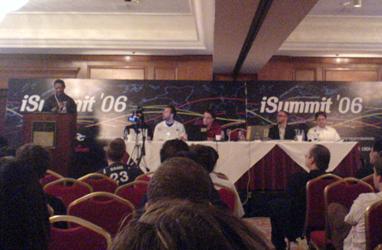
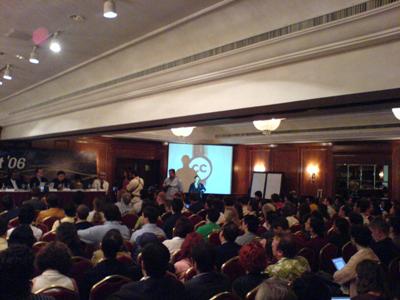
Opening Session: Very good opening session. The highlights for me were Joi Ito, who has been speaking on the many different technical things in which we can make sure that Creative Commons works from a business perspective. Gilberto Gil has amazed the audience with a pasionate speech about the importance of CC as a tool to grant the widest possible content to the widest amount of people, and has obtained the loudest ovation of the day.

The international affiliates session: This was actually quite heated workshop. We had presentations from Mia Garlick, Mike Linksvayer, Heather Ford and Christianne Henckel. They tried to explain the changes on the international structure of the movement. iCommons is a new brand for promoting the movement, International Creative Commons deals with new licences, and the Creative Commons brand will remain, but if I understood it correctly, the name will remain for the United States, while all international affiliates will have to use the iCommons brand. This created a bit of problems.

Session on Collecting Societies: The meatiest legal session, as there have been several conflicts already between CC and collecting agencies in Spain and Australia. Could there be some technical solutions? Perhaps some click-wrap opt-in option for users where people in automated colledcting agencies could highlight if something is under a CC licence. Maybe not. There will be a complete drafting report on this subject. Ther have been several meetings between some naitonal CC leads and local collecting societies to keep them informed of the movement, and that we are not a "threat".

Live from Rio

The meeting has started, we are gathered in the impressively posh Marriot Hotel in Ipanema. I measure poshness by how many times I politely get asked what I'm doing (three times before getting to the venue). I guess that it's just because I look like I don't belong, but it could also be the fact that i've decided to go very casual.

Anyway, this seems like a U.N. meeting, or at least what the U.N. would look like if everyone wore t-shirts and carried laptops. Everyone seems to be here, Geist, Lessig, Ito, Dotorow and Wales.

The speeches have started, so I better get going. More later.

Tuesday, June 20, 2006

Brazil, Brazil


I will be away to Rio de Janeiro to attend the second Creative Commons summit, or more accurately, the iCommons summit, as it is actually an international gathering to discuss the Creative Commons movement, and what a gathering it promises to be! As with last year's gathering in Harvard, I will be reporting directly on the impressive programme, wireless permitting of course.

When moral rights go wrong


I am becoming rather ambivalent about moral rights, which goes against my Civil Law upbringing. I believe that moral right of attribution is a good thing, but that the moral right of integrity can be difficult to apply, and when it is it may prove more trouble than it's worth.

This is an excellent article in the New Yorker on the issue of the eccentric Stephen Joyce, grandson of the famous Irish writer of the same surname. It seems like Stephen has been wielding his moral rights as a weapon since the 1980's, threatening to sue critics that he disagrees with. He has also been using this tool to get invited to Joyce panels, conferences and symposia (without paying fees of course).

Now an academic is fighting Stephen's lock on the estate with the help of Larry Lessig. Carol Loeb Shloss is arguing for fair use in research and scholarship, and in my opinion she has a good case.

This offers the interesting legal opportunity to review just how much power do estates hold. For those interested in this issue, there is an excellent article by Matthew Rimmer in a previous issue of SCRIPT-ed on this very same topic.

Monday, June 19, 2006

Help Microsoft, get smacked for it


In a week were we have seen the two sides of Bill Gates exposed by the press ad nauseam, it is refreshing to see Microsoft do some of the stupid things why we love them for. The Beta version of the long-awaited/feared/loathed Windows Vista has been released to testers, with Microsoft sending large numbers of DVD-ROM discs to beta testers, or having them wait long times for downloading. A couple of enterprising guys decided to help out Microsoft and set-up a Windows Vista torrent, so that the effort of downloading the large files could be distributed and shared across the network. But that won't do, how dare these people share a microsoft product without permission? Enter Microsoft's lawyers:

"Microsoft has received information that the domain listed above, which appears to be on servers under your control, is offering unlicensed copies of, or is engaged in other unauthorized activities relating to copyrighted works published by Microsoft."
It seems to me like a boiler-plate take-down notice. , but what is more worrying is that this is not something done by hackers, crackers and/or pirates, it was done by members of the Windows beta-testing community willing to help Microsoft with the new operating system. Their statement says it all, really:
"As long-standing members of the Windows community, we would have much rather worked with Microsoft directly on this matter than to have circumvented established protocol. We have plenty of Windows Vista Feedback to share - and our feedback list gets longer by the day. We want to encourage all Microsoft Windows users to obtain the software through safe and trusted distribution channels."
*SIGH!*

Friday, June 16, 2006

June 2006 Issue of SCRIPT-ed online

The June issue of SCRIPT-ed, the Journal of Law and Technology, is now online. In this issue:

Editorial:
- Open Letter to the Gowers Review of Intellectual Property. AHRC Research Centre for Studies in Intellectual Property and Technology Law and IP Academics.

Special Feature :
- The Intellectual Property Incentive: Not So Natural As To Warrant Strong Exclusivity. Shubha Ghosh

Peer-reviewed articles:
- Patent Remedies: Online Management of IP Services. Allan Gordon , Jim Adams , Alexis Barlow , Peter Duncan , John Huntley , Martin Jones.
- Copyright Failure and the Protection for Tables and Compilation. Dennis K W Khong.

Analysis:
- GNU General Public License v3: A Legal Analysis. Andrés Guadamuz González.
- The Mystery of Intellectual Capital: A Prospectus. David R Koepsell.

Book Reviews:
- Antitrust, Patents, and Copyright: EU and US Perspectives, by Francois Lévêque and Howard Shelanski (eds). Reviewed by Alex Cameron.
- Copyright, Mass Use and Exclusivity, by Mikko Huuskonen. Reviewed by Bengt Domeij.

Wednesday, June 14, 2006

iPods and ripping CDs

The British Phonographic Industry (BPI) gave us a nice gift last week to celebrate the International Day of the Beast (6/6/6) by announcing that we could rip music into our iPods. Yes, the widely popular practice of making copies of what you have purchased is still illegal, but the kind folks at the BPI have decided to allow us to continue making these copies. In their press statement they declare that making private copies goes against the "All Rights Reserved" nature of UK copyright law. Their representative states that "without specific authorisation,– any UK consumer who rips CDs they have bought in order to fill an iPod or other MP3 player is currently guilty of copyright infringement." However, they promise not to enforce their rights, saying that "if they copy their CDs for their own private use in order to move the music from format to format we will not pursue them."

How kind of them.

Anyway, this has become rather relevant to me because I'm now the proud owner of a shiny 60 GB black iPod just like the one pictured. I have started engaging in illegal activities no longer in fear that the police will break down my door and take my new iPod away. However, ripping an entire CD collection is hard work.

Tuesday, June 13, 2006

Software Patents: The story

Florian Müller, the founder of the NoSoftwarePatents.com campaign, has published his long-awaited testimonial of his role in the amazing story of the software patent war in Europe. The book is entitled "No Lobbyists As Such - The War over Software Patents in the European Union", and it is now available online for download under an Attribution-NonCommercial-NoDerivatives Creative Commons German licence. A perfect read for the long flight to Rio next week.

Monday, June 12, 2006

Net neutrality defeated in the US

I must admit that I have not been following the Net Neutrality campaign, mostly because I felt that it seemed like an American phenomenon, and also because I cannot explain it any better than a ninja.

The Communications Opportunity, Promotion and Enhancement Act (Cope Act) is a wide-ranging piece of legislation that deals with all sorts of telecommunications provisions ranging from VoIP to emergency services. A specific amendment to the bill was sought to include a net neutrality principle, which would enshrine it in American legislation.

Perhaps the markets will decide adequately, watch for ISP watch-dogs and switch if they violate neutrality. I cannot see this happening in Europe, but I'm often wrong about future predictions.

Sunday, June 11, 2006

Piratebay back online


Pirate Bay, the Swedish-based bittorrent search engine, is back online after the raid this week to their servers, where Swedish police confiscated some index files. Pirate Bay is a tricky one for authorities because there are no copies of any shared files, the system apparently only contains links to tracker files where people can try to find other users who are sharing the desired file. Pirate Bay is now based in a server in the Netherlands.

What has been the result? Well, it seems like there are so many new users that the servers are slowing down. Seems like this action produces the opposite result, as usual. ARRR Matey!

Saturday, June 10, 2006

OSS Conference 2nd day

Some interesting papers from the 2nd day:

- Institutional Entrepreneurs and the Bricolage of Intellectual Property Discourses
Ann Westenholz

- Open Source and e-Justice
Cuno Tarfusser

Unfortunately the papers are not available online, which is rather strange from an "open" conference. Why not release them under Creative Commons? I am participating in a workshop, and the proceedings are available online under CC. Now, this is proper open source ! I will be speaking on the GPL v3, if you are interested in this article the proceedings are here.

Friday, June 09, 2006

OSS conference highlights

Some very good papers at the conference, I've been enjoying the excellent scholarship on offer, although practically none of it is legal. Interdisciplinary conferences can be tiring and challenging, but you are always open to an entirely different way of thinking. Some papers I've particularly enjoyed:

- Evolution of Open Source Communities
Michael Weiss, Gabriella Moroiu, Ping Zhao

- Beyond Low-Hanging Fruit: Seeking the Next Generation in FLOSS Data Mining
Megan Conklin

- Impact Of OSS On Social Networks
Communication Networks in an Open Source Software Project
Jeffrey Roberts, Il-Horn Hann, Sandra Slaughter

- Impact Of Social Ties On Open Source Project Team Formation
Jungpil Hahn, Jae Yun Moon, Chen Zhang

- Social dynamics of free and open source team communications
James Howison, Keisuke Inoue, Kevin Crowston

Another great find has been FLOSSmole, a research tool that offers raw data on open source projects.

Thursday, June 08, 2006

OSS 2006

I'm in the beautiful Lake Como in Italy for the Second Open Source Systems conference. Some very interesting papers already, and more to come.

I will be highlighting some of the best in the next days.

Monday, June 05, 2006

DRM in the news

The BBC has a certain journalistic style where they make everything sound reasonable, and always offer both sides of the story (read their global warming reports). Here they comment on the new report on DRM by the All Party Parliamentary Internet Group (APIG). The report to be released later today, apparently contains praise towards some limited use for DRM, but also strongly criticises rootkit-like technologies, telling the industry that they could be subject to criminal liability for the use of such technical protection measures.

It seems that one of the main solutions proposed is to have some form of labeling of digital media which will let consumers know what they can do with their works. Why? Because people are ripping their CDs and placing them in their iPods, which is certainly an infringement under current UK law because there is no right to make private copies.

I'm giving up and buying an iPod this week. Any recommendations?

Saturday, June 03, 2006

Silly Saturday Strikes Back

This is an excellent online game, but quite addictive. Pierce your foe with well-placed arrows. Another addictive game is Plastic Martians.

Friday, June 02, 2006

Fuck - the ultimate legal SSRN paper

Ok, so I am a bit obsessed with SSRN ratings. What does it take to have a succesful paper on SSRN? My most popular paper has only 108 downloads. Now witness Fuck by Christopher Fairman (3203 downloads and counting). Yes, this is a paper about the legal implications of the F word. The abstract says:

This Article is as simple and provocative as its title suggests: it explores the legal implications of the word fuck. The intersection of the word fuck and the law is examined in four major areas: First Amendment, broadcast regulation, sexual harassment, and education. The legal implications from the use of fuck vary greatly with the context. To fully understand the legal power of fuck, the nonlegal sources of its power are tapped. Drawing upon the research of etymologists, linguists, lexicographers, psychoanalysts, and other social scientists, the visceral reaction to fuck can be explained by cultural taboo. Fuck is a taboo word. The taboo is so strong that it compels many to engage in self-censorship. This process of silence then enables small segments of the population to manipulate our rights under the guise of reflecting a greater community. Taboo is then institutionalized through law, yet at the same time is in tension with other identifiable legal rights. Understanding this relationship between law and taboo ultimately yields fuck jurisprudence.
Provocative? Gimmicky? You decide. Now I'm off to research scatological legal references.

Venezuela goes free software

The Venezuelan Parliament is going to start discussing the draft legislation called "Ley de Infogobierno", which will overhaul e-government and software procurement in the Venezuelan public sector. Although I am often sceptical about Chavez and his Venezuelan project, some aspects of the legislation are rather interesting. Here are some highlights.

  • Open standards: As far as I know, this is the first time that open standards are made into law. The draft sets various principles, which include openness, standardisation, interoperability and transparency. Proprietary principles are out.
  • Technological neutrality: The act encourages something called "progressive interpretation" of the law, which will encourage courts to interpret existing legislation in light of new technological development. This sets a standard of technological neutrality rarely found in Civil Law jurisdictions.
  • Farewell paper: Information technologies will be the preferred for all of the archiving operations performed by the State, but this will be in keeping with cultural sensibilities.
  • Technological sovereignty: As far as I can tell, the act establishes a policy of encouraging research and development to ensure a certain level of national technological autonomy. Venezuelan resources and expertise will be favoured wherever possible. Expensive foreign consultants are out.
  • Free Software: the government will “guarantee” that the software it uses fulfils several conditions. These include value added, the right to access the software’s source code, freedom to use, freedom to modify and freedom to distribute modifications. Intriguingly enough, government software cannot have undisclosed access paths. Could this be the first legal rootkit prohibition?
Will embedding free software into legislation facilitate open source principles? I do not think so. Free and Open Source are organic phenomena, top-down approaches do not work well. Still, Venezuela seems to be at the forefront of “progressive” politics again. I think that this legislation goes further than anything Brazil has.

Thursday, June 01, 2006

Unlocking IP Conference

The programme for the Unlocking IP Conference is now available online. This event will take place on Monday 10 - Tuesday 11 July 2006 at the University of New South Wales, Sydney.

The programme looks quite impressive: Michael Geist, Brian Fitzgerald, Peter Drahos, Graham Greenleaf, Kathy Bowrey, Kimberlee Weatherall, Nic Suzor, Andrew Christie, Emily Hudson and Janet Hope amongst many others, including yours truly.

If you are anywhere near Sydney for those dates, this is a highly recommended event.

Wednesday, May 31, 2006

Commons creative utopia?

It has been a good week for creativity based on open licences and Creative Commons. Firstly, there have been glowing reviews about the amazing creative display that encompasses the first "open" animation, a lovely little film called Elephants Dream (I know, it looks weird without the apostrophe). Then there is the amazing BloodSpell, a machinima animated series. I've watched the first episode, and all I can only say is WOW! Well done to the people at Strange Company!

Both works are distributed under Creative Commons licences, which serves to prove that creativity and free culture can co-exist. There are those who assume that the creative process only occurs if there is a promise of a fat cheque as a benefit. This is true of a lot of people, but not all. Some creators will share their work with no regard to profit, at least until the first industry executive makes THAT phone call and then you sell out for a limo and a mob of adoring groupies. But I digress.

More good news for the open movement is that the BBC has released more content online using the Creative Archive licence. I know that many people do not consider the Creative Archive a true open project because it is available only within the UK, but things like the amazing Open Earth Archive can only benefit the commons.

Tuesday, May 30, 2006

Firefox in the news

Get FirefoxThe Daily Telegraph has published an article on why Firefox is stealing market share from Internet Explorer. Being a sticker-carrying Firefox evangelist (yes, I also own a Firefox t-shirt), I am surprised at the growing importance of the browser. I believe that people are finally realizing that IE is very vulnerable to virus and security attacks, while Firefox is more secure.

Something that still bothers me though is the large number of websites that do not test for browser compliance. Firefox will simply not load some pages properly because their designers only check their functionality in IE, ignoring the growing minority of Firefox users. Thankfully, there is a Firefox plugin called IE Tab, which opens Internet Explorer as a tab within Firefox and allows you to view pages without having to open the other browser.

Firefox is not only a better product, it is seen as "cool"by the geeky techno-elite tribe. According to the article, Firefox is making a profit thanks to Google ad income (and I'm sure that they must be making some money from t-shirts). The profit aspect may affect Firefox's street-cred and coolness currency, something not lost on the team:

"We have a user base of 40m to 50m people, who use our product as their -primary way of participating on the web," [Mitchell Baker] says. "That means we have a set of responsibilities and activities that we must conduct to be a responsible vendor - whether it is cool or not."
The fact that the Telegraph has published this article may also steal coolness from Firefox. What next? Endorsement from the Daily Mail? *shudders*

Monday, May 29, 2006

Freedom of expression campaign online

Amnesty International is starting a campaign in favour of freedom of expression online. The organisation claims that there is growing governmental control over blogs, chat rooms and websites where governments try to re-assert their control over cyberspace, and more importantly, about criticisms exercised in the vast virtual world.

The best part of the campaign is that one can copy and paste a small applet into the site which will publish random censored material in one's work. The code can be found here.

Friday, May 26, 2006

Is the EU scrapping software patents?

I have been surprised by the coverage given to a small comment by a member of the EU Commission with regards to a question with regards to software patents. The full answer from the Commission can be found here. Most of the press reports are inaccurate, as usual. Yours truly will endeavour to cut through the falsehoods to get to the heart of the story.

For those unfamiliar with the intricacies of the European software patent debate, computer programs as such are not patentable subject matter in the EU, but the Board of Appeals of the European Patent Office (EPO) has repeatedly ruled that software which has a technical effect can be an invention, and therefore patentable. Many of the press reports have stated that the EPO Board of Appeals rulings with regards to software patents are not binding to member states of the EU. To me this is obvious because the EPO is NOT an EU institution, and the EPO board of Appeals rulings are binding only to the EPO. However, the Office's practice has been applied in several national cases, particularly by courts in the UK.

As far as I can decipher the comment by the European Commission, the status quo would not change with the establishment of a European Community Patent. There is a new European Regulation being discussed that will create a "Community Patent", but this new figure will be administered by the EPO. In my opinion, the new regulation would mostly "legitimise" the status of the EPO, it does not work against the existing system, but parallel to it. One of the important provisions of the existing Patent Convention (the one that gives power to the EPO), is that it has a provision which excludes patentability on some Fields of endeavour, software included (Article 52). From the comment, the Commission is only stating that the existing exclusion will be carried into the Community Patent Regulation. This was already on the cards as far as I'm aware, so I'm a bit surprised by all the excitement.

Wednesday, May 24, 2006

Machinima project under CC-Scotland

We have received this email from Hugh Hancock, forwarded by Prof. Hector MacQueen:

Just thought you might be interested to hear about what I suspect is the largest Creative Commons project in Scotland, if not the UK as a whole.

BloodSpell is an independent animated series, made using Machinima technology, which we're releasing entirely under Creative Commons. It's the product of more than 10,000 man-hours and three years of work, and will, when it's completed, be a feature-length animated project.

We're already getting a fair chunk of press attention for the project, too, including SFX, the Guardian, and CNN.

You can check it out at www.bloodspell.com - hope you like it!
Excellent use of Machinima and CC! A marriage made in digital heaven.

Tuesday, May 23, 2006

Open Source in Europe report out

The Consortium for studying, evaluating, and supporting the introduction of Open Source software and Open Data Standards in the Public Administration (COSPA) has made available a series of documents and resource listings of open source, open data and open standards tools and projects in Europe. I'm in Spain this week but I will read as soon as I get a decent connection. This seems like an impresive resource for those interested in OSS in the public area.

Monday, May 22, 2006

Synthetic Biology webcast today

(Thanks to Jean-Pierre Wack for the link). This is a link to a conference taking place this week on synthetic biology. Arti Rai will from Duke's Centre for he Public Domain will speak on "Synthetic Biology: Caught Between Property Right, the Public Domain, and the Commons". It seems like this is webcast only and not a podcast.

Symantec sues Microsoft

One of the main arguments against software patents is that it reduces innovation and generates unnecessary litigation. Microsoft has been suffering considerably from software patent litigation, perhaps because they are the largest and juiciest target for patent trolls and for patent owners interested in reducing MS market power.

Symantec is suing Microsoft in order to obtain an injunction to stop development of Windows Vista, as they claim that Gates & Co are using Veritas storage technology, for which Symantec owns the patents obtained from tech company called, unsurprisingly, Veritas.

Hopefully, the software development scene will become so difficult to navigate that large companies will lobby for reform of the American patent system. If you want to have a look at the picture is in Europe, you can read this article here *cough*shamelss plug*cough*.

Friday, May 19, 2006

High-tech cheats

In my youth, cheating used to be done by whispers and written notes in cuffs (I'm aware that makes me sound ancient). Nowadays, cheats have embraced new technologies. There is the case of the student that loaded all the notes in their palm pilot. Another one that photographed the questions with their mobile phone, sent them to friends outside via MMS, and got the answers to the questions. In another test, a student dictated the notes into his iPod and listened to them during the exam.

If they spent the same time studying, they wouldn't need all the technology. They just don't make students like they used to.

Thursday, May 18, 2006

Computer Law Conference registration


The site for the VI Computer Law World Conference has been updated. The registration is now open, and there is a list of accepted papers, some accomodation information and other assorted goodies.

Come to Edinburgh this September and enjoy a top level and truly global conference.

Wednesday, May 17, 2006

WIPO Advisory Committee on Enforcement: Day 3

After two days of presentations by governments and industry the last day begins with discussion on how the ACE should proceed. Different groups take the floor to make suggestions for the next agenda.

CPTECH has taken the floor and offered a sobering message that there should be care with regards to what is considered "counterfeiting", and warnings against DRM.

Friends of development: Enforcement should be considered in the broadest sense and in light with development goals, seeking balance of rights. Development should be in the next agenda, particularly technology transfer.

European Union: Austrian representative speaks as they are holding the EU presidency. The EU is extremely interested in acting against counterfeiting.

Canada: Supports more empirical research about the effects on piracy and counterfeiting. Must fill methodological gaps, ACE could fulfill this role.

Brazil: Costs of enforcing IP in developing countries should not surpass the benefits of IP. Biopiracy should be included in enforcement.

Australia: Supports methodological research, and welcomes further discussion on the issue of border control.

Mexico: Again supports methodology efforts on how to measure infringement and piracy. Seems like we have unanimity!

Ecuador: Supports that ACE should look into biopiracy.

United States: So-called "biopiracy" does not fall into the mandate of enforcement. This is subject for the IGC and the Council of TRIPS.

OECD: They have been studying and researching on the eocnomic impacts of piracy and counterfeiting.

IFPI: Supports only border control measures.

It seems like a deadlock in the meeting, the U.S. and the Friends of Development cannot even agree on the subjects for the next event! Are all WIPO gatherings like this? After closed-door talks trying to get everyone together, it has been decided that the next ACE meeting will be an exchange of ideas and views on coordination and cooperation on international enforcement. This seems like a very bland compromise indeed.

Tuesday, May 16, 2006

WIPO Advisory Committe on Enforcement: Day 2

It may be because this is an enforcement meeting, but the feeling in the meeting is pretty much pro-owner. Seems like everybody is singing from the same sheet (with very few exceptions). The rhetoric seems to be quie stronger against all sorts of piracy. Some noteworthy comments:

Malaysia: Counterfeiters must end behind bars! Strong hand, Malaysian government practically equates piracy with counterfeiting.

Barbuda: IP enforcement is difficult because of lack of resources.

Brazil: Enforcement with a social face. Police enforcement is followed by concise education policies. A very cool-looking campaign against piracy has been followed by price-reduction, which has been well-received by the public.

Comments to the Brazilian efforts: A lot of favourable comments to public/private partnerships to reduce prices.

IFPI: Price reduction will not work because prices are set by markets, not by regulators or NGOs.

Interpol: Police intervention for cross-border smuggling of conuterfeits.

Spain: Two-pronged approach, spearating enforcement issues between copyright and industrial property. Piracy is not only what is illegal and/or criminal, it is the culture and attitude of infringement.

Australia: Copyright legislation is being reviewed, looking at exceptions to allow for time-shifting, on-site offences and more serious offences. Australia does a lot of work with industry. How do you measure the effect of infringement? Trying to unify methodology on this issue.

Switzerland: Counterfeiting is bad. Public-private partnerships work.

eBay v MercExchange ruling

The long-awaited U.S. Supreme Court ruling regarding the patent dispute between eBay and MercExchange has finally been decided.

This case is of importance because it rules on the strength of the injunction power awarded to patent holders in the United States. In this particular case, MercExchange held business method patents with regards to software search agent and fixed-price listing patents, and tried to get licences from eBay. When this failed eBay was sued and was found to be willfully infringing the patent, and they were subjet to an injunction that threatened to shut down part of the service.

eBay is objecting to the patent, which I hope they get. I mean, how much more generic can you get than getting a patent on selling stuff at a fixed price? However, eBay petitioned to the U.S. Supreme Court to decide on the issue of injunctive power. In the States, patent holders have considerable power to shut down infringers through injunctions, something that became evident with the Blackberry case. eBay has just won the case, which will make it more difficult for patent trolls to affect established businesses. The ruling states:

The traditional four-factor test applied by courts of equity when considering whether to award permanent injunctive relief to a prevailing plaintiff applies to disputes arising under the Patent Act. That test requires a plaintiff to demonstrate: (1) that it has suffered an irreparable injury; (2) that remedies available at law are inadequate to compensate for that injury; (3) that considering the balance of hardships between the plaintiff and defendant, a remedy in equity is warranted; and (4) that the public interest would not be disserved by a permanent injunction. The decision to grant or deny such relief is an act of equitable discretion by the district court, reviewable on appeal for abuse of discretion.
Patent trolls beware.

Monday, May 15, 2006

WIPO Enforcement Meeting: Day 1

This is my first time at WIPO and Geneva, the experience as been extremely interesting, seeing at first-hand how an international organisation works. The place is very clean and sanitised, it does feel very multicultural, I have never heard so many languages spoken in hallways. Then there are the international organisations, the EU and right at the back there are the observers, NGOs and industry representatives. The first part of the meeting is for countries to make comments about their enforcement strategies. Here are some highlights from the interventions:

Nigeria: Serious problems in Nigeria with regards to widespread organised counterfeiting of drugs and pharmaceuticals.

Sri Lanka and Romania: Heavy governmental and official involvement in enforcement.

United States: Enforcement and development are intrinsically linked, and this should be recongised in the WIPO development agenda.

China: Moving forward in IP protection through education and serious police enforcement.

Lebanon: This is not a developing country issue, it is a global issue. Some price-reduction initiatives could help curb piracy! Investment and loss of revenues in developing countries are of relevance.

South Africa: Criminal enforcement has been the most important aspect of IP policy for the South African government.

Serbia & Montenegro: Heavy spending on enforcement does not equate a noticeable reduction in infringement and counterfeiting. Seems like some institutions are expecting too much from recipient countries, as there are no resources to implement some of the enforcement ideas. Resources should be allocated intelligently.

Chile: Responding to an assertion that real property and intellectual property stealing are hte same, the representative from Chile made an excellent comment that they are not because IP is non-rivalrous.

Brazil: This was the most interesting part of the day. IP should change to protect against other types of infreingment, such as biopiracy. There should be more social inclusion and WIPO should provide aternative manners of protection. So far, represive measures are implemented without any consideration to factual evidence, this is provided by the IP industries.
Setting "enforcement" standards would give "some" countries the power to indict others by their own interpretation of IP law.
Everybody knew what they meant, and at the end of the meeting the American representative stormed in to have a long chat with the Brazilians.

Saudi Arabia: question about internatinal enforcement of file-sharing. Which law applies? I almost raised my hand and went "I know! I know!"

European Commission: Proposed new directive on enforcement (some of us knew about that).

ALAI: Former representative of SGAE. Piracy is the greatest scourge to musicians and artists.

Now off to a reception to network.

WIPO Advisory Committee on Enforcement

I am representing Alfa - Redi at the 3rd meeting of the WIPO Advisory Committee on Enforcement. This is my first time at WIPO, and it is proving to be quite an interesting and eye-opening experience on how international institutions actually work.

I will be blogging more details as they happen. So far we have heard from representatives from Romania, Nigeria and Sri Lanka on their efforts to enforce intellectual property. Most of the enforcement efforts seem to be directed against counterfeiting.

Alfa - Redi has observer status, so I am sitting right at the back of the large room. First there are member states, then other international organisations, and then the observers.

Saturday, May 13, 2006

Open Source Car


(Thanks to Burkard for the link). Do you ever ask yourself WWLD (What Would Linus Drive?) Meet OScar, the first open source car project. Can open source ideals be brought to design and eventually manufacture a car? The people at the OScar project think they can. They are bringing together designers, drivers and assorted technical people to create the first open source car. All the design contributions are from volunteers, and all the documentation is openly shared via the website. All aspects of the project are discussed in the forums, from the engine of choice to how many wheels should it have. It seems counter-intuitive to try to get a car designed by committee, but it could work.

I do have several questions being the unimaginative lawyer that I am. What licence will it be released under? Maybe a new licence is in order, what about the General Public Transport Licence? The Mobility Public Licence? Can the car be copyleft? Will it turn right? Will Stallman approve? After all, it is not the Free Software Car, is it?

Joking aside, this seems like a great idea and I wish them the best of luck. I don't own a car, but if I did, it would be an OScar.

Friday, May 12, 2006

Software and biotech patent reform

A report for the U.S. Congress takes on the problems present in software and biotechnology patents, and makes some recommendations for reform. The report concludes:

The multiplicity of patents involved in computer-related products has resulted in the extensive use of cross licensing in these industries such that one commentator argues: “licensing of software patents has become an industry unto itself.” Instead of promoting innovation, some experts maintain that the ownership of intellectual property has become an obstacle to the development and application of new ideas. The expansion in the number of patents associated with software is a consequence of the changes in patent law that make these patents easier to obtain, rather than an indication of increased innovative activity. There are indications, according to Bessen and Hunt, that patents are being substituted for increases in R&D. The substitution occurs in industries that patent strategically but not in other sectors. The propensity to patent software appears to be related to the utilization of the software by companies rather than to the R&D resources expended in developing the product. This is of interest because a rationale behind the patent system is that it provides incentives for the additional investments necessary to bring a product to the marketplace.
A breath of fresh air in patent policy?

Code Breakers

BBC World is broadcasting a two-episode documentary called Code Breakers about the use of open source software in developing countries to avoid becoming Microsoft client states and to help "bridge" the digital divide.

BBC World is simulcasted online (but it's not available within the UK), so if anyone know of a torrent available, just drop me a line. The episodes will be broadcast:

Episode One
Friday 12 May 16:30 GMT
Monday 15 May 01:30 and 07:30 GMT

Episode Two
Wednesday 17 May 19:30 GMT
Thursday 18 May 09:30 GMT
Friday 19 May 16:30 GMT
Monday 22 May 01:30 and 07:30 GMT

Thursday, May 11, 2006

Your console speaks


(via The Guardian). Big Brother is watching you. Actually, Microsoft is watching your Xbox 360, and getting all sort of gaming stats from their users about the amount of time they spend online, what games they are using and how much do they spend in each one. This information is then relayed to Microsoft in XML format as a "Gamer Card". Privacy rights advocates can pause here to have a heart attack.

What is perhaps scarier is that some people are using an online service to show this information to the world. 360voice.com is a blog created by the Xbox, telling the world what their owner has been up to. It can be sort of cute. Some Xbox posts:
- Overburdened didn't play any games yesterday... big loser...

- WhitePhantom87 likes to game, I like to game, this is a match made in heaven! It takes a gamer score like 4361 to be as cool as him. He played G.R.A.W., PGR 3, DEAD OR ALIVE 4, and almost cried with joy. I have that affect on people.

- Good thing I have access to Major Nelson's entire MP3 collection streamed off his computer. It keeps me busy on days like yesterday when he never shows up to game.

- Pick it, pack it fire it up, come along, lets get Karl89's gaming on! Gamer score is 2338. He played Battlefield 2: MC, and laughed with joy and glee the whole time. I like making people happy.
Weird? Creepy? The surveillance society gone mad? You decide.

UPDATE: The Xbox360 does have privacy settings.

Tuesday, May 09, 2006

Podcasters of the world, unite and take over

Creative Commons has released their Podcasting guide, which strangely enough, provides legal advice for podcasters. This guide applies only to American law, so its relevance for us outside of the land of stars and stripes will be limited, but it still contains some valuable tidbits and a lot of links to other resources.

One of the most useful resources is a link to the instructions on how to embed CC metadata to your mp3s. Only do this if you actually own the mp3, do not try this with pirated copies.

Monday, May 08, 2006

Hack NASA, hunt for UFOs

Some people may remember Gary McKinnon, the British system administrator who was arrested in 2002 for hacking into NASA, the American Department of Defense and the U.S. Airforce. McKinnon has been convicted in absentia in the United States for those offenses, and he is back in the news as he is fighting his extradition and wants to be tried in the UK under the Computer Misuse Act. However, reports at the time failed to disclose his motives, why would anyone hack into NASA? In a new interview for the BBC, McKinnon finally answers the question: he was looking for evidence of the existence of UFOs.

Perhaps the most serious point of the interview is the fact that McKinnon was not that much of a hacker, he simply designed a PERL script that hunted for systems in NASA and the military that had blank administrator passwords, and allowed him to gain control over those machines. He claims to have found thousands of compromised machines in this way. It seems like this is a common vulnerability, and Windows XP Pro users are particularly open to certain attacks. After watching the interview, I checked my services, and lo and behold, my administrator password was blank, and my Remote Registry service was indeed turned on! My system could be a zombie and I would not know it.

Besides the interesting issues of computer security and defense intelligence, what we all really wanted to know was if he did find any evidence for UFOs. McKinnon claims he did find pictures of artifacts that could not be human (I never know how UFO believers can identify what is human and what is not). He claimed that he could not obtain any evidence of this because he was caught while downloading an image, and he did not think of hitting the PrintScreen button. Yes, you heard correctly, this masterful hacker is going to jail, and he forgot to printout his evidence.

Saturday, May 06, 2006

Requiem for the sui generis Database Right?

(Via Andrew Adams) The long-awaited report on the European Database right has now been issued. The study provides some very strong evidence against the right, as it seems that database production in Europe has actually decreased since its implementation, while production in the United States for the same period, and without having a right, has increased. The report says:

"The second problem with the “sui generis” right is that its economic impact on database production is unproven. Introduced to stimulate the growth of databases in Europe, the new instrument has had no proven impact on the production of databases. According to the Gale Directory of Databases, the number of EU-based database “entries” was 3095 in 2004 as compared to 3092 in 1998 when the first Member States had implemented the “sui generis” protection into national laws. More significantly, the number of database “entries” dropped just as most of the EU-15 Member States had implemented the Directive into national laws in 2001. In 2001, there were 4085 EU-based “entries” while in 2004 there were only 3095."
The report offers four different policy options, and the arguments in their favour:

Option 1: Repeal the whole Directive
Option 2: Withdraw the “sui generis” right
Option 3: Amend the “sui generis” provisions
Option 4: Maintaining the status quo

Stay tuned.

Friday, May 05, 2006

Digital Radio: nice idea, shame about the fees

This is an excellent article in The Guardian by Wendy Grossman. The problem of webcasting and collecting agencies is gathering momentum as there is a meeting this week in Geneva at WIPO, where member states are negotiating the inclusion of webcasting and simulcasting into a new treaty on the protection of broadcasting organisations. Robin Gross of IP Justice has written a look at the proposals; and Pedro Canut has a detailed blog report of the meeting (in Spanish).

This is a difficult issue because it deals with the already complicated landscape of collecting agencies, but it is further entangled by the international aspect of webcasts and simulcasts. In most countries, radio stations have to pay license fees for broadcasting over the radio waves, with the exception of the United States, where radio playtime is considered promotion (a system that I personally like). The problem with webcasts is that collecting agencies are national, while the data could be listened in countries where there is no agreement, and where the station may not be licensed to broadcast. This generates a complex regulatory situation where there is no agreement with regards to how to solve it at international level. WIPO believes that this can be fixed with an international treaty, but the disagreement shown at the meeting in WIPO would lead me to believe that this may not happen.

I think that this could be an area for self-regulation. The problem is about the many (and often competing) collecting agencies. Perhaps they should sort their own house first.

Thursday, May 04, 2006

Deep linking. Again.

Are deep links legal? Deep links are outgoing hyperlinks that do not lead to the front page of the hosting website. You may ask, what is the problem? That is how the Internet works, right? Initially, you would be right, as deep links were defeated in earlier copyright cases such as Ticketmaster v Microsoft and the famous Scottish case Shetland Times.

While the issue of deep links seems to have been solved for many years, I have been noticing that there seems to be a resurrection of deep links threats by commercial operators. It seems counter-intuitive to believe that the Web can operate without hyperlinks, and that in a lawyerly heaven we all need to ask permission to link into a page. However, there may be cases where companies may want to argue that incoming links deep within their sites is copyright infringement in some way or another. Witness the case reported in The Register, where Apple objected to a link posted in an online discussion forum to the PDF of the MacBook Pro manual. Their reason? Their email explains that:

"The Service Source manual for the MacBook Pro is Apple's intellectual property and is protected by U.S. copyright law. Linking to the manual on your website is an infringement of Apple's copyrights. We therefore must insist that you immediately take all necessary steps to remove the Service Source manual and any other Apple copyrighted material from your site and to prevent further unauthorized use or distribution of Apple intellectual property."
How can Apple even claim that linking to their manual is infringing their copyright? The problem is that the law has changed since the young and naive days of Ticketmaster and Shetland Times. I'm afraid that Andrew Orlowski is yet again wrong (I'm losing count of the times he has misrepresented the law in his Register reports). The WIPO Copyright Treaty (WCT) created a "new" right given to copyright owners called "making available to the public". Owners will have the exclusive right of "making available to the public of their works in such a way that members of the public may access these works from a place and at a time individually chosen by them." Looking at some of the letters from owners, it seems like some lawyers believe that this right includes deep linking.

I completely disagree for many reasons. Firstly, the author has already made the work available to the public, what the referring page is doing is telling other people how to reach the work via a link; the work is already available online in a place and time chosen by the owner. Secondly, there seems to be a reductio ad absurdum in the argument against deep links, as it would render the internet inoperable, and almost every single website in the world would be infringing copyright, opening the gates for unlimited claims by everyone against everyone else. If this argument held, bookmarks, favourites and search engine results would be infringing as well.

There has been a successful deep linking case after the two mentioned, and this is the Danish case of Danish Newspaper Publishers' Association v Newsbooster. The case was that a news service called Newsbooster was linking and extracting paragraphs from Danish newspapers. This is different to the above argument for several reasons, but in this case the court ruled not under copyright, but based on the European Database right, ruling that the links consisted of unlawful extraction of data.

I think that this is still an open legal question, but I am highly sceptical of the copyright argument. By the way, the forum in the Apple case has changed the link since then, evidence that threatening letters work.

Wednesday, May 03, 2006

Virtual money in the real world


Complicated publicity stunt or new economic model? As previously reported, there is growing economic importance in virtual worlds and MMORPGs. Players make virtual money from selling loot and goods within game. The in-game economics can be complex and involve all sorts of new assumptions about value, and warrant studies on the phenomenon.

The next logical step for the growing online economy is to make a jump from virtual value into the real markets. Online players can acquire goods and currency from the game, and then these goods can be converted into "real" money via auction sites or specialised sellers. There is enough of a market that it has prompted "farming" of experience and items by virtual sweatshops in developing countries.

Now the game Project Entropia has gone one step further. Following a similar model to Second Life, the game can be downloaded and played for free, but you can only experience certain aspects of the game by spending online currency, and the easiest way of doing this is to purchase credits and online property with "real" money. People have spent up to $100,000 US Dollars (USD) for online property. The game allows advertising and selling of real world services, such as videos and music. But what makes Project Entropia different is that you can now obtain a cashcard to withdraw your online credit and spend it in real life! With the exchange rate running at 10 Project Entropia Dollars (PEDs) to 1 USD, this has real economic value. The game gives something called a PED card, which in theory can be used at ATMs around the world.

I would like to see details of the credit agreement. I have noticed that Mindark (the makers of the game) is a Swedish company, and that their end-user agreement is subject to Swedish law. Will Mindark have to apply to be considered an electronic money institution according to European Law?

Tuesday, May 02, 2006

Open standards, open source and open innovation

I have finished reading a report by the Committee for Economic Development, which has membership from representatives from IBM, GE and Citigroup (not precisely a group of leftie pinko liberals). Their report is entitled Open Standards, Open Source, and Open Innovation: Harnessing the Benefits of Openness. The report is considerably in favour of open standards in the information and communication technology field. They point out that open standards have proven themselves, with the largest and most important example being the Internet. "Closed" proprietary standards benefit a few and increase costs of entry into the market. The report is also in favour of open source software.

To me the most interesting concept is that of open innovation. This is not only software, but any sort of innovative process that operates by peer-development and online non-proprietary collaboration. The vast range of resources available online, be it Wikipedia, open access, open science, open courseware, provide a new collaborative environment that fosters innovation. The report recommends that such efforts should be publicly funded, but more importantly, they call for a limit to stronger IP protection. They say that "...the Council recommends that any legislation or regulation regarding intellectual property rights be weighed with a presumption against the granting of new rights. The burden of proof should be on proponents of new rights to demonstrate with rigorous analysis the necessity of such an extension, because of the benefits to society of further innovation through greater access to technology."

How refreshing.

Monday, May 01, 2006

Blogging for fun and promotion

(via Legal Theory Blog). I have been reading some of the reports by Lawrence Solum from the symposium Bloggership: How Blogs are Transforming Legal Scholarship from Harvard's Berkman Centre.

It seems like this was a very successful event, with an impressive arrange of thought-provoking papers about academy, lawyering and blogs. I have been reading Solum's excellent paper Blogging and the Transformation of Legal Scholarship, and I thoroughly agree that blogging has the potential to change the way in which legal research is done. American academics are definitely more open to the interaction between Google Scholar, blogs and SSRN to bring about a much more vibrant and updated type of scholarship. Here in the UK, legal and academic blogs seem to be the realm of a determined minority, while on the other side of the Atlantic you cannot be a cyber-professor if you don't have a blog.

Another paper that caught my eye is Blogging While Untenured and Other Extreme Sports by Christine Hurt and Tung Yin. Loads of fun, but it has a serious point. Blogging is a worthwhile effort for researchers, particularly if you blog in the same area in which you are researching. It has several advantages, such as finding out the latest legal developments as they take place, but it also serves as a networking tool. Having had some few invitations to give talks based on people stumbling this blog, I have to agree about the possibilities.

However, how many opportunities have I missed precisely because somebody read my blog?

Firefox awards fan videos

How do you promote an open source browser if you have no money for glitzy marketing? Organise a competition and let the fan's originality do the job. Firefox has awarded fan videos entered into their Flick competition. First prize went for Daredevil, an ad about a surfing 12 year-old. The second prize went to the popular "Wheee!"

By the way, the thrid browser is Safari, the OS X browser based on Konqueror code.