Sunday, August 12, 2007

Government should act on cybercrime

The BBC reports that the House of Lords Science and Technology Select Committee has issued a paper prompting the government to take tougher action against cybercrime. It is refreshing to see a policy-making body taking the problem seriously, as lack of enforcement has been a problem in the past.

One of the most important points of the report is that it nails the issue of personal internet security as one that should be treated as crime in general. The problem so far is that regulators have left the bulk of the responsibility for Internet security to the end-user: install anti-virus, firewall and keep your computer updated at all times. However, some of the responsibility for keeping the Internet secure should go to the government. The report recommends:

"The current emphasis of Government and policy-makers upon enduser responsibility for security bears little relation either to the capabilities of many individuals or to the changing nature of the technology and the risk. It is time for Government to develop a more holistic understanding of the distributed responsibility for personal Internet security. This may well require reduced adherence to the “end-to-end principle”, in such a way as to reflect the reality of the mass market in Internet services."
Let us hope that this measured and well-informed report prompts some action.

Friday, August 10, 2007

Facebook sued for patent infringement

Facebook is being sued for patent infringement by venture capital firm Cross Atlantic Capital Partners, which seems to be the latest in a wave of investors involved in financing patent troll litigation. The plaintiffs are asking for licensing fees.

The subject of the suit is U.S. patent 6,519,629, which protects a "System for creating a community for users with common interests to interact in". The application was filed in 2001 and the patent issued in 2003. The abstract reads:

"An Information and Application Distribution System (IADS) is disclosed. The IADS operates, in one embodiment, to distribute, initiate and allow interaction and communication within like-minded communities. Application distribution occurs through the transmission and receipt of an "invitation application" which contains both a message component and an executable component to enable multiple users to connect within a specific community. The application object includes functionality which allows the user's local computer to automatically set up a user interface to connect with a central controller which facilitates interaction and introduction between and among users."
I cannot even begin to convey my utter amazement that such broad patents are ever issued by the USPTO. This "invention" seems nothing other than an automated system to invite people into groups, a technology that was not even new in 1997, let alone 2001. Yahoo Groups has been around before, and could have been cited as prior art. Heck, even Usenet would be infringing this patent!

I love the types of technology covered by this broad patent. The technologies and applications that would be infringing are:
  • chat application object: Messenger, AIM
  • a white board application object: Facebook
  • a shopping cart application object: Amazon
  • a photo album application object: Flickr
  • a store application object: eBay
  • a voice and/or video conferencing application object: Skype
  • a pals application object: Myspace
Must go and vent my anger somewhere. Perhaps a violent game of Tetris will do.

Wednesday, August 08, 2007

New copyleft ruling in Spain

One more case in the ongoing battle in Spain between SGAE and small bars over copyleft music. Derecho de Internet reports on this latest appeal by the SGAE against a bar in Madrid called "Buenavistilla Social Club". The collecting society initially lost the case and therefore appealed to have the ruling reversed. In the latest sentence, the court argued that evidence presented by the defendants indicated that the locale played alternative music, also known as "música libre" or copyleft, and therefore dismissed the appeal and allowed the initial ruling to stand.

There are two interesting points made by the decision. The first is that apparently the court was swayed by the fact that the bar in question was not a commercial venture, but was part of a non-profit organisation which held social and cultural events in the venue, which leads one to believe that this may prove to be a useful distinction to make in future cases. The second element is the growing sophistication of Spanish judges with regards to copyleft and other alternative licensing concepts. The ruling states:

"With the copyleft clause the owner allows, through a general public licence, the transformation or modification of his/her work, placing an obligation on the responsible for the modified work to make it available to the public under the same conditions, that is, allowing its free access and its adaptation. With Creative Commons licences, the rights-holder reserves his/her right for commercial exploitation, and can even forbid adoptions of the work. Therefore, one must distinguish between Creative Commons licences and the copyleft clause. There will be some Creative Commons licences which include a copyleft clause." (translation mine)
This is very accurate depiction of the nuances in the licensing models, and to my mind it shows that judges in Spain grok the concepts involved. I am heartened by the fact that Civil Law jurisdictions seem to be at the forefront of open licence and copyleft litigation, as evidenced by the many positive results for open source and open content in the Netherlands, Germany and Spain. If we also consider the rulings in France and Finland with regards to DRM, and some of the English cases with regards to software patents, I would like to put forward that Europe is experiencing a resurgence in progressive court decisions in Cyberlaw.

But what do we know, everyone knows that Europe is filled with pinko-commie liberals...

Tuesday, August 07, 2007

New survey on open content licences

Colleague and friend Jordan Hatcher has requested me to reproduce this notice.

Use of open content licences by cultural heritage organisations

The Eduserv Foundation is funding a study into the use of Creative Archive, Creative Commons and similar open content licences by cultural heritage organisations in the United Kingdom. The study is being led by legal consultant Jordan Hatcher of opencontentlawyer.com. The survey is available here:

https://www.surveymonkey.com/s.aspx?sm=L3x_2b1lQJxqu7KdfK587AeA_3d_3d

This survey is open to UK-based cultural heritage organisations such as museums, libraries, galleries, archives, film and video organisations, broadcasters, and other organisations that conduct cultural heritage activities.

The goal of this study is to provide information on the actual use of Creative Archive, Creative Commons, and similar licences. This information will be useful to decision makers and interested professionals in the cultural heritage sector, and for local and national government and the HE and FE sector. The study will be conducted from now through to the middle of September and a report will be made available in October.

If you are a member of a cultural heritage organisation, whether or not you currently use Creative Commons or Creative Archive licences (or even know what they are!), your participation is needed to make this study a success.

Again, the survey is available at:
https://www.surveymonkey.com/s.aspx?sm=L3x_2b1lQJxqu7KdfK587AeA_3d_3d

iPod Shuffle giveaway
As a bonus for completing the survey, respondents will get the chance to enter a drawer to win one of three iPod Shuffles that come pre-loaded with music! See the survey for full details.

More about the project

You can learn more about the project and read the original research proposal at our homepage:

http://www.eduserv.org.uk/foundation/studies/cc2007

If you would like to take part via post or telephone, or are interested in finding out more about the study, please contact Ed Barker and Jordan Hatcher at

cc-study@eduserv.org.uk
--or--
phone +44 (0) 125 474328

Friday, August 03, 2007

GikII 2 programme available

Those interested in the GikII 2 (pronounced geeky) workshop, which will take place on September 19 at UCL, London, will be delighted to know that the provisional programme is now online. Yours Truly will present a paper entitled “From Zero to Hero: Building a New Virtual Economy”.

Those of you who do not care at all or do not know what GikII is, please ignore this post.

Thursday, August 02, 2007

Empty Life

Yes, I know I am coming across as a curmudgeonly harbinger of doom, but I've just read an excellent article on Wired on actual traffic numbers for Second Life. To quote from the article:

"Once you put in several hours flailing around learning how to function in Second Life, there isn't much to do. That may explain why more than 85 percent of the avatars created have been abandoned. Linden's in-world traffic tally, which factors in both the number of visitors and time spent, shows that the big draws for those who do return are free money and kinky sex. On a random day in June, the most popular location was Money Island (where Linden dollars, the official currency, are given away gratis), with a score of 136,000. Sexy Beach, one of several regions that offer virtual sex shops, dancing, and no-strings hookups, came in at 133,000. The Sears store on IBM's Innovation Island had a traffic score of 281; Coke's Virtual Thirst pavilion, a mere 27. And even when corporate destinations actually draw people, the PR can be less than ideal."
Why does it always comes down to online sex? (that was an unfortunate choice of words, but I digress) Anyway, Chris Anderson has also been complaining about his disappointment with the virtual world. For a counter argument, read GigaOM's list of SL myths.

I have made my opinion clear many times, I happen to agree that SL is over-hyped. As someone used to much better looking virtual worlds, SL's clunky technology, illogical interface and dated 3D engine are an immediate turn-off. The concept is good, but I think that unless SL banks on its brand and starts from scratch with a new engine, the world will continue to remain empty.

iTunes sells, Eminem sues

It has been a mixed week for iTunes. Earlier this week it was reported that the site has hit 3 billion downloads, and it is now the 3rd largest music retailer in the United States, ahead of the likes of Amazon. But now the BBC reports on a suit initiated by rapper Eminem against Apple for copyright infringement, alleging that the company makes his songs available to the public through iTunes without his permission.

If the case is not settled out of court, this could prove to be a landmark litigation. Music publishing and distribution agreements are famously complex legal matter, filled with tortuous clauses that try to foresee any eventuality. For average artists, the agreements involve a record label (nowadays likely to be a subsidiary of a large media conglomerate), the publishers and the distributors and retailers. Digital retailers like Apple have existing agreements with publishers in which they are licensed to distribute the work through iTunes.

The problem in this case seems to be that Eminem operates outside of the normal channels. He still releases his records (or more accurately, released) through an independent record label called Eight Mile Style. In the analogue economy of bricks, mortar and limited shelve space, such small labels need the complex distribution chains available to the corporations, so they will usually have an agreement with a publisher or distributor in order to get their product to the stores; in this particular case Eight Mile Style has a distribution agreement with Universal Music. However, in the digital realm of the long tail, such arrangements are not required because popular artists like Eminem can effectively cut out the middle person and deal directly with the retailer. In their complaint, the plaintiffs argue that Apple currently sells the music based on their existing agreement with Universal, but that they have never allowed Universal to licence their works to Apple. This is an extremely interesting claim, I'm curious to read the current publishing agreement between Eight Mile Style and Universal to see if this is correct.

This could have huge repercussions throughout the industry, as it would be possible for artists to obtain more per download.

Tuesday, July 31, 2007

Who let the IP dogs out?


Meet Flo and Lucky, two dogs hounding out piracy from Malaysia's borders. These two black Labradors are part of Operation Double Trouble (now, there's a name destined for film fame). This operation is funded by the Motion Picture Association, which invested $17,000 USD to have the dogs trained in Northern Ireland and then sent to work in Malaysia's cargo ports and border crossings. The dogs have been hugely successful, their noses have led to 13 arrests and the confiscation of 1.3 million pirated DVDs. Nevertheless, success has been hard on these IP hounds, crime syndicates are offering $29,000 USD to whoever can get their paws on our canine heroes, they must be barking mad! (apologies for the gratuitous dog-related puns).

However, the highlight of the article is this gem:

The MPA’s senior vice president and Asia-Pacific regional director, Mike Ellis, highlighted the discovery in recent raids of child pornography alongside pirated movies. “Piracy is frequently linked to other insidious activities,” he said. “Consumers should be aware that their purchases of pirated movies fund the ongoing illegal operations of the movie pirates, who may also be profiting from the distribution of child pornography."
From IP to child pornography in one quote. Nicely done.

Saturday, July 28, 2007

Second Life bans gambling


(via net.wars) The official Second Life blog has announced that it will ban gambling from the popular virtual world. The new policy bans all games of chance through random-number generators that provide a payout in Linden dollars or any real life currency. This includes all sorts of casino games (such as poker, Blackjack and Roulette), but also covers sports betting "including the placing of bets on actual sporting events against a book-maker or through a betting exchange".

Why this ban? For those unfamiliar with recent events in the United States, the Bush Administration has declared War on Online Gambling through the Security and Accountability For Every Port Act of 2006 (SAFE Port Act, those Americans sure know how to get cool acronyms into their legislation, huh?) You may be wondering about the name, right? You see, the Act deals with port security AND Internet gambling because, well, because, err... you got me there. What better way to pass legislation that erodes civil liberties than to marry it with legislation that deals with the War on Terror? You're either with us or against us, if you support online gambling you also support the terrorists, they all hate our freedoms; you know the rhetoric. But I digress...

This is a deeply troubling move by Second Life for so many reasons. Firstly, let me say that I have never gambled online, and I do not intend to do so. The extent of my gambling is to go once a year to a casino in Costa Rica to lose whatever I bet (I'm just unlucky that way). Moreover, I do not intend to ever gamble in Second Life (my contempt for that online world is well documented). However, I find this regulatory action by Linden Labs as an extremely worrying trend. So, the current American administration has a problem with online gambling? Good for them. But why should such an action be transferred to an online world inhabited by people from all over the world? This is regulatory action that goes beyond anything that exists in the law, and also exports a model to the rest of us.

I understand that Linden Labs are trying to reduce their liabilities, but to do so by banning activities that are legal almost everywhere else in the world is a vastly worrying development. We should all be concerned about private actions that have such extensive regulatory consequences.

Thursday, July 26, 2007

ConnectU v Facebook

It seems to be social network week here at TechnoLlama.

There have been some interesting developments in the ongoing case ConnectU v Facebook (not to be confused with Facebook v ConnectU). ConnectU is yet another social networking site from three Harvard graduates, brothers Cameron and Tyler Winklevoss, and Divya Narendra. The plaintiffs are suing Facebook founder Mark Zuckerberg for, amongst other things, copyright infringement, breach of contract, and misappropriation of trade secrets. In their original complaint, the plaintiffs argue that in January 2004 they hired Zuckerberg to write some code for their social networking site, which had the novel idea to connect Harvard college students to one another, with the initial name Harvard Connections ... sounds familiar, right? ConnectU founders claim that they gave Zuckerberg unlimited access to their business model and ideas, while stressing the need to have as early launch as possible, as there was a narrow market gap.

While allegedly working on the code, Zuckerberg had also been working on Facebook. A company was formed in April 2004 and the actual site launched 3 months before ConnectU. The rest is history as they say. Only one fact appears to be clear, Zuckerberg did not contribute code to ConnectU. However, this is where the facts become blurred, ConnectU claim that Zuckerberg took code from ConnectU and used it on Facebook. The problem here is one of knowing who to believe, as there appears to be little or no documentary evidence on the murky early days of ConnectU. The judge will then have to decide based on some unreliable testimony. And now, the judge has ruled that he's had enough with the dodgy contract claims by ConnectU.

There are some straightforward legal questions here:

  • Was Zuckerberg under a contract? Unlikely.
  • Was there a non-disclosure agreement? Unlikely again.
  • Is there copyright protection over the social networking idea? No, at best there could be a business method claim, if ConnectU had bothered to file a patent application.
  • If it is proven that Zuckerberg took some code from ConnectU, would there be a copyright infringement case? Possibly yes, depends on how much code was copied.
Interesting case, and I think that there is something dodgy going on here. The legal case against Facebook may be weak, but there seems to be something morally wrong in Zuckerberg's alleged actions.

Update: For the people in this Facebook group, no they are not shutting down Facebook. Even if Zuckerberg lost (which I find extremely unlikely), the worst that may happen is that Facebook will have to pay some large amount of money to ConnectU.

2nd Update: Reading the relief request again, the plaintiffs request an injunction not to allow the defendants to operate facebook.com. Even if the judge granted the injunction, (again, highly unlikely), Facebook could still operate, just not by its current operators.

3rd update: Those interested in following the case can do so here. At the moment the judge has reserved ruling on all the motions to dismiss, which does not bode well for the plaintiffs. Were I a betting man, I would say that this case has only two weeks left.

4th update: ConnectU has just filed (August 8) an amended complaint and offered more evidence.

Wednesday, July 25, 2007

Sex offenders banned from MySpace

The idea that the Internet is filled with sexual predators has received a boost as MySpace has admitted to having found and removed 29,000 registered sex offenders on its site. The admission comes amongst attempts by North Carolina's Attorney General to change the law so that social networking sites require parental permission when a minor tries to open an account.

While I understand the potential dangers of grooming, and I must admit at being surprised by the large numbers of convicted sexual offenders online, I always take these stories with scepticism. Actual figures are difficult to come by, but it seems like grooming is usually over-estimated. For example, in a period between 2004 and 2005, a study found that the Sexual Offences Act 2003, which was created specifically to tackle online grooming, had been applied only 8 times (with no convictions). While there is danger, I always feel that this issue invokes moral panic rather than actual statistical threat.

I am also rather worried about what seems to be a threat to civil liberties here. Should all convicted sex offenders be banned from all web spaces where they may interact with minors? This is a legitimate regulatory question that has not been answered properly. Actions like that taken by MySpace indicate that industry is prepared to act in order to avoid bad press, which generates a de facto market regulatory response that goes beyond anything required by law. One could argue that those who have been involved in some sort of sexual offence in the past have relinquished their rights to have a normal online presence, just as they have relinquished their right to work with children in other jobs, such as teaching, but should it really?

I believe that if society wishes to place such restrictions, then it should be up to legislators to make it into law instead of relying on fickle market forces.

Update: This story has been quoted in Business Week.

Tuesday, July 24, 2007

Are you the real online you?

The mainstream press has discovered Web 2.0. Here is an interesting piece in the BBC about what they claim is a growing phenomenon amongst busy people, hiring someone to attend your online presence via blogs and social networking. To be honest, I found the premise for the article rather thin, "a friend of a friend claims to pay someone to maintain his blog entries". You know, a friend of a friend claims to have met aliens from the Orion belt...

Nevertheless, I can see the potential allure in such a notion. As a fierce Web 2.0 warrior, I have first-hand experience in the amount of effort required to maintain a continuous web presence. I can see how very busy people would like to maintain the semblance of communication, but would not have time to do it. The legalities of such actions are not problematic whatsoever, a simple work-for-hire scheme, an employment contract no different from an assistant writing letters for his boss.

Then again, how do you know that I'm really me? *cue eerie Twilight Zone music*

Monday, July 23, 2007

The Internet IS a series of tubes

(via BoingBoing) This is an amazing image charting the Web As We Know It (circa 2007), using the Tokyo underground as a reference. There are some interesting relations implied in the chart, for example, PirateBay is listed as one of the main sites, just as LastFM, YouTube, CraigList and OpenID, which seems to make some sense, but that means that it shares that line with Yahoo, Google, MSN and eBay. Microsoft shares the technology line with PayPal, Adobe, WordPress and Apple. Some others are baffling, why is About.com between Wikipedia and Apple in the Knowhow line? Why is YouTube in the Knowhow as well?

Update: Talking about neat graphical representations, here is a Periodic Table of the Internet.

Wednesday, July 18, 2007

Synthetic lifeforms and patenting


Last week I was reading New Scientist (as you do), and I came across an extremely interesting article on the race to produce synthetic life. The article claims that scientists are on the verge of producing an entirely new type of life from scratch, a prospect that scares the bejeebus out of me. Don't these evil scientists know that tampering with life always results in nefarious results?

Events have been building rapidly in the synthetic front. Researchers built a small basic genome from scratch and managed to implant it into an existing cell, which everyone agrees is one of the precursors for creating an artificial lifeform. Another team has managed to build an artificial cell-like self-assembling sphere, where the genome could be implanted. If developments continue to move at the same pace, we could have fully and unequivocal artificial life in the next few years. We will have become like gods and all that.

The interest for intellectual property is quite obvious. Large amount of research money is going into this field as a result of the patenting potential of said artificial beasties. Craig Venter, one of the people involved in the research, has been in the news for filing patent applications for his synthetic genomes. The argument goes that this is just another invention, and whether it self-replicates is irrelevant for its novelty. An invention is an invention and it should be patented.

Colleague Gerard Porter has directed me to a very interesting response to these developments from Arti Rai and James Boyle. They comment that the nascent field is already filled with overly-broad patents that could stifle further research. The authors believe that some efforts like the MIT Registry of Standard Biological Parts could be used to solve potential patent clogs in the future, a view that I wholeheartedly share.

Tuesday, July 17, 2007

Caught on Facebook

The Times Online reports on the use of Facebook to enforce some of Oxford University's strict regulations on post-exam celebrations. I have it on good authority that students post pictures of drunken shenanigans on Facebook, some of which fall foul of existing rules. Staff have used those pictures to warn and discipline students. My favourite part of the article is this:

"Alex Hill, 21, a maths and philosophy student, received an e-mail stating that three of her photos provided evidence that she had engaged in “disorderly” conduct. “I don’t know how the proctors got access to it,” the St Hugh’s College student said. “I thought my privacy settings were such that only students could see my pictures."
There's the problem, you see? People assume that Facebook's privacy settings offer some form of security blanket, but they do not. People have already lost their job because of failing to understand that simple fact. There are many problems with thinking that what happens on Facebook stays on Facebook. This line of arguments ignores the very simple truth about information in digital environments; paraphrasing the Replicator Technology Principle, once something has been digitised, copies of it can and will be made. Those drunken pictures are one forward button away from dissemination. Similarly, what is to say that those proctors are not listed as students as well? Interestingly, when I became part of Facebook, it did not assume that I was a member of staff, it assumed I was a student. There is also the assumption that the large list of friends who has access to all your personal details will always behave as "friends". The problem of course, is that the use of the word "friend" hides the fact that most of those on the list are at best acquaintances. And the last in the chain is Facebook itself. Will they always play nice with the very vast amount of sensitive personal data they hold? Forgive me if I declare scepticism on that.

Seems like the student union is not happy about the development:
"The students are livid that their online world is being gatecrashed. Martin McCluskey, president of Oxford University Student Union, said: “While we do not condone unruly, violent or disorderly behaviour, we believe that the university’s use of private photos from the Facebook site in disciplinary procedures is disgraceful."
Private photos? Posting pictures in a social network site does not precisely mean the pictures are private. Anyway, I have mentioned before that I have a love/hate relationship with social networking. I think it's a great idea, but I'm baffled by the liberty with which people treat their personal data. My view of online privacy is quite simple. There isn't any. Anything that I have ever done and written online is stored somewhere, and it can be traced. Failing to understand that simple fact is asking for trouble.

Update: Seems like this story has legs. There are excellent posts from panGloss and Collected Voices, and lively commentary at The Guardian's Organ Grinder.

Monday, July 16, 2007

Software patent debate? No thank you, says EPO

There are many of us interested in the software patent debate, but the EPO seems not to be one of those. The EPO held a one-day conference attended by parliamentarians, industry, NGO and experts to discuss what has happened since the dismissal of the Computer Implemented Inventions Directive two years ago (2 years? How time flies!) The consensus in the conference was that the debate will not be re-opened, and that there is no need for more legislation, or to resurrect the failed Directive. The efforts should go towards better patent quality and patentability, and perhaps even to sort out the messy case law.

Indeed, case law has been rather messy in this area. After Jacob's controversial decision in Aerotel, there has been a case by the EPO Board of Appeals (T 0154/04) which refuses to answer the questions posed in the Aerotel ruling (more discussion about this in IPKat and IP::JUR). At the moment there are clearly two ways of dealing with software patents in European cases: firstly is the "technical effect scepticism" present in recent UK-based cases and exemplified by Aerotel. Then there is "technical effect purism" present in EPO Board of Appeals decisions, where they have directly criticised Jacob's interpretation of European Patent Convention (which is rich coming from them, as technical effect has no basis in the EPC whatsoever).

We are left then with a rather clouded picture. It seems like we are in for a continued court battle, the balls are in the air and it seems like if you want to litigate in this area, the decision will depend on the forum.

Nevertheless, I think that some industry players are beginning to understand that software patents were not such a great idea to begin with. IBM continues to be at the forefront of this practice. Yes, they are the ones who apply for and obtain more software patents, but they are also continuously making efforts to project an image of usefulness. IBM has recently announced that it will “perpetual and universal access” to more that 150 software standard patents. This move is incredibly important because standards are what allow interoperability between devices and software. If a company owns a patent over a standard, it will be able to stifle innovation in that area, or to charge licence fees for others wanting to interact with that technology. by opening these basic patents, IBM will allow further interoperability and innovation in those areas in which it holds patents, a wise commercial move in my opinion.

Friday, July 13, 2007

Virgin Australia using Creative Commons content


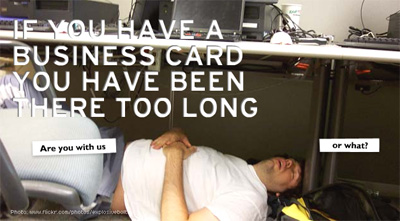
(via Rebecca Kahn) The Icommons mailing list has been discussing another potential Creative Commons enforcement case, this time in Australia. Virgin Mobile Australia has started an advertising campaign called "Are you with us or what?", which has been collecting images from Flickr released under a CC-BY licence, which allows commercial re-use and modification of the licensed work. The images contain comments which could be construed as being insulting and derogatory, as the one displayed here. Needless to say, this has angered some people (displaying my penchant for understatement once again). How dare Virgin Mobile misuse CC licences in such way? Some bloggers have placed the fault squarely in Creative Commons' lap, as they argue that this campaign's subjects were not made to sign model release forms, which I guess is the manner in which Australian modelling agencies deal with image and personality rights.

There is plenty to discuss here. It is true that Creative Commons does not deal in any way with image and/or personality rights. As many pointed out in the mailing list discussion (nod to Andrew Rens), Creative Commons offers copyright licences that do not deal with other areas of the law. While image rights are not something I know a lot about, it is clear that this is an area dealt separately by other type of legislation. One cannot expect the thousands of people uploading images into Flickr and Facebook to ask their subjects for model release forms, or any such nonsense.

It seems like Virgin may be safe in this case with regards to copyright claims, as the images contain a small link to the original photo stream (for example, the one pictured above can be found here). However, there are some other licence elements in which Virgin may be in breach of the terms and conditions. It was also mentioned in the list discussion (nod to Herkko Hietanen) that there is an obligation to place a copy or link to the licence on any modified works, which is not done here. I would also argue that the resulting campaign is being released as a Flash animation, which may (or may not) fall foul of the restrictions against technological protection measures.

Similarly, I believe that Virgin is not exempt of misuse of the subject's other rights. I believe that in Europe there could be a case to be made with regards to Data Protection as the pictures could be used to identify the data subject. It is also clear that the captions could be considered defamatory and/or derogatory, which could be litigated regardless of the copyright case. And there is of course the right of image, wherever that may exist.

While a lot of people oppose non-commercial clauses in Creative Commons, I must say that it is cases like the one I'm describing which proves the point of the popularity of such licence elements. There is now a Flickr group dedicated to collecting the images used in the campaign. One of the comments left in the group's message board pretty much sums it up: "ooh, that sucks. :/ I switched my license a while ago to no commercial use. Glad I did!"

Freedom advocates, take note.

Thursday, July 12, 2007

SCRIPT-ed books for review

SCRIPT-ed is looking for reviewers for three books. These are:

  • Roger Cullis, Patents, Inventions and the Dynamics of Innovation: A Multidisciplinary Study.
  • Charlotte Waelde, Hector MacQueen (eds), Intellectual Property: The Many Faces of the Public Domain.
  • Tarleton Gillespie, Wired Shut: Copyright and the Shape of Digital Culture.
If you're interested, please email Wiebke Abel, our Books Review editor.

Wednesday, July 11, 2007

Virtual lawsuits

Internet news websites have been commenting on a copyright infringement case involving sex toys in Second Life. With spectacular titles like "Sex Toy IP Scandal Rocks Second Life", one would imagine thousands of depressed avatars shocked by the news of a lawsuit involving sex toys. The lawsuit involves something called the "Eros SexGen Platinum Base Unit", a sex toy that only works in Second Life (at this point my imagination decides to take a coffee break). Kevin Alderman, inventor and CEO of the company "making" such devices, has filed a copyright infringement suit in the U.S. District Court in Tampa, against a virtual persona called "Volkov Catteneo", who is apparently selling similar devices.

I will resist the temptation to hypothesise about the type of people who: a) would invent sex toys for exclusive use in a virtual world; b) sell them; c) buy them; d) care enough about the fate of their sex toy to sue someone else for alleged infringement of said device.

Despite the mirth-inducing elements of the suit (and let's face it, this story has "comedy value" written all over it), there could be some interesting legal elements to this. Firstly, there is the copyright claim itself, as I do not envy the judge who will have to decide on the originality of virtual sex devices; perhaps there are not many ways in which one can invent a pixelated toy, I guess that it would depend on the function (there goes my imagination again!) Secondly, what are the implications of suing an avatar? I'm aware that the avatar is just a way to represent a person who will be identified at a later date, but I still find it interesting that the Second Life nickname is the one present on the legal documents.

Alt Text has some great commentary about potential future lawsuits. My favourite is:

"Douglas Anders of Bellefontaine, Ohio, files suit against Thanatog, a warlock from Goldshire, Elwynn Forest, Azeroth, Bloodhoof Server. The suit alleges that "the defendant did knowingly and willfully, without lawful authority, aggro about 30 goblins in the Deadmines, preventing plaintiff from finishing the instance and retrieving the Cape of the Brotherhood, causing mental anguish and loss of wages..."
Given some recent developments, that is not so far-fetched after all...

Update: Ray Corrigan pointed out that I had a Freudian slip, calling it "Second Lice"... nice catch, I think that I may keep calling it that :)

Monday, July 09, 2007

Knock-off Nigel

I guess I'm not the only person to have noticed the ridiculously over-the-top anti-piracy commercials in cinemas. Besides 'Knock-off Nigel', there's the utterly awful crime ad. You know, because pirates are also drug-dealers, arms tradesmen and people smugglers.

Friday, July 06, 2007

CAFTA declared constitutional in Costa Rica

Those following free trade agreements and TRIPS-plus agreements will be familiar with the tortuous approval process of the Dominican Republic and Central American Free Trade Agreement in Costa Rica (DR-CAFTA). While all other signatory states have already approved the agreement, Costa Rica is still in the process of passing it into law due to heavy political opposition. The opposition has been such that President Oscar Arias signed an executive decision allowing a referendum to take place in October 2007 (Decreto del Poder Ejecutivo 33.717 MP).

The Costa Rican press has been reporting on the unconstitutionality action brought by the Defensoría de los Habitantes (a citizen ombudsman), and 17 legislators from several opposition parties. The argument is that the existing text in CAFTA violates several constitutional norms, particularly with regards to the opening of the telecommunications market. The Costa Rican Constitutional Court (Sala IV) has voted to uphold the constitutionality of the agreement 5 votes in favour and 2 against (2007-09469). The Court's reasoning has not been published yet, but the vote has been made available by the press. I will write a brief outline of the analysis as soon as it is published, as this may prove to be an extremely important and historic decision.

This ruling will green-light the referendum. The YES camp is consistently ahead in the polls, with roughly 50% of the voting population in favour of its approval.

Thursday, July 05, 2007

Cybercrime pays... in the UK


I think we could all agree that cybercrime is a growing threat. Online fraud, phishing, viruses, hacking, DDoS, and spam, consumer are increasingly at risk from online security vulnerabilities that could translate in financial loss. What is the UK's response to the threat? "Call your bank".

The Guardian carries a story today on the UK's enforcement reply to cybercrime. Back in April the Association of Chief Police Officers announced that it would not be dealing with financial fraud conducted online, and that enforcement and reporting would have to go to the financial institution directly. The argument behind such move is that apparently, the banking industry is responsible by having credit cards in the first place. Yes, and the copyright industries are responsible for infringement by having music and movies. Lamest excuse for failure to regulate evah!

I'm literally loss for words. It seems like the Luddites have taken over and have decided that there is a vast section of criminal behaviour not worth pursuing. Let the private enterprises handle it! I guess that the only way in which some of these people will notice the Interweb is if they hear that there is cannabis being sold somewhere, or simply utter the word "pedofile" (misspelt on purpose because the correct spelling seems to attract some strange people to the comments section). While online fraud goes unpunished, the only hacker who has seen the sharp end of the law is Mr Gary McKinnon, guilty of hacking into NASA servers looking for aliens. You can get away with stealing credit card numbers, but Buddha forbid you are into aliens. Off to jail for 80 years you go.

2nd rant in two days, must need a holiday.

Wikipedian protesters

(via Luke Razzell) Talking about problems with Wikipedia...


Wednesday, July 04, 2007

Wikiality

Wikipedia is great. However, as a sometimes editor, I'm starting to grow tired of getting involved in endless editing wars with people who are not experts on the subjects. If you don't like a rant, look away now.

I'm perfectly happy with people editing and disagreeing on all sort of subjects in which I may not be well-versed. For example, if I decide to edit an article on Naruto characters, I would be happy for someone else to stamp their anime expertise and authority over mine. However, I have started to realise that there are articles zealously policed by wiki-obsessives who do not want any changes to their pet subjects. I recently experienced this (I won't specify where, as the battle is still being waged), where a specific editor has decided unilaterally that his definition of a criminal offence is the only one possible, and has precluded all other interpretations of that opinion, although it is clear that he lacks the legal credentials to make the distinction.

I am all in favour of the vibrant and democratic nature of the Internet, but this characteristic should not herald the end of specialised knowledge and expertise. There is something positive about an environment that fosters the free examination and discussion of ideas, but to kill-off the expert is to enter a parallel reality where there are no truths and all opinions have the same weight. This is, I believe, what has allowed patently untrue memes such as global warming denialism and creationism to survive. When a home-schooled teenager from Nebraska feels that he has the same right to talk about evolution than an experienced biologist, then there is something wrong with the way in which we look at knowledge. Do not get me wrong, if I am wrong and a pimply teenager from Nebraska points it out to me, I will still be as wrong as if it was pointed out by a peer. However, experience and expertise count for something. I would not want an amateur to operate on me, so why would anyone wish to get legal opinions from amateurs?

Rant over. I'm now off to Wikipedia to wage a guerilla war against the home-schooled pimply teenagers of the world.

Monday, July 02, 2007

Creative Commons licence statistics

The Creative Commons blog has published some of the latest licence usage statistics. Mike Linksvayer and Giorgios Cheliotis have made public some of the statistics presented at the iSummit, which provide a lot of tasty food for thought for licence geeks everywhere.

The data comes with a lot of caveats, particularly because there is a large discrepancy of results depending on the search engine used. Google produces results that seem excessively high, while Yahoo's seem low. One of the ways in which one can get some reliable data is to use site-specific statistics: there are 38.7 million images in Flickr released under a CC licence alone. Still, one of the results that can be seen across the board is the licence distribution. As was the case with previous statistical data, the most restrictive licences are undoubtedly the most popular ones, as seen in the graphic below:

(click to enlarge)

This may come as a surprise to some who advocate the use of less restrictive "free" licences, but I think that it makes a lot of sense. Most people (myself included) have no problems with wide non-commercial dissemination of their data, but there seems to be something unfair in someone profiting from your work when you have decided to make it available to the public.

Kudos to Mike and Giorgios for the excellent data, it is time to start getting to grips with it and we should analyse its implications.

Saturday, June 30, 2007

GPL v3 released


As I mentioned earlier this week, the GPL version three is finally out. Richard Stallman read a statement yesterday announcing the much-awaited launch, which will undoubtedly be met with both trepidation and caution in software development circles.

The text will maintain some of the more controversial features present in the drafts. Particularly, one of the most controversial additions is the restriction on some forms of technological protection measures by avoiding what is called the tivoization of software. This means that modified software is released under the GPL and the source code is made available to the public, but there are hardware restrictions on what software can be run in a device, just as is the case with the TiVo players. This addition has been so controversial that Linus Torvalds has stated repeatedly that the Linux kernel will not be released under the GPL v3.

Similarly, the final text has kept language designed to punish the patent licensing agreement between Novell and Microsoft. The original text in the last draft was modified however to make it less punishing. The original draft read:

"You may not convey a covered work if you are a party to an arrangement with a third party that is in the business of distributing software, under which you make payment to the third party based on the extent of your activity of conveying the work, and under which the third party grants, to any of the parties who would receive the covered work from you, a patent license (a) in connection with copies of the covered work conveyed by you, and/or copies made from those, or (b) primarily for and in connection with specific products or compilations that contain the covered work, which license does not cover, prohibits the exercise of, or is conditioned on the non-exercise of any of the rights that are specifically granted to recipients of the covered work under this License [...]"
The final version however, has been watered-down a bit, so it now reads:
"If you convey a covered work, knowingly relying on a patent license, and the Corresponding Source of the work is not available for anyone to copy, free of charge and under the terms of this License, through a publicly available network server or other readily accessible means, then you must either (1) cause the Corresponding Source to be so available, or (2) arrange to deprive yourself of the benefit of the patent license for this particular work, or (3) arrange, in a manner consistent with the requirements of this License, to extend the patent license to downstream recipients."
This is a good move by the FSF, as the previous text was not only rather awkward, but extremely specific. Something that has been bothering me about v3 is that, while it claims to be the constitutional norm regulating the Free Software movement, the actual language tended to have very narrow application. GPL v3 uses some clunky legal language to tackle technologies and applications that annoy Stallman, but such language applies only to singular cases. There's a reason why constitutions are usually drafted in the broadest possible terms, they are supposed to apply to a wide variety of situations. Regulating for specifics will usually have nefarious results.

In the end, I hope that the amendments to the text were made because the draft was unworkable, and not as a result of threats made by Microsoft about Linux patent infringement.

Personally, the bad news about the release is that I will have to write a new article on GPL v3. So much to do, so little time!

Friday, June 29, 2007

GikII 2

In September 2006, panGloss and yours truly organised the first GikII workshop, a tremendously entertaining gathering of like-minded people willing to discuss the interface between geek culture and the law. The resulting workshop provided a look at the virtual personality of avatars; legal aspects of fandom, anime and even hentai; privacy in the novels of Harry Potter; technophobia as a drive for regulation; the ecological impact of computing; and more mentions to the three laws of robotics than you could ever expect in a legal workshop.

We are officially announcing GikII 2 for September 19 2007 at University College London. The cost of the workshop is £30 GBP ($326 Croatian Kuna). There should be an online registration form shortly. Because we're trying to be all Web 2.0, you can also join the group on Facebook, which already has 19 members.

And you know what they say, the geek shall inherit the earth. Did I get that right?

Thursday, June 28, 2007

Second Life hype over?

Terra Nova reports on the potential business migration from Second Life, due in part to its "clunky technology". Some of the early comers in the virtual market, such as Well Fargo, have left and set up their virtual tent elsewhere.

I agree with TN about the fact that this is an expected backlash, but I also would like to add that it is a welcome one. It may be just me, but I have always been particularly underwhelmed by Second Life, it is to me nothing more than a glorified chatroom, and I tend to get tired of the time it gets in technology news reports and podcasts. The problem I see with it is that it has become one of those technologies that people who are not into technology are supposed to know, so in order to sound clued-in and updated, it is brought out as an example of the virtual economy. It also makes for nice and trendy subject for lazy journalists who want to convey trendy news from the wild virtual frontiers without making a lot of effort (for example, reports about virtual tours).

The backlash will perhaps see the end of the virtual.com bubble, but that does not mean that virtual worlds are not useful. Second Life maybe over-hyped, but there's much more out there that requires analysis.

In the end, what good is a virtual world if you cannot blow things up properly?

Wednesday, June 27, 2007

Eben Moglen in Edinburgh


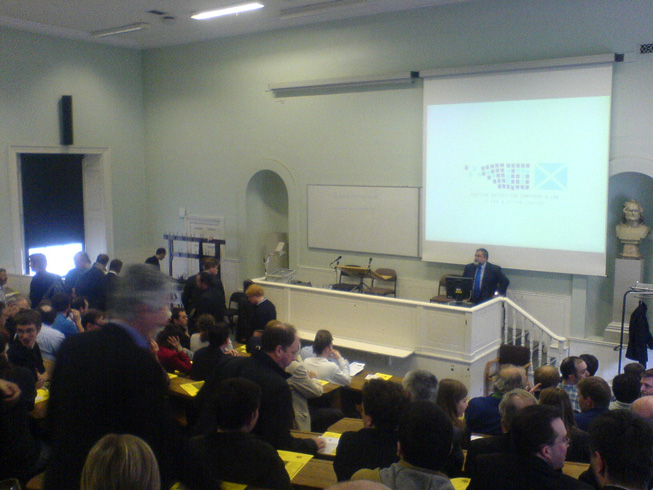
Last night I attended Professor Eben Moglen's lecture at the School of Law at the University of Edinburgh, organised by the Scottish branch of the Society for Computer and Law. The first thing I noticed was that that the audience present in the lecture theatre was starkly divided between the suits and the t-shirts, a shallow observation perhaps, but one that conveys the profound difference of the way one looks at software. As I was explaining to someone before the talk who was unfamiliar with the topic, the t-shirts were there because they believe in free software, while some of the suits were there because they cannot afford to ignore free software and free licensing. The talk is about the GPL version 3.

The lecture started with a compelling look at the ethical imperatives in the sharing of knowledge, "we are one generation away from the free spread of knowledge" through digital means with little or no replication cost. Money is still needed to represent and create knowledge, but such things are becoming cheaper to reproduce. If it is possible to give to each human being anything of utility or beauty at no or little cost, shouldn't we? In the analog economy, cost, labour and the expense of creation generated an economy of property, economists explained why the prior system worked, and why it was wrong. However, nowadays, ignorance and deprivation are preventable, so why do they persist?

Richard Stallman began his movement with a clear moral statement. He had a moral insight regarding software, about rights to use, understand and know about the software. The result of such ideals is the Free Software Foundation. It allows software to get done, it also empowers communities to share their work. GPL v1 and v2 were drafted and released before 1991, but they are just the starting point of the philosophies expounded. The initial rules for sharing assumed that copyright only had to be considered, and therefore the GPL v2 only takes copyright law into account through the inception of copyleft and other legal hacks. But the change brought about by proprietary software has changed the environment, these systems became monopolies, and as every monopoly in history, it creates lousy products at high prices.

Such evolution has required the re-drafting of the GPL, the fundamental legal mechanisms require an update, which has been done by a global process of assembling a physical and virtual community for such purposes. Moglen keeps referring to this as a legislative process, which is an interesting choice of words, but it is precisely intended, as he has been known to have made statements that the GPL is the global norm of the free software movement. The legislative process has been achieved by allowing the community to work freely with itself. The consultation included hackers, industry, lawyers and users. A lot of the useless legislative behaviour was skipped, such as people trying to buy, coerce or scare Stallman. Professor Moglen admitted that the end result is a bit too long and a bit too complex, which is to be expected of such a long consultation.

A persuasive discourse follows on the creation of new law, with some clever snide remarks at Civil Law systems maintaining Roman Law institutions to this day ("norms that were created to sustain 1st century Mediterranean commerce"), and proposes the American Uniform Commercial Code (UCC) as an example of vigorous new norm-making, and that the new GPL is very much akin to the new UCC. But the GPL goes beyond that, it is law-making by the common man, by the community, by the people, in a way that is not done any more. There is a veiled attack on the lawyers in the room by the mention of paid spies (ouch!). There is some mention of the Web 2.0 revolution, that the people's empowerment may herald a new political era. The GPL improved copyright law, which was the law of the publisher. Free software is the law of the creator. The fate of the monopoly will be decided in the next few weeks and months, and the talk ends with rhetoric that resembles "we shall prevail" language.

To me, the other big news from the lecture is that the GPL v3 consensus draft will be released on Friday!

Questions: A question about the interaction between v2 an v3 brings about the quote of the night: "The moment we released the first GPL version 3 draft, version 2 became perfect". He acknowledges that some developers will decide to stay with version 2 (explicitly acknowledging Linus Torvalds very outspoken refusal to migrate), but that this will be a question for each project.

Yours truly then asked the following question: "One of the most controversial elements of the draft version has been the inclusion of technological protection measures in the draft. Seeing that DRMs may fall by their own weight and by their defective nature, wouldn't it have been wiser not to include them?" Moglen answers that having the debate itself was useful, he agrees that TPMs are on the way out, but he argues that this is in part due to the fact that they were included in the draft in the first place. I see his point that the discussion was useful, but I'm not at all sure that DRMs would not be under siege as they are if they had not been mentioned in the proposed text. Hubris anyone?

Media: There will be a video of the talk available from here. Watch this space.

Verdict: The talk was about moral imperatives, and I see why the argument is so persuasive to those who have heard it before. I may be misreading the crowd, but there was a respectful hush throughout. Moglen is a powerful speaker, make no mistake.

Tuesday, June 26, 2007

... and the winner is ....


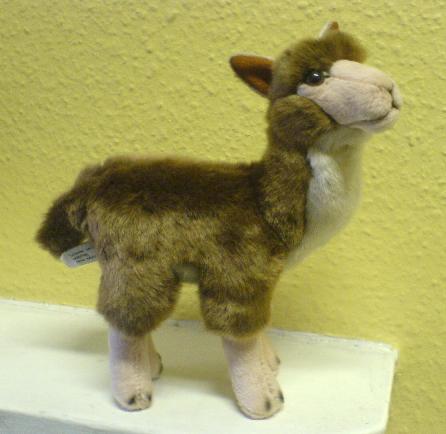
I thought that the best judge for the llama competition had to be Linda's daughter Bethany, who chose the llama in the first place. The winner is Lilian (funny, I didn't think it was female).

In an executive decision, I've decided to call it Lillian to differentiate it with the inimitable original.

Monday, June 25, 2007

New aggregated blog

As part of the synergy generated in the iCommons summit, several Latin American leads suggested the creation of a new aggregated blog bringing together voices talking about open content, CC and other related topics. Thanks to Katitza Rodríguez from CC-Peru we now have a new blog. If you would like to aggregate your content to the blog, please send me an email.

Saturday, June 23, 2007

Friday, June 22, 2007

EMI's sales soar without DRM


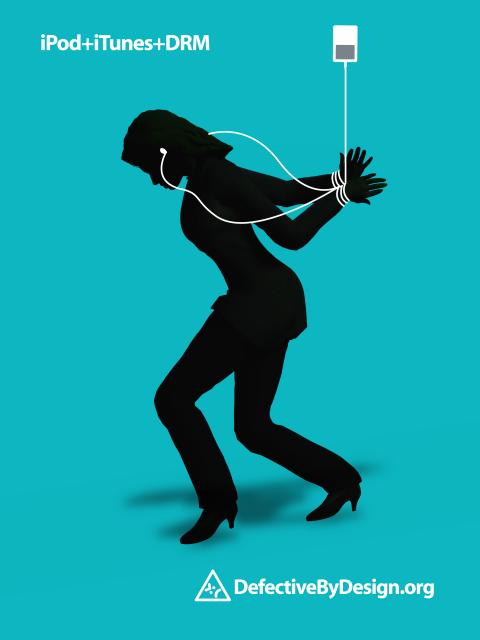
There seems to be nothing better than the content and smug feeling you get by saying "we told you so". Well, we did, and it seems clear that the technical protection measure experiment may have finally crashed (henceforth DRM). Several sites report what every person even mildly clued-in to the music scene already knew, that EMI's music has experienced noticeable gains with iTunes Plus service.

Common sense prevails (I'm sceptical about the argument from common sense, but please indulge me this time). Most people who love music want, at one point in their lives, to be able to reward those artists that make them feel good. This reward can take all sorts of shapes, from buying a CD to buying the lead guitarist a drink when they are at the bar after a gig, and patting them in the back and saying "well done mate". DRM is not one of those natural and moral reward mechanisms. DRM sends a clear message to the fan, it says "we think you're a thief, we only want your money, go away". We want to do all sorts of things with the music, including sharing it with friends and family from time to time. DRM stops us from doing that.

I will continue to buy DRM-free music from iTunes, and if enough of us do, I think that other companies may follow.

Thursday, June 21, 2007

Name the llama shortlist

Thanks to all who sent in entries. There are three short-listed entries:

  • Lilian
  • Dougal
  • Bruno
The winner shall be announced shortly, I'm trying to negotiate a judge.

Wednesday, June 20, 2007

The life of a Chinese gold farmer

(via Colin Miller) As part of my growing interest in virtual economies, here is an eye-opening look at the gold of Chinese gold farmers from Julian Dibbell, including some video footage of their virtual sweat shops (you can sort of smell that the term could be quite literal as well).

Dibbell nails the point that this is probably little different to the conditions found in other sweat shops in China, but that the product still shocks us because these people are hired to play games and produce virtual goods with real monetary value.

I know that this may be a shallow point to make (nobody has ever accused me of depth to the best of my knowledge), but I wonder if there's anyone out there willing to pay me for the many hours spent gaming in front of my computer?

Peer to Patent live

The amazing Peer to Patent system is now live. The system is the creation of New York Law School Professor Beth Noveck, and it is an extremely interesting system of involving the online community on the review of patent claims in pending patent applications.

I believe this is an interesting exercise for many reasons, and it will hopefully help in helping the USPTO in getting its act together and cleaning up its woeful patent quality record.

Tuesday, June 19, 2007

iSummit in pictures

Here's my iSummit in pictures (check out the iCommons Flickr stream):


Not a bad place to hold a conference


Badges? We don't need no stinkin' badges!
(courtesy CreativeCommoners)


So, THAT is how he does it!
(courtesy Joi Ito)


Snowclones are the new black
(courtesy Mathias Klang)


Tessi disagrees with me about the quality of the talk


Two children down, about two billion to go


I haven't been this excited since I bought my Mazinger t-shirt!
(courtesy Joi Ito)

Monday, June 18, 2007

Free Radio

(photo courtesy of Becky Hogge)

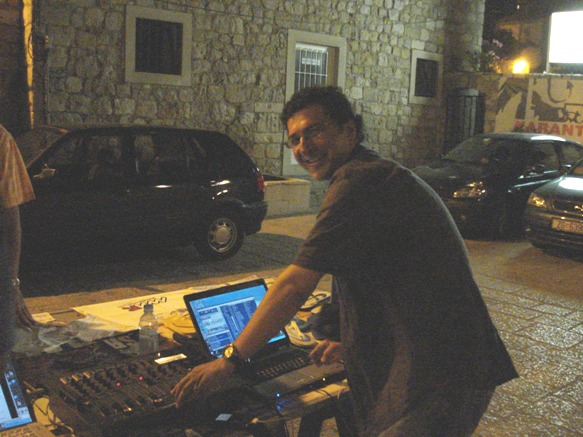
One of the coolest activities I managed to do during the summit (besides annoying random people with rants about contract law) was to participate in the Free Radio broadcast. As you can see, it is a radio broadcasting outside one of the venues. I managed to play a Latin set (Fabulosos Cadillacs, Molotov, Juanes and Manu Chao) and as you can see from the picture, the crowds loved it... well they were gathered in the picture's blind side, yeah, they were, truly!

Creative Commons movement

A common theme running through the summit has been the question of the nature of the Creative Commons organisation. Is it a movement? And if so, what is its philosophy? Ideology? Is it political?

I think that these are important questions, and while I believe clearly that this is a movement, I tend to be rather more sceptical about its political and ideological implications. The fact that "we" are now back in the FSF's good books (at least a couple of the licences are), leads me to believe that there is a united front on free or open licences. I would claim that there is clearly a wider philosophical movement dedicated to the generation of digital conservation spaces protected through legal instruments enforceable in court. However, the movement is not a legal movement as such, it simply uses copyright licences as an implementation tool.

This is why the reason why the underlying philosophy is so important. Yochai Benkler agrees that there is a counter-movement exemplified by an opposition to IP maximalism, which is clearly opposed to software patents, increased copyright terms, criminalisation of infringement, new sui generis rights, and other important issues.

Those are worthy causes, but does joining a cause make one a movement? I keep thinking that we need some strong direction, a manifesto for the digital age.

Off to catch a plane now.

Saturday, June 16, 2007

Poker

Venerable (I sort of hate that word, but I don't know how else to describe him) Harvard Professot Charlie Nesson gave an excellent talk on poker and democracy. I'm sure this will be one of those events which will be part of the many excellent talks we have been seeing in the last few days, particularly because Professor Nesson is here after an operation, so we had to go to his hotel and had a session in a 5 star hotel lounge talkinga bout the online poker ban and the law.

Professor Nesson has a theory that poker is a game that teaches about life, about thinking for oneself, independent thought and strategic thinking on specific situations. It is relevant for the law because it is not about lying, but the minor deception involved in bluffing is all about a recognised excercise of risk. The ban on poker is tantamount to an attack on democracy (he did not put it in those terms, but it was implied on the discourse).

Some interesting discussion followed, talking about the benefit of the metaphor, about the specific developments on the American online gambling ban, and about regulation of such practices.

The future of the Commons

Last night Larry Lessig and Jonathan Zittrain presented what I'm sure will become a legendary session on the future of content and the future of the Commons.

Jonathan Zittrain gave a thoroughly enjoyable presentation related to his work on the Web's famous network vulnerability, and what it means for the future of the internet and for the future delivery of content. Zittrain's final points related to the fact that there appears to be a devolution of content provision by technologies that are more analogous to the old BBS services. Similarly, there is a growth in the creation of gated sharing communities instead of the wide and vastly open sharing P2P networks. I was happy to see this expressed in such a manner, I have personally believed that the next generation of "sharing" has been coming back to what I call the "tree house" model, where membership is by invitation only.

Zittrain's presentation was amazing, but something kept nagging me about it, and when I got back to the hotel it dawned on me that it was not specific to the talk, but to the summit in general. There has been a certain American-centric slant on the summit. We have been hearing a lot of American speakers, talking about American practices, American technologies, American websites, and American devices. There is also a certain absence of recognition that other people in the world do things differently. For example, in Africa the devices spoken about are practically unheard of, while the mobile rules the waves. There is also a bit of over-exposition of Western and American cyber-culture and American law. We need to recognise that this is a global summit, and that people do things differently in other places (the exception has been Jimmy Wales, who presented a candid and honest look at global educational projects).

Lessig's talk was a tour de force. I have seen him speak several times, and I honestly thought that I had become used to his presentation style, I didn't think that he could amaze me the way he did last night. The talk was frank, forceful and honest, but most importantly, it was passionate. Lessig has announced that he will be taking a lower-key role, and that it is up to us, the members of the movement to take the brunt of the responsibility in promoting it. He received a standing ovation, and there was a certain buzz after it was over, I think that people were aware that we had witnessed something different.

Jamie Boyle is announcing CC Learn, and Yochai Benkler will give his keynote tonight. I can hardly wait.

On the social front, I went back to the hotel early. Too much international liquor on Thursday night!

Friday, June 15, 2007

F.U.D. from Chile

On the same day that friend and colleague Claudio Ruiz has given me an excellent t-shirt and stickers from the Creative Commons enforcement case in Chile (pictured), I have read some F.U.D. from that same country. It's amazing how some people see CC as a fundamental challenge against proprietary models and have to resort to all sort of methods to raise fear and uncertainty about its adoption.

Thursday, June 14, 2007

Legal Day


We've had some excellent discussion on the first day of the conference, which has been an unofficial start before the summit fully begins tomorrow (in other words, licence geeks get together and throw around ideas).

The first session was an extremely useful description from Lucie Gibault and Paul Keller of the re-licensing issue experience in the Netherlands, which has already ported the 3.0 licences into a Dutch version (but has not been launched yet). We received a set of instructions, tips and recommendations to project and legal leads on how to incorporate the v3.0 changes. Mike Linksvayer also presented instructions and updates on the technical aspects of the licence.

The second session brought an amazing paper from Giorgios Cheliotis, who presented a statistical analysis of the actual licence usage, particularly the ported licences. I will link to the paper when I have access to it. Mike Linksvayer also gave a great run-through some of the statistics, made relevant by the fact that national jurisdictions are not particularly popular, which places things into perspective.

The third session started some of the fireworks. I presented on enforcement, one of my favourite topics, where I spoke about contract formation problems. I was pretty intimidated by the fact that I was speaking after Lessig, who is always his amazing self. To me, the most important piece of news of the entire day was that Creative Commons is now back in the list of "Free Licences" published by the FSF. Comments on this session were provided by Lawrence Liang and Ronaldo Lemos.

Mireille van Eechoud presented an excellent introduction to International Private Law issues, which prompted a lively discussion on whether CC is a contract or a licence. This generated a clear split between common law and civil law systems, with all of us from civil or mixed jurisdictions stating that of course the licences are contracts, with the common law systems disagreeing. Most of us walked away like Galileo, muttering "but it is a contract!"

Paul Keller and Melanie Dulong de Rosnay gave their now yearly report on collecting societies, followed by a very brave David Uwemedimo from CISAC, who presented a very balanced view on where collecting societies stand with regards to CC. I'm sympathetic to people who present to a hostile audience, so I think David did quite well, although I disagreed strongly with his view of creativity. One of my favourite memes is about how the Internet and user-generated content is the result of new sharing ethics online, where CC would be the licence of choice for those at the end of the Long Tail. To think of creators as only those who make a profit or make a living of their creators is entirely wrong in my opinion. We are all creators, even those of us who make their poor musings on their pyjamas every morning.

On the social front we had an excellent night where everyone brought liquor from their countries of origin, which means I'm not feeling at my best today (and from the comments received this morning, I don't look too good either).

Update: Carolina Botero made a very complete and competent report (in Spanish).

Live from Dubrovnik

And the summit begins with the legal day, there will be plenty of discussion on all licensing legal topics, so today is lawyer's day.

The great thing about annual conferences is that you get to see again your friends from last year, and in the words of one of the organisers, you get to see how much people have aged in the last couple of years (and undoubtedly, people get to notice how much I've aged).

Tuesday, June 12, 2007

Croatia

I'm off to Croatia to the iSummit '07. If last year's Rio Summit is anything to go by, we can expect lively discussion, excellent presentations and the gathering of a truly multinational audience. I hope to blog the event, so expect regular updates, wi-fi permitting of course.

Torrentspy ordered to track visitors

The popular torrent site TorrentSpy has been ordered by a California court to track its visitors as part of a suit initiated by the MPAA (WARNNG: TorrentSpy contains pictures of bouncy females in various stages of clothing). According to TorrentSpy's site:

"We have spent the last year challenging their relentless campaign against the 1st Amendment and personal privacy laws Worldwide. We have succeeded in delaying the court order to turn on logs while we appeal it. TorrentSpy will not create logs of what you do on the site without your consent."
It is interesting that the suit against TorrentSpy is about secondary infringement, it is clear that the industry cannot make the case that Torrent tracking sites are the direct infringers. It may also come about making items available to the public via links to trackers, but this will be open to debate. I have placed a copy of the magistrate's order here (courtesy of Fred von Lohmann). This will be definitely one to keep an eye on.

Saturday, June 09, 2007

Name that llama

Former student Linda Wilbraham has sent us a mascot llama (pictured). Colleagues at the office have suggested that it needs a name, so I have decided to initiate a competition to name that llama. You can either write a comment with your name and the suggested llama name, or send an email to technollama at gmail.com. The deadline is June 20th.

Three entries will be short-listed by a third party (I have yet to decide who will make the final decision). The winning entry will receive a £30 GBP Amazon Gift Certificate (or equivalent in your local currency); or a £40 GBP donation to the charity of your choice (I cater for both the selfish and the selfless).

Get creative and make your suggestions soon!

Friday, June 08, 2007

Class-action suit for virtual gold farming

(via Terra Nova) I missed this one during my travels, but I find it such a great story. A Florida law firm has initiated a class-action suit against Internet Gaming Entertainment (IGE), a gold farming company based in Hong Kong and Delaware. According to the plaintiff, one Mr Antonio Hernández, he "spent hundreds of hours" playing World of Warcraft, spent $100 USD on the game and game expansion, and spent $15 USD per month on subscription fees. According to Mr Fernandez, this constitutes a substantial investment on his part on the game and its mechanics.

His argument is that IGE and other gold farmers act against the terms and conditions specified in WoW's EULA and Terms of Use, which specify that the user may not sell items for real money outside of the virtual world. IGE uses gold farmers from developing countries, who are paid to collect the gold, which IGE will then sell for "real" currency. The current exchange rate for 11,000 gold in WoW is $ $1,425 USD. Yes, you read correctly, more than a thousand dollars. Similarly, a Level 60 Female Night Elf Hunter with weapons and mount is sold for $279.99 USD in a European server.

Similarly, the plaintiff claims that IGE has sold virtual gold for millions of dollars, and that the amount of gold on sale is such that it creates a tangible economic damage to "honest" players because it devalues the currency and their own their efforts, it reduces the amount of virtual goods available to them, and it also places their characters at a disadvantage in PvP, because they are not willing to purchase powerful items through the farming system.

Although I find these claims spurious, there may be something to be said for the economic effects of farming. If resource drops are limited, as claimed by the plaintiff, then farming would certainly have severe economic consequences in the virtual world. However, if item and loot drops are instanced per kill (as in City of Heroes), it would not matter how many people are farming resources, you would all have a chance to get a drop because the system works on percentages. In City of Heores you are more likely to receive rare items by killing bosses than minions, and some special missions are guaranteed to produce a rare recipe upon completion.

My question is, what sort of gamer would purchase virtual gold? Where's the fun in that?

Thursday, June 07, 2007

The Genesis of We7

The BBC reports on a new download service started by Peter Gabriel called We7 (wet in l337, geddit?) The service allows free downloads but includes a small advert clip to each songs of up to 10 seconds.

This seems like a good effort, but I'm not sure about its prospects. It is further evidence that the smarter parts of the music industry have realised that the business models have changed.

Monday, June 04, 2007

File-sharing promotes terrorism

The International Federation of the Phonographic Industry (IFPI) has published music piracy's "10 inconvenient truths". Jumping on about three or four bandwagons at the same time must be taxing for the good folks at the IFPI, but I digress.

The list is (with some fisking added):

"1. Pirate Bay, one of the flagships of the anti-copyright movement, makes thousands of euros from advertising on its site, while maintaining its anti-establishment “free music” rhetoric."
Not true, PirateBay does not promote free music, they promote self-serving piracy. The IFPI should understand that people are sophisticated enough to know that pirates are selfish, back-stabbing drunkards who say "argh" a lot. We've all seen Pirates of the Caribbean!

"2. Allofmp3.com, the well-known Russian website, has not been licensed by a single IFPI member, has been disowned by right holder groups worldwide and is facing criminal proceedings in Russia."
In other breaking news, water is wet and snow is cold...

" 3. Organised criminal gangs and even terrorist groups use the sale of counterfeit CDs to raise revenue and launder money."
From P2P, to dodgy Russian sites, to organised crime and terrorism in three steps. That must be some sort of record. Remember kids, when you download songs, you assist Osama Bin Laden.

" 4. Illegal file-sharers don’t care whether the copyright infringing work they distribute is from a major or independent label."
True most of the times, although in my experience music fans are sophisticated enough to support struggling bands they like.

" 5. Reduced revenues for record companies mean less money available to take a risk on “underground” artists and more inclination to invest in “bankers” like American Idol stars."
The music industry has never really been aware of irony, but it does strike me particularly lovely that here it complains about its own bias and emphasis on easy-money, while asking for sympathy.

" 6. ISPs often advertise music as a benefit of signing up to their service, but facilitate the illegal swapping on copyright infringing music on a grand scale."
This one sticks out in this list. It is not a dig directed against P2P and file-sharers, but it's part of an ongoing intermediary liability war. Pangloss should have something to say about that.

"7. The anti-copyright movement does not create jobs, exports, tax revenues and economic growth – it largely consists of people pontificating on a commercial world about which they know little."
If all your efforts to stop file-sharing fail (the pleas from artists, the angry lawsuits, the DRM), then revert to a level of right-wing rhetoric that would fit quite well in Fox News. Only The Industry creates jobs, all of you pinko-commie hippies do not generate anything for the economy. And you're stupid.

"8. Piracy is not caused by poverty. Professor Zhang of Nanjing University found the Chinese citizens who bought pirate products were mainly middle or higher income earners."
Look at the nice straw man being erected. See it knocked down. This is not a logical fallacy for nothing.

"9. Most people know it is wrong to file-share copyright infringing material but won't stop till the law makes them, according to a recent study by the Australian anti-piracy group MIPI."
So, we'll just sue you into oblivion until you comply! We have lawyers and we're not afraid to use them!

"10. P2P networks are not hotbeds for discovering new music. It is popular music that is illegally file-shared most frequently."
Could it be because new music is *gasp* often shared for free?

All in all, a poor showing for the IFPI, even below their stridently inadequate standards.

Sunday, June 03, 2007

AACS keys cracked. Again.


Nothing demonstrates the futility of DRMs arms like the HD-DVD fiasco. Ed Felten has posted about the latest crack on the latest patch of the failing security system used to protect high definition discs. After the now infamous key number was cracked last month and publicised last month, the solution has been to blacklist some keys and update players with the blacklist. But as soon as one key is blacklisted, another crack is sure to follow.

The problem for AACS and similar technological protection measure providers is that they are fighting a hopeless arms race against hackers, regardless of what anti-circumvention legislation says. The Internet community will go to great lengths to publicise anything that seems to be an act of "repression", including a person tattooing the AACS key on himself.

Yes, the Interwebs is a strange place full of whacky people willing to tattoo circumvention of effective techological measures on themselves. The war is lost, change!

By the way, DRM free music available on iTunes! I've purchased my first DRM-free iTunes album, although apparently the music is tagged with the purchaser's name and email.