Wednesday, May 03, 2006

Virtual money in the real world


Complicated publicity stunt or new economic model? As previously reported, there is growing economic importance in virtual worlds and MMORPGs. Players make virtual money from selling loot and goods within game. The in-game economics can be complex and involve all sorts of new assumptions about value, and warrant studies on the phenomenon.

The next logical step for the growing online economy is to make a jump from virtual value into the real markets. Online players can acquire goods and currency from the game, and then these goods can be converted into "real" money via auction sites or specialised sellers. There is enough of a market that it has prompted "farming" of experience and items by virtual sweatshops in developing countries.

Now the game Project Entropia has gone one step further. Following a similar model to Second Life, the game can be downloaded and played for free, but you can only experience certain aspects of the game by spending online currency, and the easiest way of doing this is to purchase credits and online property with "real" money. People have spent up to $100,000 US Dollars (USD) for online property. The game allows advertising and selling of real world services, such as videos and music. But what makes Project Entropia different is that you can now obtain a cashcard to withdraw your online credit and spend it in real life! With the exchange rate running at 10 Project Entropia Dollars (PEDs) to 1 USD, this has real economic value. The game gives something called a PED card, which in theory can be used at ATMs around the world.

I would like to see details of the credit agreement. I have noticed that Mindark (the makers of the game) is a Swedish company, and that their end-user agreement is subject to Swedish law. Will Mindark have to apply to be considered an electronic money institution according to European Law?

Tuesday, May 02, 2006

Open standards, open source and open innovation

I have finished reading a report by the Committee for Economic Development, which has membership from representatives from IBM, GE and Citigroup (not precisely a group of leftie pinko liberals). Their report is entitled Open Standards, Open Source, and Open Innovation: Harnessing the Benefits of Openness. The report is considerably in favour of open standards in the information and communication technology field. They point out that open standards have proven themselves, with the largest and most important example being the Internet. "Closed" proprietary standards benefit a few and increase costs of entry into the market. The report is also in favour of open source software.

To me the most interesting concept is that of open innovation. This is not only software, but any sort of innovative process that operates by peer-development and online non-proprietary collaboration. The vast range of resources available online, be it Wikipedia, open access, open science, open courseware, provide a new collaborative environment that fosters innovation. The report recommends that such efforts should be publicly funded, but more importantly, they call for a limit to stronger IP protection. They say that "...the Council recommends that any legislation or regulation regarding intellectual property rights be weighed with a presumption against the granting of new rights. The burden of proof should be on proponents of new rights to demonstrate with rigorous analysis the necessity of such an extension, because of the benefits to society of further innovation through greater access to technology."

How refreshing.

Monday, May 01, 2006

Blogging for fun and promotion

(via Legal Theory Blog). I have been reading some of the reports by Lawrence Solum from the symposium Bloggership: How Blogs are Transforming Legal Scholarship from Harvard's Berkman Centre.

It seems like this was a very successful event, with an impressive arrange of thought-provoking papers about academy, lawyering and blogs. I have been reading Solum's excellent paper Blogging and the Transformation of Legal Scholarship, and I thoroughly agree that blogging has the potential to change the way in which legal research is done. American academics are definitely more open to the interaction between Google Scholar, blogs and SSRN to bring about a much more vibrant and updated type of scholarship. Here in the UK, legal and academic blogs seem to be the realm of a determined minority, while on the other side of the Atlantic you cannot be a cyber-professor if you don't have a blog.

Another paper that caught my eye is Blogging While Untenured and Other Extreme Sports by Christine Hurt and Tung Yin. Loads of fun, but it has a serious point. Blogging is a worthwhile effort for researchers, particularly if you blog in the same area in which you are researching. It has several advantages, such as finding out the latest legal developments as they take place, but it also serves as a networking tool. Having had some few invitations to give talks based on people stumbling this blog, I have to agree about the possibilities.

However, how many opportunities have I missed precisely because somebody read my blog?

Firefox awards fan videos

How do you promote an open source browser if you have no money for glitzy marketing? Organise a competition and let the fan's originality do the job. Firefox has awarded fan videos entered into their Flick competition. First prize went for Daredevil, an ad about a surfing 12 year-old. The second prize went to the popular "Wheee!"

By the way, the thrid browser is Safari, the OS X browser based on Konqueror code.

Friday, April 28, 2006

Creative Commons: 3, Collecting Agencies: 0

(Via Carolina Botero) Spanish courts have delivered the third ruling in favour of Creative Commons (more accurately, copyleft licences in general) and against collecting agencies. The Spanish music collecting agency, the SGAE, has just lost another case brought against a bar for not paying licence fees. The previous cases can be found in Spanish here and here.

The main point about the rulings is that the judges have been sceptical about the claim from the SGAE that they represent the musicians being played in the bars subject of the demands. In each of the cases, the respondents have provided evidence that they play music licensed through Creative Commons or other copyleft licences (I should point out that not all CC licences are copyleft).

It seems to me that the SGAE is in some problems, but in my opinion they are largely self-imposed. If you are going to sue entertainment locales in order to extract every drop of profit from royalties, you should at least make sure that they are playing music from bands that you represent.

Thursday, April 27, 2006

New Benkler book and interview

Christian Ahlert from Open Business has informed us that Yochai Benkler, professor of law at Yale, has given an interview to their website about his new book called The Wealth of Networks, which is online offered through a Creative Commons licence. Interestingly, the online version of the book online is in a wiki, so I guess that it can be edited by everyone. You can still buy the book or download the PDF.

This is innovative, and brave.

Update: For an interesting inside at how publishers make profit and loss decisions, see this enlightening blog entry.

Wednesday, April 26, 2006

Virtual PowerPoint

I was not present in the virtual presentation in Second Life by Mia Garlick (sorry, Mia Wombat). It was too early on Saturday morning my time, but it seems like it was a fun event. There is a report at the Creative Commons blog and another one here (including pictures of an unidentified alien).

I find the possibilities of using virtual environments to deliver presentations intriguing. As I mentioned a couple of days ago, I will deliver a lecture today in a video-conference with Costa Rica to celebrate the World Intellectual Property Day, although I find the video-conference key-note format rather constraining. I like to get feedback from the audience, and I'm not sure if this is possible while faced with a camera and a screen. What would be the effect of going to Second Life and giving the presentation there?

Well, at least they haven't invented virtual tomatoes yet.

Tuesday, April 25, 2006

The Daily Mail picnic

The Daily Mail picnic features sexy goats, crooked penguins and terrorist dogs intent on blow things up, all dancing to the catchy tunes of a singing sheep. It only lacks a singing llama.

Yes, the internet is the source of all evil known today, full of paedophiles, Nigerian generals and Spanish lotteries. Do as the sheep says and "stay in and read the Daily Mail". For those who don't know what the Daily Mail is like, have a look at Daily Mail Watch (full of comedic value).

Monday, April 24, 2006

Creative Commons: publishing paradigm?

(The author apologises in advance for the gratuitous use of the word "paradigm"). I have been looking at the use of Creative Commons by businesses for a video-conference that I'll be involved in this week. One of the most intriguing potential uses of CC is in to revolutionise the publishing industry. I am not talking of open access journals and blogging, but traditional book publishing.

Could publishers become a thing of the past? Have we all become our own publishers? There are people who are happy to forego the intermediaries and publish directly online using CC (Ariel Vercelli in Argentina has been doing just that). Others use CC and some form of traditional publishing, such as Cory Doctorow. Then there are places like Lulu.com that provide printing on demand, and are certainly compatible with CC.

While researching on this topic, I found a very astute comment from Neal Stephenson, who is one of my favourite writers. This is a 2004 interview in Slashdot. Talking about CC and whether new publishing models make season, Stephenson says:

"Publishing is a very ancient and crafty industry that existed and flourished before the idea of copyright even existed. When copyright came into existence, the publishing industry dealt with it and moved on. My suspicion is that everything that's been going on lately will amount to a sort of fire drill that will force publishing to scurry around and make some new arrangements so that they can get back to making money for themselves and for authors.

You can use the brick-and-mortar bookstore as a way to think about this. There was a time maybe five years ago when many people were questioning whether brick-and-mortar bookstores were going to survive the onslaught of online retailers. Now, if you take the narrow view that a bookstore is nothing more than a machine that swaps money for books, then it follows that there's no need for a physical store. But here we are five years later. Some bookstores have gone out of business, it's true. But there are big, beautiful bookstores all over the place, with sofas and coffee bars and author appearances and so on. Why? Because it turns out that a bookstore is a lot more than a machine that swaps money for books.

Likewise, if you think of a publisher as a machine that makes copies of bits and sells them, then you're going to predict the elimination of publishers. But that's only the smallest part of what publishers actually do. This is not to say that electronic distribution via CC is just a fad, any more than online bookstores are a fad. They will keep on going in parallel, and all of this will get sorted out in time."
I usually run into the apparent dichotomy in people's minds: either proprietary or non-proprietary models will survive, some do not see room for co-existence.

Sunday, April 23, 2006

Email addresses are not signatures

(via Out-Law) The England and Wales High Court has ruled that email addresses are not to be considered signatures (Metha v J Pereira Fernandes SA [2006] EWHC 813 (Ch)).

JPF is a Portuguese company that supplies bedding products, and supplied then to a British company called Bedcare Ltd. Bedcare failed to pay for the products it had received and were eventually involved in attempts to arrange for payment in early 2005. At that time, the Director of Bedcare Ltd., Mr Metha, asked a clerk to send an email to JPF's solicitors in order to arrange a repayment plan by providing a personal guarantee of £25,000 GBP. The email was not signed by Mr Metha, but it came from his email address, which is the one that had been used to communicate with the supplier so far in emails that had been adequately signed.

The question in this case rested in two parts. Was there a contract and was there a signature? Did the email constitute a personal guarantee to pay the promised amount if it was not sent directly by the guarantor? Was the email address enough to prove provenance and the will to enter into an obligation by sender? The case was initially heard by a District Judge in which it was determined that the email itself was the guarantee.

In the appeal, Judge Pelling QC found that the email was an offer, and therefore not a complete contract. With regards to the signature issue, it is good to remember that all of the UK jurisdictions consider all sorts of things as signatures, including rubber stamps, faxes, and even the printed name in a form. But n this case Mr Metha's name was not even included in the email, therefore not fulfilling the usual requirements for a signature. Was the email enough? Not according to the judge. The email would be analogous to a phone number, not a signature. He explains:

"...it seems to me that a party can sign a document [...] by using his full name or his last name prefixed by some or all of his initials or using his initials, and possibly by using a pseudonym or a combination of letters and numbers[...], providing always that whatever was used was inserted into the document in order to give, and with the intention of giving, authenticity to it.
[...] I have no doubt that if a party creates and sends an electronically created document then he will be treated as having signed it to the same extent that he would in law be treated as having signed a hard copy of the same document. The fact that the document is created electronically as opposed to as a hard copy can make no difference. However, that is not the issue in this case. Here the issue is whether the automatic insertion of a person's e mail address after the document has been transmitted by either the sending and/or receiving ISP constitutes a signature for the purposes of Section 4.
[...] To conclude that the automatic insertion of an e mail address in the circumstances I have described constituted a signature for the purposes of Section 4 would I think undermine or potentially undermine what I understand to be the Act's purpose, would be contrary to the underlying principle to be derived from the cases to which I have referred and would have widespread and wholly unintended legal and commercial effects."
A very sensible ruling in my opinion. It is clear that an email address may not be enough to prove the signature of a document, particularly because they are easily forged. It is easy to get an email address that looks like somebody else's, somebody could get a.guadamuz@hotmail.com for example. It is also easy to forge email addresses with access to an SMTP server.

Friday, April 21, 2006

Credit card companies liable for overseas purchases

(via OUT-Law) The English Court of Appeals has finally ruled in the long running case of the Office of Fair Trading v Lloyds TSB Bank & Others [2006] EWCA Civ 268. The dispute was initially brought by the OFT against several credit card comanies to make sure that they fulfilled their obligations under s75 of the UK Consumer Credit Act, which states that credit card suppliers can be sued by their customers in case of breach of contract or misrepresentation on the part of the supplier of goods and services for transactions between £100 and £30,000. This is an extremely useful tool because it allows consumers to make their claims against a company with which they already have a contractual relationship, instead of having to chase a merchant.

The dispute arose because credit institutions claimed that the provisions of s75 did not apply to international transactions. They argued that there was no contractual relationship between UK banks and overseas companies. The case was initially won by the UK card suppliers, [2004] EWHC 2600 (COMM), but the OFT appealed. The new ruling concludes:

"...we have reached the conclusion that section 75(1) does apply in cases where the supply transaction was entered into abroad. In our view the primary purpose of the section is to provide additional protection for debtors under credit agreements of the kinds to which it relates. One of the difficulties in the way of the banks' argument is that although under modern conditions card issuers do not, and for commercial reasons cannot, restrict the provision of credit to transactions entered into in this country, there is nothing in section 75(1) or (2) that provides for a distinction to be drawn between transactions entered into in this country and transactions entered into abroad, to say nothing of transactions entered into on the internet, the place of which may be quite difficult to determine."
This is interesting because it is a recognsition of the difficulty of drawing borders in a global e-commerce environment. A very sensible ruling in my opinion.

Tip of the day: If you have aUK credit card and you are booking a holiday abroad, use your credit card!

Thursday, April 20, 2006

Charting the blogosphere

I am increasingly interested in network science and the possible legal implications of power laws, symmetry-breaking and other network phenomena. One area where the application of scale-free topologies can be experimented and measured is online through the complex mesh of blogs.

There have now been several studies on the replication of information throughout the blogosphere. Perhaps one of the less surprising results is that blogs display a power law, where a very small number of blogs make up the head of the blogosphere, while the rest of us inhabit the tail, a relationship that follows an increasing power distribution. Another study from HP Labs charts the flow of information through blogs as if it were a virus, and following the rate and nature of the infection. Interestingly, this analysis has determined that bloggers are largely plagiarists, and that big blogs recycle news (and entire paragraphs) from smaller and less-read sources. Damn you BoingBoing!

What does this all mean for the internet? One could argue that those of us who inhabit the long tail of small readership and occasional links (comparatively that is) should not even bother. As somebody once said, the vast number of blogs online means that the blogosphere is full of people shouting at walls. However, others believe that diversity is good, and that even if something is not clicked often, it does not mean that it is entirely futile, as the richness of the internet relies on the wealth of information and opinions out there.

Nevertheless, we live in a Technorati-oriented environment. Give me more links. Muahahahaha! (I need to work on that evil laugh).

Wednesday, April 19, 2006

Top Jobs: university professor 2nd

Money Magazine has declared that the 2nd best job in the United States is that of univeristy professor. Reasonably well paid, flexible hours, casual wear and low stress levels make this an appealing carreer choice.

Ok, where did I leave my passport?

UPDATE: The full list is:

1. Software Engineer
2. College professor
3. Financial adviser
4. Human Resources Manager
5. Physician assistant
6. Market research analyst
7. Computer IT analyst
8. Real Estate Appraiser
9. Pharmacist
10. Psychologist

Tuesday, April 18, 2006

Everything you wanted to know about rootkits...

... but were afraid to ask. I've just discovered Rootkit.com, as site offering information and, controversially, source code to build your own rootkit. For those who do not know, a rootkit is software that is installed in a computer without the knowledge of the user, running hidden processes that vary from technological protection measures to more malign virus-like functions. Rootkits became infamous after Sony BMG used one as a DRM function in some music CDs.

With so much readily available information, some claim that this open source take on rootkits may be detrimental to internet security. I tend to agree that offering the source code for this type of technology may not be the best idea, but I believe that those who want to create rootkits will find the code no matter what.

Monday, April 17, 2006

The Easter Bunny Hates You

It's been a slow news day in the IT and IP field, so I will perform a community service announcement. Now that Easter is over, beware the Easter Bunny!

Sunday, April 16, 2006

The real cost of piracy

While the British music industry claims they have lost £1.1 billion in the last three years, media market resaerchers Jupiter media calculate that the figure is at most £290m. The problem is that the numbers do not add up. For example, the British music industry keeps claiming that there is a reduction in the market. Could it be that there is obviously a shift in consumer trends? Witness iTunes and the legitimate download sites. Then there is the fact that the entertainment market is much more competitive. Games and DVD sales keep going up, which indicates that people are spending their media money elsewhere.

Thursday, April 13, 2006

Piracy sells

(via Furdlog) Two articles in the LA Times (here and here) help to further the case that piracy does not always translate into lost sales, it may very well end up in opening new markets and new customers.

The first case, and perhaps the most documented, is that of Microsoft. While the software industry spends millions of pounds every year fighting piracy, it is recognised that early widespread illegal copying helped Microsoft lock-in the software market, particularly with Windows and MS Office. This early advantage helped them to get ahead of the competition. Similarly, widespread piracy of MS products in developing countries have stopped the adoption of other operating systems, particularly free and open source software. Bill Gates commented in 1998:

"Although about 3 million computers get sold every year in China, people don't pay for the software. Someday they will, though. And as long as they're going to steal it, we want them to steal ours. They'll get sort of addicted, and then we'll somehow figure out how to collect sometime in the next decade."
The other case of "good" piracy is YouTube, the amazing phenomenon where people share all sorts of videos. Most of the content comes legally, but there are also streams from TV. Although a lot of the infringing content gets taken down, TV and movie executives are wondering if this is free advertisement for the young and hip techno-elite.

Tuesday, April 11, 2006

Cyber-bullying case settled

The sad case of the 'Star Wars kid' in Canada has been settled out of court. A teenager in Quebec made a video where he emulated the double lightsabre famously wielded by Darth Maul. The video was released on the internet by three other students, labeled as the "Star Wars Kid". Needless to say, the video became a viral phenomenon, and generated a number of parodies. If you watch the videos, you will understand that Ghyslain Raza did not have a chance. After the video was released he was endlessly harassed by classmates at school, where they united in chanting "Star Wars Kid" every time he walked by.

The press reports are not clear on the nature of the lawsuit, but I have read that it could have been about copyright infringement. After all, if Raza filmed the video, he owns the copyright and he has the exclusive right of reproduction and making it available to the public.

A warning then to the unaware: never video your Star Wars moves.

Patently MAD


I must admit that I just came across the Open Invention Network (OIN). This is a company created last year by IBM, Novell, Philips, Red Hat, and Sony. Its purpose is to act as a patent pool which will accumulate a number of software patents that will be cross-licensed to the members. The patents will also be "available on a royalty-free basis to any company, institution or individual that agrees not to assert its patents against the Linux operating system or certain Linux-related applications." OIN has acquired a good number of patents, including a valuable batch of e-commerce XML patents from Novell.

This is an impressive initiative that makes Linux and open source more secure against costly patent litigation. The software patent environment is increasingly looking like the Cold War, with companies accumulating patents as a deterrent from attack. OIN is just another weapon that ensures that the open source patent environment is in a state of Mutually Assured Destruction (MAD). The first to shoot will be likely to unleash the mother of all patent litigations.

Monday, April 10, 2006

What's wrong with Oklahoma?


This is a story that has all the makings of a geek legend. A stupid bureaucrat in the city of Tuttle, Oklahoma, noticed that the website belonging to the city that he administers was missing. What was in its place? An Apache Server page. The bureaucrat freaked. Imagine what he must have thought when he saw the test page, "Them Indians are attacking our website!" What followed was an email to the providers of the server software, CentOS, a Linux distribution. The email exchange is presented in its entirety here, but there are some jewels of unintended comedic genius:
"Who gave you permission to invade my website and block me and anyone else from accessing it??? Please remove your software immediately before I report it to government officials!! I am the City Manager of Tuttle, Oklahoma."
Translation: I do not know anything, but I am a bureaucrat in Oklahoma, FEAR ME!
"Get this web site off my home page!!!!!
It is blocking access to my website!!!!~!"
Multiple exclamation marks are a sure sign of a diseased mind.
"I do not want this software!!!! This is the City of Tuttle, Oklahoma. Get rid of this software!!!!!
Second notice!"
Translation: Feel my wrath! Contemplate your doom and despair!
"Unless this software is removed I will file a complaint with the FBI."
Translation: Homeland Security will be there right away to arrest you all filthy injuns.
"No one outside this building has complained about this problem."
Could it be that *GASP* nobody reads your page?
"You have officially been notified and given an opportunity to correct the situation without legal intervention. The rest is up to you!"
You can see at this point that he is finally getting the impression that something is not right. A memory of a thought may be stirring in his brain.
"I am computer literate! I have 22 years in computer systems engineering and operation. Now, can you tell me how to remove "your software" that you acknowledge you provided free of charge? I consider this "hacking". I have no fear of the media, in fact I welcome this publicity."
Turning the computer on and off for 22 years does not qualify as "computer systems engineering".
"I am sorry that we had to go through the process and accusations to get the problem resolved. It could have been resolved a lot quicker if the initial correspondence with you provided the helpful information that was transmitted in the last messages. My initial contact with VIDIA disallowed any knowledge of creating the problem."
Translation: You are guilty of my stupidity. Make it stop.

Saturday, April 08, 2006

Da Vinci Code ruling available

A comment in IPKat has a link to the ruling for Baigent v Random House [2006] EWHC 719 (Ch). I've browsed through it (a good way of spending a Friday night). It is not particularly surprising, the ruling specifies that The Da Vinci Code did not constitute substantial copying of Baigent and Leigh's book.

The ruling by Peter Smith contains noteworthy analysis of the state of the art of the originality test in UK copyright law. It is stressed that originality does not equal novelty, and therefore original works may be based on other works in a non-substantial part. A case that has been heavily cited in the new ruling is Ravenscroft v Herbert [1980] RPC 193. This is a case where writer James Herbert copied substantial parts of another book. The main difference with the Da Vinci Code is that the copying could not be considered substantial in any significant manner. However, the claimants argued that the copying was substantial because their "central themes" had been used by Brown. Mr Smith rubbishes the central themes conclusion:

"Nevertheless for the Claimants case to have any credibility the Central Theme has to be found in HBHG at the first stage before one even comes to consider whether Mr Brown copied it or even substantially copied it because that is the medium through which it is asserted that HBHG itself has been substantially copied. The fact that the Claimants had difficulty formulating their own Central Theme which was allegedly always in their minds when they wrote HBHG is incredible. I can forgive the obvious blunder of missing the Grail out of the first 19 but there are limits to forgiveness."
Well said!

Friday, April 07, 2006

Dan Brown wins 'Code' case

The BBC is reporting that Dan Brown has won the preposterous case brought by writers Michael Baigent and Richard Leigh, who wrote the book The Holy Blood and the Holy Grail, in which many plot ideas from The Da Vinci Code are based. The claimants argued that Brown had stolen several of their key ideas and had used them in his book.

The fact that The Da Vinci Code had some ideas from The Holy Blood and the Holy Grail has never been disputed. What Baigent and Leigh seemed to be arguing is that you could not base fiction on their ideas. Well, the fact that their book was based on shoddy research, forged documents and more recycled ideas, should come into play. Ideas do not spring out of thin air, we are all influenced by other's thoughts and premises. I look forward to reading the ruling.

Brown reacted like this: "After devoting so much time and energy to this case, I'm eager to get back to writing my new novel."

Nice plug for his next book.

Thursday, April 06, 2006

Macrossan: New software patent case

Lawyer Simon Hart has sent me this very interesting email, and has allowed its reproduction:

I was involved in the recently decided Macrossan case [2006] EWHC 705 (Ch) before the High Court in England which I believe will be of interest to intellectual property lawyers and anyone who follows UK patent law. (A link to a report of the case is:
http://www.bailii.org/ew/cases/EWHC/Ch/2006/705.html )

The decision of Mr Justice Mann, handed down on 3rd April 2006, appears to have significant implications for software patenting in the UK. The case concerned the patentability of an automated method of producing the documents necessary to incorporate a company. The system has been deployed on the internet since May 2003 at www.ukcorporator.co.uk.

A Patent Office Hearing Officer had rejected the patent application in March 2005, relying on all three of the commonly raised exclusions in the context of software patents, namely, the mental act exclusion, the computer program exclusion and the business method exclusion. Mr Macrossan sought to counter all three exclusions and also raised an allegation of ‘apprehended bias’ against the Patent Office Hearing Officer. The bias allegation was based upon an alleged secret submission made to the Hearing Officer by the Patent Office examiner and was also based upon a Patent Office internet publication (still appearing at http://www.patent.gov.uk/about/ippd/issues/softpat.pdf ). The internet publication refers to the Patent Office’s “ … strong tradition of rejecting patent applications for software … “ and goes on to say that “… this tough approach has ensured that only patents with a ‘high presumption of validity’ are granted.”.

The Court ruled against Mr Macrossan on two of the three exclusions and also on the bias point. Interestingly however, the Court ruled in Mr Macrossan’s favour on the ‘business method’ exclusion point.

The Patent Office has, for years, been relying on the business method exclusion to assist it in denying all manner of patent applications, for example –
  • a method for facilitating online payment transactions between participants in a network based transaction facility (eBay case BL O/314/04),
  • an automated food ordering system for cafeterias (Fujitsu case Applic. No. 9912296.2),
  • a web-based on-line user interface for enabling a customer to custom configure a computer system (Dell USA’s case),
  • an automated reminder and actioning system for use in a patent attorney’s office (Venner case BL O/106/04), and
  • an automated system for machine translation of a foreign language communication (Wordlingo case BL O/110/04).
But the Court in Macrossan’s case accepted Mr Macrossan’s argument that the business method exclusion does not apply to ‘partial methods’ of doing business. Mr Macrossan argued that the business method exclusion was directed to entire methods of doing business, such as a method of running a particular franchise business. He drew a parallel with the telephone, submitting that a telephone, assuming for the argument that it was a new invention, would hardly be excluded from patentability merely because it may be used in business. It is merely a ‘tool’ for use in business, rather than an entire business method. The Court accepted these arguments and ruled against the Patent Office on this point.

The bias point has rarely, if ever, been considered previously in the context of a Patent Office Hearing and unfortunately the judgment only partly clarifies the law on this point. Mr Justice Mann at one point said “ … I do not consider that the full bias rule, as such, applies to a hearing of this nature.”. It is apparent from this remark that His Honour thought the rule has at least some application, but unfortunately His Honour did not elaborate. In the final analysis, the Court found that the rule against apprehended bias did not assist Mr Macrossan on the facts of the case. One is left wondering as to the precise scope of rule’s operation, as the case for apprehended bias in the Macrossan case seemed quite strong.

Lucent sues Microsoft. Again.

Lucent sued Microsoft a couple of years ago over their U.S. patent 5,227,878 for a method for "Adaptive coding and decoding of frames and fields of video". The first case was thrown out in 2005 because the patent contained a typo. This was corrected and now Lucent is at it again suing Microsoft for technology contained in the Xbox 360.

The technology is beyond me, but it seems like the claim is for a coding and decoding algorithm that converts high-quality video at smaller bit rates without loss of quality. Yet another low qualityUSPTO patent? Who would have guessed?

Wednesday, April 05, 2006

Netflix sues Blockbuster

My recent interest in software patents have made me an observer of the U.S. patent system. You know that there is a problem when somebody can patent DVD rental and sue its competitors. This is what happens in the case of popular web-only DVD rental service Netflix, which has sued Blockbuster over one of its patents protecting their rental service. Netflix owns U.S. patent 7,024,381 , which protects an "Approach for renting items to customers". The abstract reads:

According to a computer-implemented approach for renting items to customers, customers specify what items to rent using item selection criteria separate from deciding when to receive the specified items. According to the approach, customers provide item selection criteria to a provider provides the items indicated by the item selection criteria to customer over a delivery channel. The provider may be either centralized or distributed depending upon the requirements of a particular application. A "Max Out" approach allows up to a specified number of items to be rented simultaneously to customers. A "Max Turns" approach allows up to a specified number of item exchanges to occur during a specified period of time. The "Max Out" and "Max Turns" approaches may be used together or separately with a variety of subscription methodologies.
Netflix also owns patent 6,966,484, for "Mailing and response envelope". I kid you not. The abstract reads:
A mailing and response envelope for conveying an item from a sender to a recipient and back is disclosed. The envelope comprises a base panel, a sender address panel, and a recipient address panel. The sender address panel is affixed to the base panel by an adhesive region. The sender address panel and adhesive region define a pocket sized to accept an item. The adhesive region extends laterally on the base panel in an amount selected to ensure that a postal cancellation is not applied to an area overlying the item. The recipient address panel is joined to the base panel by a detachable joint. In this configuration, a fragile item may be conveyed from the sender to the recipient and from the recipient back to the sender without damage to the item.
Has the patent system come to this? It has in the United States. Business method patents are in my opinion the death of the patent system, they protect the minutiae of progress and innovation, and turn the marketplace into a bickering schoolyard of spoiled kids shouting "this is mine" and "I saw it first". The purpose of the patent system is to encourage innovation. Patents like the one mentioned above do anything but that. You can get an idea for adding a minor twist to something that already exists, and claim that you are a real innovator.

Tuesday, April 04, 2006

China protects virtual property

Courts in the Guangdong province of China have upheld a ruling against Yan Yifan, a 20 ear-old man accused of stealing passwords for a Chinese MMORPG and entering into the accounts to steal online currency and equipment that has only a virtual existence.

Yan received a $620 USD fine as it was considered by the judge that the actions amounted to theft of goods that had real value to players. There had been considerable time and effort spent on the creation of the goods. Yan would steal gold and items and sell them on one of the many virtual good sites.

It is clear that passwords and accounts have certain level of protection, but I am curious if a UK court would return a similar ruling. Should virtual property receive protection?

Monday, April 03, 2006

April's Fools roundup


Some pretty good gags this year. IPKat reported that WIPO is about to launch a probe... into space. Wired had a collection of old classics (did you know that dihydrogen monoxide can kill?). Harry Potter fan websites The Leaky Cauldron and Mugglenet merged after their editors got married at Edinburgh Castle. The resulting site was The Leaky Mug. Some gaming magazine announced Halo 3 and got gamers hearts racing. The Economist claimed that you could buy your own pet dragon.

Google continued with its tradition as one of the best online pranksters with the release of Google Romance. According to the press release, "Google Romance users who find one another via Soulmate Search™ may then select the Contextual Dating option, which offers an all-expenses-paid romantic evening in exchange for viewing contextually relevant advertising throughout the course of the users' date (learn more). " And you'll live happily, and contextually, ever after.

There is a full list at Wikipedia.

Saturday, April 01, 2006

Artist tops charts without a single CD sale

I believe this is probably the first artist who will top the music charts without having a single CD sale in his name. Gnarls Barkley will probably top the UK charts today with a single that has not been released physically, and is only available as a download.

I guess this is just more evidence that the music market has moved on and that dowloads are now a very real part of the market.

Thursday, March 30, 2006

The DRM debate

Lessig has made some comments about DRM in his blog, particularly about Sun's project to create some open DRM formats with their Open Media Commons Project. Seems like Karl-Friedrich Lenz was right all along about this specific point. I tend to agree that it should be possible to build some DRM systems that protect copyright exceptions in some way or another. I have also argued that there is considerable room for a wide definition of DRM that includes all sorts of digital rights management.

Then there is this interesting article about the folly of some technical protection strategies from the industry. The fact is that restrictive TPMs have never stopped widespread piracy, they only annoy and affect fair dealing provisions.

Tuesday, March 28, 2006

CFP reminder

Just a reminder that the deadline for the Call for Papers for the VI Computer Law World Conference to take place in Edinburgh this September is this Friday! You only have to send a small abstract.

The zombie clause

(via Oren Bracha) Nobody reads what they sign, this seems to be demonstrably true. But this is not only true of click-wrap agreements, it also happens with printed materials. A video store in Austin TX presented their customers with a receipt that includes the clause "I hereby surrender my soul for all eternity to the clerks at the I LUV VIDEO and will become part of their legion of Zombies".


Grr... Argh!

Monday, March 27, 2006

When batteries run out...


(Thanks to Burkhard for the link)

Saturday, March 25, 2006

Stealing Wifi

Can people "steal" wifi? A man in Illinois has been fined $250 USD and given a one year suspended sentence for sitting in his car at 2 AM and accessing an open Wifi network belonging to a charity.

This poses several interesting legal questions . Many legal systems now have criminal offences to deal with hacking, generally construed as some form of "unauthorised access" to a computer network (see the UK's Computer Misuse Act). Is accessing an open network the same as unauthorised access? In crowded residential areas you can view several networks, often some of them are open. What if I access someone's by mistake? I have heard stories of people who did this. Can there be an offence then?

Friday, March 24, 2006

March 2006 issue of SCRIPT-ed live

The new issue of SCRIPT-ed is now online. In this issue:

Editorials:
- Adebambo Adewopo, "Protection and Administration of Folklore in Nigeria".
- Johanna Gibson, "The Gowers Review of Intellectual Property – A Valuable Affair.

Special Feature:
- Roger Brownsword, "Neither East Nor West, Is Mid-West Best?"

Peer-reviewed articles:
- Miranda Mowbray, "Implementing Pseudonymity".
- Molly Ann Torsen, "Beyond Oil on Canvas: New Media and Presentation Formats Challenge International Copyright Law’s Ability to Protect the Interests of the Contemporary Artist".

Analysis :
- Mark J Taylor, "Data Protection: Too Personal to protect?"

Book Reviews:
- Soft Law in Governance and Regulation: An Interdisciplinary Analysis, Ulrika Mörth (ed). Reviewed by Catherine Lyall.
- Modern Intellectual Property Law, Catherine Colston and Kirsty Middleton. Reviewed by Joseph Savirimuthu.

The politics of access to knowledge

Different reports are coming from the meeting earlier this week on the polictics of IPRs, organised by the Trans Atlantic Consumer Dialogue (TACD). You can browse several reports from Patenting Lives, Axel H Horns and IP Watch. The meeting had quite an amazing number of experts brought together, and it seems like the discussion was lively and engaging.

Thursday, March 23, 2006

Measuring CC popularity

Christian Ahlert from Open Business has posted a very useful tool online. This is a web applet that checks the links to a specific licence from Yahoo! and displays the results. Creative Commons Scotland only has 3,074 links to the licences, while England and Wales version 2.0 licence has 69,320. The generic licence is still the most popular. Version 2.0 licences get 7,332,000 links, while version 2.5 get 3,771,100 links.

As far as I can tell, the most popular jurisdiction is Germany, with 375,552. It also seems to me that the most popular licences are still the most restrictive ones. BY-NC-SA and BY-NC-ND.

Wednesday, March 22, 2006

Downloaders buy more music

A study commissioned by the Canadian Recording Industry Association has been made public, and Michael Geist has found some interesting facts on it. Apparently, those who download the most are those who buy the most music. We already knew this, but it is nice to see more hard evidence for the fact. The study has a breakdown of the source of music on people's hard drives (this does not include other music people may have). The sources are:

  • Ripped from own CDs (36.4%)
  • P2P downloads (32.6%)
  • "Legal" downloads (20.1%)
  • Shared from friends (8.8%)
  • Downloads from artist's sites(5.6%)
  • Other sources (2.9%)
Quite a damning report in my opinion. More evidence to show that P2P will not bring the music industry to its knees.

Saturday, March 18, 2006

The Economist on open source

(thanks to Nicolas Jondet for the link) This is a good article in The Economist about open source business models. The article goes through everything open, from source code to biotechnology, interviewing key experts. The article states that:

"Perhaps that is why open source is taking up a permanent place as a facet of modern business. As open source begins to look more corporate, corporations themselves are looking to adopt and adapt more open-source practices."
Good read.

Friday, March 17, 2006

Vanity Wikipedia

I was looking at the Wikipedia entry for the Open Rights Group, and I was surprised at how many people have entries on Wikipedia. I'm not implying that the people listed do not deserve entries, but reading so many interesting bios got me thinking as to how many people are entering their own personal details into the free encyclopedia. Is there any qualification of who should be listed? What qualifies a person for Wikipedia fame? Do you just post your own small blurb with links? Is it ethical to list yourself on Wikipedia? Can you just get a friend to create your entry?

Thursday, March 16, 2006

A licence or a contract?

I have been involved in an argument on a mailing list with regards to the legal nature of copyleft licences such as the GPL. This is a bit of a pet peeve of mine (and talking to other lawyers, it seems like I'm not alone in this). This is the fact that in Free Software circles there is a mantra stating that "the GPL is a license, not a contract". An example of this can be found here. I must admit that this artificial distinction drives me up the wall. As far as I can see, Eben Moglen is the one person who came up with this distinction. He explains it like this:

"The word 'license' has, and has had for hundreds of years, a specific technical meaning in the law of property. A license is a unilateral permission to use someone else's property. The traditional example given in the first-year law school Property course is an invitation to come to dinner at my house. If, when you cross my threshold, I sue you for trespass, you plead my 'license,' that is, my unilateral permission to enter on and use my property.
A contract, on the other hand, is an exchange of obligations, either of promises for promises or of promises of future performance for present performance or payment. The idea that 'licenses' to use patents or copyrights must be contracts is an artifact of twentieth-century practice, in which licensors offered an exchange of promises with users: 'We will give you a copy of our copyrighted work,' in essence, 'if you pay us and promise to enter into certain obligations concerning the work.' With respect to software, those obligations by users include promises not to decompile or reverse-engineer the software, and not to transfer the software. "
The problem with this interpretation is that despite protestations to the contrary about the practice being an "artifact of twentieth-century practice", a licence is still a contract if it fulfils contract formation requirements. The above quote rests on a specific view of contract formation. Contracts require offer, acceptance and in some places consideration (reciprocity). The error in Moglen's explanation is that he is assuming that a contract can only be formed with consideration, which is not the case in a large number of countries of the world that have civil or mixed legal systems (Scotland for example). Contracts in those countries do not require a promise of payment, as specified by Moglen, which then allows unilateral promises and licences. To assume that American contract law applies everywhere seems a bit odd.

Why would anyone want to make a distinction between a contract and a licence? There are some useful procedural reasons to identify a copyright licence in some jurisdictions. For example, there may be different legal effects if a contract is a licence, or sale of goods, or sale of services. But those three are still contracts!

As far as I can tell, Moglen declares that he has a problem with the global variability of contract law. He says in an interview with Kathy Bowrey (thanks to David Berry for the link): "This is the very reason why I have resisted contractualisation completely because contract law is totally non uniform around the world." With all due respect to Prof. Moglen, it is not up to him to decide if contract law applies to a licence, it is up to the courts. I find a part of the interview very telling. Here Moglen says:
"So all that I do is bring an infringement action. It is the defendant'’s responsibility to prove license and the only credible license for the defendant to plead is my license, because code is not otherwise available except under that license."
That is a dangerous position! Firstly, how do you prove that the user is under a licence other than by contractual law principles? Secondly, this argument would seem to suggest that any user of copyright works can be taken to court, and only then they can prove that they actually had a licence to use the work. Imagine the same paragraph above being said by Bill Gates and not by Eben Moglen, and you will get why this is such a dangerous position! As a colleague pointed out to me, according to this view, all use is a priori infringement until proven otherwise.

Wednesday, March 15, 2006

Update on Dutch CC case

Professor Bernt Hugenholtz has distributed a translation of the Dutch CC case, very useful for those of us who have never been to the Netherlands (unless you count transfers at Schiphol Airport). The relevant text reads:

“All four photos that were taken from www.flickr.com were made by Curry and posted by him on that website. In principle, Curry owns the copyright in the four photos, and the photos, by posting them on that website, are subject to the [Creative Commons] License. Therefore Audax should observe the conditions that control the use by third parties of the photos as stated in the License. The Court understands that Audax was misled by the notice ‘This photo is public’ (and therefore did not take note of the conditions of the License). However, it may be expected from a professional party like Audax that it conduct a thorough and precise examination before publishing in Weekend photos originating from the internet. Had it conducted such an investigation, Audax would have clicked on the symbol accompyinying the notice ‘some rights reserved’ and encountered the (short version of) the License. In case of doubt as to the applicability and the contents of the License, it should have requested authorization for publication from the copyright holder of the photos (Curry). Audax has failed to perform such a detailed investigation, and has assumed too easily thet publication of the photos was allowed. Audax has not observed the conditions stated in the License […]. The claim […] will therefore be allowed; defendants will be enjoined from publishing all photos that [Curry] has published on www.flickr.com, unless this occurs in accordance with the conditions of the License.”
The relevant part seems to be that the court held the browse-wrap element of the licence, as well as the "human readable code", the Commons deed that explains the terms and conditions of the licence is easy-to-read format.

Tuesday, March 14, 2006

Online gold farming

(Via Terra Nova). There has been a lot of talk in online gaming circles about the gold farming phenomenon. Gold farming is the use of "virtual sweatshops" in which gamers from developing countries spend hours earning in-game currency, rare items or virtual property in order to sell it in exchange of real life currency. At first it was believed that gold farming was a myth, but it has become a fact, with sites like IGC4X selling gold for various games. Ebay is also full of people selling in-game goods.

The article in Terranova has an interesting link about the people who do gold farming. It is interesting to read that some of the people employed in virtual sweatshops do not find their occupation that bad. One could argue that they are being paid to play, but that is besides the point.

What about the law? Many games forbid gold farming in their user agreements, and some may even claim ownership over the intellectual property created in game. One could argue that this is just another example of free market economy. If a gamer wants something bad enough, he/she will pay real money for it. Who loses in the transaction? Some other games have recognized the value and sell upgrades within the game, or even high-level characters, such as the case of Ultima Online.

Monday, March 13, 2006

EDonkey server shut down

Last weeks there were reports that police in Belgium had shut down an EDonkey server called Razorback. This server did not hold actual infringing material, it held contact data of people using the EDonkey network. As the P2P weblog suggests, this has no bearing whatsoever on the service, as new protocols do not rely on indexing servers, but on dynamic indexes downloaded every time the user connects.

The shutting down of one server does nothing to the actual network, which begs the question of why do they bother in the first place.

Saturday, March 11, 2006

Creative Commons enforced in court

The first case (as far as I'm aware) enforcing a Creative Commons licence has come out in the Netherlands. The case involves famous podcaster Adam Curry, who had a number of pictures in Flickr under an Attribution-NonCommercial-Share Alike licence. Some of the pictures were taken by Weekend, a Dutch tabloid, and placed in the cover. Curry sued over infringement of the non-commercial and attribution elements of the licence, and apparently has obtained €€1000.

An interesting case that proves that CC licences are enforceable in court.

Friday, March 10, 2006

Changes in media consumption patterns

Two unrelated stories indicate that there may be a large shift in the way in which we consume media, which could have implications for policy (if only policy was informed by empirical evidence). The first is that 2005 saw a drop in movie attendance, despite being a year that saw plenty of blockbusters released, such as Revenge of the Sith, The Island, King Kong and War of the Worlds. It is difficult to ascertain the reasons behind the drop - one could argue that it is only caused by the fact that the movies released last year were not that good. One could also argue that people are happy waiting for movies to be released on DVD and watch them in their increasingly impressive home theatres.

Another interesting news item is that according to the BBC, people spend more time surfing the internet than watching TV. This shift is understandable due to increased broadband and better and more varied content online. TV ratings now should start taking into account that many people will prefer to watch entire series on DVD or to download them. Series such as Lost and Galactica are now offered for download in iTunes, and one can even watch the next episode of The IT Crowd online right after the show.

Is traditional media dead?

Thursday, March 09, 2006

The wild and wacky world of chain letters

A new chain email has been making the rounds recently, it is a message that claims that MSN is about to charge for their email service, and links to a story on the BBC website. The problem is that the story is five years old, and dates from an outdated idea by some MSN suit. Many people have been forwarding the email, the problem is that it is not true.

I love chain letters, but unfortunately, I don't get it anymore. From the early days of the Internet I used to get the best emails. There were the messages about sick children that had managed to get an organisation to pay money if you clicked on certain link or sent an email, like the famous variation of the Jessica Mydek email. And who could forget that great guy Bill Gates, who promised to pay people $1,000 dollars for forwarding a letter?

You may not be surprised to learn that I stopped receiving chain mails after I started debunking them to my friends. Nobody likes a smartarse.

Wednesday, March 08, 2006

Report clears GPL of securities threat

The Software Freedom Law Centre (SFLC) has produced its first white paper, which deals with the potential threat to developers who distributes software under the GPL. The alleged threat comes from a securities legislation called the Sarbanes-Oxley Act 2002, which establishes criminal sanctions to corporate board members who fail to fulfill some of their responsibilities with regards to auditing, quality control and accounting. What does the GPL have to do with corporate securities legislation? The allegation from GPL critics is that using the GPL creates a threat of widespread license violation (it's free after all), and this should be reported to the securities regulator in the United States (the SEC) and to shareholders.

The paper goes into some detail about why they think this is just more FUD against the GPL, but the main argument is that the Sarbanes-Oxley Act only applies to large corporations, and that GPL litigation has been minimal in recent years, so the risk is not there.

The SFLC seems like an interesting team, and I'm sure that we can expect more from them in the future.

Google Drive

Google is set to roll out another service for its users that takes advantage of its seemingly unlimited storage and processing power. GDrive is a service that will allow users to store their files online in Google's servers, where they can access them from anywhere on the Internet. The convenience of this is not to be overstated, you could have backups of all your files, as well as being able to have the same files at work and at home.

As with many other Google services, GDrive is likely to be targeted by privacy advocates, worried about the potential abuse or misuse of the personal information stored.

Friday, March 03, 2006

Napster blames Microsoft

Napster has come out criticising Microsoft Media Player for their inability to catch up with leader iTunes in the music download market. iTunes has 80% market share despite Napster's instant name recognition. Apparently, Napster has been plagued with problems with Microsoft Media's DRM. It is an axiom of digital rights management providers that their services should be easy to use and transparent. Any failure in that, and customers may be turned off by it.

This does not fare well for Microsoft, who are planning to compete with Apple by releasing the Origami, a small PC that can play music files.

Thursday, March 02, 2006

DRM down under

(via Boing Boing). A new report from the Australian Standing Committee on Legal and Constitutional Affairs regarding copyright and technical protection measures has come out. It seems like the report is very much in favour of consumers and calls for balance in IP policy with regards to the use of restrictive technologies to protect copyright. It is refreshing that we now see a number of policy papers calling for balance in IP. It is possible that the pendulum has swung as far as it will go in favour of publishers, and it will swing back in favour of users.

Wednesday, March 01, 2006

Charging to browse

(Via Michael Geist's blog). Sometimes I sort of wish news like these were false. The main Australian copyright collecting agency is requesting Australian schools to pay for browsing the web. They argue that it is analogous to making photocopies, and therefore they should pay their members for the benefit.

Trying to dissect the idiocy of this policy is a wasted point. The mind process that produces such a view of the world is so alien to me that I don't even know where to begin. I am guessing that there are several assumptions here that are so wrong that they should not even warrant discussion:

  1. Students only browse Australian sites.
  2. Authors of Australian sites are members of the collecting agency.
  3. Those sites require royalties in order to survive.
  4. A click equals a sale.
One day I'm going to start charging people who read my stuff, seems like I'm the only one who writes for pleasure.

Tuesday, February 28, 2006

D&D online

Online gaming is still making headway into the mainstream by the release of Dungeons & Dragons Online, the new version of the popular pen and paper game. It seems like the online gaming market is heating up, with other large role-playing games set for release soon in order to compete with market leaders World of Warcraft. But what does it all mean for the law?

Online trading is just one of the legal issues involved, with people selling some of their virtual goods at different market places. Online game intellectual property is also an interesting avenue to explore in the future, with some companies claiming ownership over the IP assessts created in-game. I believe that other legal issues will start to emerge soon, but one thing that has struck me is that the popularity of games has not prompted more legal suits or legal issues.

Friday, February 24, 2006

Attack of the patent trolls

The world's favourite patent troll, NTP, is back in court trying to bump Blackberry makers RIM Ltd. out of the market. Welcome to the wacky world of the American patent system, where innovators are punished for being first in the market while a patent shell company gets all their profits.

And if you think that is bad, consider U.S. Patent 7,000,180, a patent for "Methods, systems, and processes for the design and creation of rich-media applications via the internet". The abstract reads:

Rich-media applications are designed and created via the Internet. A host computer system, containing processes for creating rich-media applications, is accessed from a remote user computer system via an Internet connection. User account information and rich-media component specifications are uploaded via the established Internet connection for a specific user account. Rich-media applications are created, deleted, or modified in a user account via the established Internet connection. Rich-media components are added to, modified in, or deleted from scenes of a rich-media application based on information contained in user requests. After creation, the rich-media application is viewed or saved on the host computer system, or downloaded to the user computer system via the established Internet connection. In addition, the host process monitors the available computer and network resources and determines the particular component, scene, and application versions, if multiple versions exist, that most closely match the available resources.
In other words, this patent is so broad that it covers all sorts of rich-media formats that already exist online, such as Flash, Flex, Java and other rich internet applications. My concern is not only about the blackmail potential bargaining power awarded by this patent, but that it could affect some open source rich applications such as LZX.

Thursday, February 23, 2006

CAFTA safe?

I had previously commented that the result of the Costa Rican elections was close. After a recount of the votes, it seems like pro-CAFTA candidate and 1989 Nobel Peace prize winner Oscar Arias has won the election with a 1.1% margin. The final result has not been announced due to legal challenges about irregularities in some precincts, but it is almost a foregone conclusion that Arias has won.

Arias still faces a tremendous challenge to pass CAFTA ratification in congress, as he will not have complete majority in the legislative. Costa Rica is the only country not to have ratified CAFTA.

I am split in this. On the one hand I think that Arias is definitely the best candidate and should be president, and I think that CAFTA could be beneficial to the Costa Rican economy, but I am against the IP provisions in CAFTA, as I think that they will affect the generic market in Costa Rica and affect the public health system.

Wednesday, February 22, 2006

Copyright and access to knowledge

A new report on access to knowledge and the implementation of IP legislation in developing countries. The report is very critical of the adoption by developing countries of restrictive IP legislation, and it also criticises WIPO's draft legislation. The summary says:

Copyright and Access to Knowledge discloses that Bhutan, Cambodia, China, India, Indonesia, Kazakhstan, Malaysia, Mongolia, Papua New Guinea, the Philippines and Thailand have all expanded the scope of copyright protection (i.e. the works to be protected and the rights accorded to copyright owners) beyond what is required by the international copyright treaties they have acceded to. In addition, they have not incorporated all the available limitations and exceptions that would have opened up access to knowledge.
More insidious however, is the legislative advice being provided by multi-lateral agencies such as the World Intellectual Property Organisation (WIPO). WIPO's advice to developing countries contained in its Draft Laws on Copyright and Related Rights does not take full advantage of all the flexibilities available under the various international copyright treaties.
One to read.

Tuesday, February 21, 2006

GPL v4?

(Thanks to Raffaele for the link). With the development of the GPL v3 underway, an enterprising soul has launched a GPL v4 website to preempt the debate and allow Free Software enthusiasts to conduct proper flame wars on the subject of DRM and software patents. The site offers some amazing insights into the drafting process. For example, we are told that "[GPLv4] finally removes the word 'suckers' and is totally written in leetspeak." N347. We are also informed that the new licence will contain the ultimate software patent retaliation clause: "If somebody sues you, you [...] just hire a hit-man to whack the stupid git." The working draft of the new licence reads:

1. Thou Shalt Smite Thy Microsoftie
2. Thou Shalt Bow To Thy Benovolent Leader RMS Thy God And Have Ye No Other God Before Him
3. That Shalt Not Take the Name of GNU/Linux In Vain
4. Thou Shalt Mod Down the unholy SlashDot Troll, For He is an Abomination unto Thee
5. Thou Shalt Not Click on false Gmail Links
6. Thou Shalt Not Fall to the Evil Seductress BSD, for She is an Unrighteous Whore Unto Thee
7. Thou Shalt Close Thine Ears Upon Hearing the False Testimony of the SCO, the Lies of TCO, and the injustices of the CMDRTCO.
8. Thou Shalt Moderate this Post to the Heavens, That All The Earth May Know of the Great And Fearful GPL.
I'm not entirely sure about clause six, it's a bit harsh on BSD developers, and it makes compatibility difficult. I also prefer to keep the word 'Abomination' out of licences, it makes enforcement a matter of stoning people to death, and tends to involve lakes of fire and such.

Felten on CD DRM

Ed Felten has written an extensive report on the use of DRM on CDs. The report's conclusions are worthy of reproduction:

First, the design of DRM systems is driven strongly by the incentives of the content distributor and the DRM vendor, but these incentives are not always aligned. Where they differ, the DRM design will not necessarily serve the interests of copyright owners, not to mention artists.
Second, DRM, even if backed by a major content distributor, can expose users to significant security and privacy risks. Incentives for aggressive platform building drive vendors toward spyware tactics that exacerbate these risks.
Third, there can be an inverse relation between the efficacy of DRM and the user’s ability to defend the computer from unrelated security and privacy risks. The user’s best defense is rooted in understanding and controlling which software is installed on the computer, but many DRM systems rely on undermining the user’s understanding and control.
Fourth, CD DRM systems are mostly ineffective at controlling uses of content. Major increases in complexity have not increased their effectiveness over that of early schemes, and may in fact have made things worse by creating more avenues for attack. We think it unlikely that future CD DRM systems will do better.
Fifth, the design of DRM systems is only weakly connected to the contours of copyright law. The systems make no pretense of enforcing copyright law as written, but instead seek to enforce rules dictated by the label’s and vendor’s business models. These rules, and the technologies that try to enforce them, implicate other public policy concerns, such as privacy and security.
I tend to agree that non-transparent DRMs are a tremendous risk to the public. I am also highly sceptical that they work at all, those who are more likely to make copies will find it easier to circumvent the protection.

Monday, February 20, 2006

PowerPoint woes

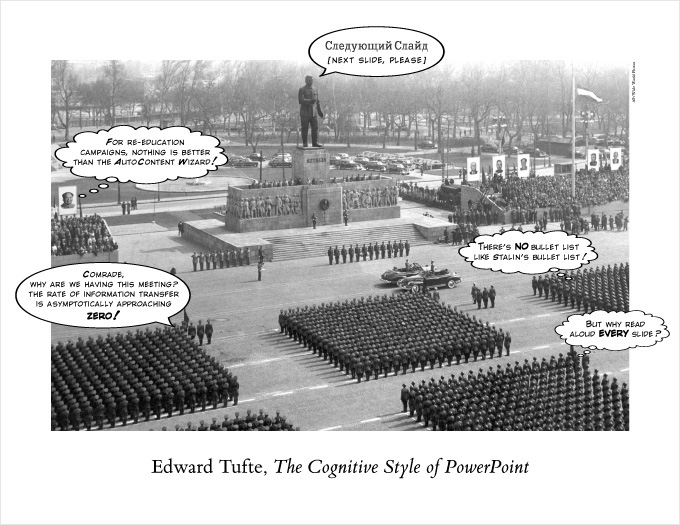
I've just come back from an interesting conference at Windsor organised by Queen Mary Intellectual Property Institute, and part of European Intellectual Property Institutes Network (EIPIN). Some of the presentations got me thinking about the use of PowerPoint. I'm always using slides, and while I admit that I tend to use them on my own benefit, they can be over-used, or mis-used. In the words of Prof. Roger Brownsword, "Power corrupts, PowerPoint corrupts absolutely".

I plead guilty of torture by PowerPoint then, and inducing what is known as PowerPoint Poisoning.

Friday, February 17, 2006

No ripping says RIAA

(via IPKat) Put yourself in the shoes of an RIAA lawyer. What is it like to be you? The money must be good, but every check arrives with the certainty that everybody hates you. You are probably the type of person who goes to a dinner party and asks the host if their music collection is legitimate. Any burnt CDs? Wait, I'll get the FBI.

Now imagine the inner thoughts of this poor lawyer (figuratively speaking of course). The Grokster and Kazaa cases are over. You repeat to yourself that you've won, you're suing all those kids after all. Ahhh, life is good! But something is wrong, you have not been in the headlines recently. And what about all of those iPods? Everybody has an iPod! People are enjoying their music! How dare they? People should feel guilty for listening to music. What can you do? How can you make them feel guilty again?

First you declare that selling iPods without deleting all the files infringes copyright. Never mind exhaustion of rights. But that is not enough. You must now declare that ripping your own CDs so that you can upload them into your iPod is also infringing copyright if it is done without authorisation. Everything is better now.

Seriously though, it is good that the RIAA only has dominion over the United States, many other countries in the world allow private copying (even in an imperfect form). Yet another reason to move to Canada?

Thursday, February 16, 2006

Windows Vista: DRM v security

More details about Windows Vista are coming out. While many aspects seem to be rather good, there will certainly some worries about some of the bundled features in the new version of Windows. One of the technologies that is making the blogosphere is the proposed BitLocker Drive Encryption. This seems to be hardware-based security solution that will allow users to lock their drives if they get lost. This would allow more security for business travelers from losing their laptops.

But the concern about this is that this may be used as the mother of all DRMs. Some of the security involved could be eventually used to lock access to certain software in the computer if the user does not produce adequate keys and passwords purchased from the vendor. This would mean ultimate control for content providers.

Would you choose better security for decreased control over your system?

Wednesday, February 15, 2006

Grid studies climate change

Distributed networking or grid computing has proven to be an excellent method of using idle processor time in computers around the world in order to crunch large chunks of data. This allows projects that would have to spend millions in buying top of the line computers to distribute the load with volunteer machines.

A new project is now being advertised by the BBC. This will look at climate change, and the potential effects of human action in the vastly complex global climate system. The system will appear in your computer as a screensaver.

Of course, the most famous grid computing project is SETI@home, the search for extraterrestrial intelligence.

Google feeling the Chinese heat?

(Via Lenz Blog). Yet another web campaign against Google for their concession to the Chinese government. It seems to me that the technocracy has definitely fallen out of love with Google, and that Google-bashing is now as fashinable as hating Microsoft. I haven't fallen out of love with the search engine, but I will not be installing any software from them.

Tuesday, February 14, 2006

A blogger's family life

Latest issue of JIPL&P out

The latest issue of the Journal of Intelectual Property Law & Practice is now out, with an article from yours truly. Amongst the contents:

  • Jeremy Phillips - Delicate balance or creative conflict?
  • Rowan Freeland - Disclosure and enablement: the House of Lords clarifies the law on novelty
  • Nicola Isaacs - Should the UK adopt a European system for the registration of trade marks?
  • Sheldon H. Klein - Geico and Google settle trade mark/keyword advertising lawsuit
  • Julia Meuser -Lost opera, lost copyright
  • Andrew Fuller -Money for nothing and your MP3s for free
  • Marius Schneider and Olivier Vrins -The EU offensive against IP offences: should right-holders be offended?
  • Arnaud Folliard-Monguiral and Giuseppe Bertoli -Inter Partes Proceedings and the Reform of the Community Trade Mark Implementing Regulation
  • Jeremy Drew -Declaratory relief: don't be afraid to ask
  • Andrés Guadamuz González -The software patent debate
  • Alden F. Abbott and Suzanne Michel -Exclusion payments in patent settlements: a legal and economic perspective
  • Pat Treacy -Settlement Agreements: The European Perspective

Monday, February 13, 2006

WTO and GM

Biotechnology news now. A dispute panel at the WTO has ruled that European restrictions on GM imports contravene global trade rules. This dispute was initiated in 2003 by the United States (DS291), Canada (DS292) and Argentina (DS293), but I find it amusing that the press only is commenting how this is a victory by the United States. Read "America's masterplan is to force GM food on the world". What about that for a Guardian headline?

Anyway, the normal process started, consultations were followed by the setting up of a three-person dispute resolution panel. The panel was supposed to produce a report for the Dispute Settlement Body (DSB) by March 2005. However, the report was continuously delayed, until it was announced last week that the EC had lost the dispute and that the report is favourable to the U.S., Canada and Argentina. The full report is still not available in the WTO site, so it is difficult to ascertain the arguments used. The EU still has the possibility to initiate an appeal, so this subject is far from over.

Friday, February 10, 2006

Beware of Google Desktop


EFF is asking computer users not to trust Google Desktop. In case you have never used it, Google Desktop is an application that allows you to use Google's indexing algorithms in your computer, letting you search your files and emails. It is a very useful application, particularly when you want to navigate large number of files and emails to find information. However, I have always been concerned about who has access to the files. With new features, some of the indexes will be stored in Google. This is indeed worrying. While I cannot think of anything in my computer that I would deem sensitive, the idea of my emails and files stored in Google's servers makes me uneasy. What stops them from searching through the files to make direct marketers aware of my tastes?

Thursday, February 09, 2006

Linux could still adopt GPL v3

In an interesting twist to the GPLv3 story, Richard Stallman has mentioned that Linus has no say in what happens to the Linux kernel, and that the kernel developers are the ones who will decide over the licence. According to Linux-watch, the developers are split over the point. Another interesting point made in the article is that the problem is not really about DRMs, as previously reported, but that the problem is about the provision of making private keys available, present in paragraph 1 of the draft.

I must say that I am a bit surprised by the statement. As far as I know, Linus owns the trade mark to Linux, and he also owns the copyright of the Linux kernel, even if there are plenty of developers who work on it. After all, the GPL can only work if someone owns the copyright. This would pose an interesting question, what if the majority of kernel developers decide to move to GPLv3, and Linus does not? He can impose his view as he owns the copyright. Would developers release their own GPLv3 kernel? Would some of them sue Linus because they have contributed to the kernel?

I do not like what is happening. In my opinion GPLv3 has made things worse by splitting the non-proprietary community.

Wednesday, February 08, 2006

The future is digital

Several interesting news coming from the digital front. According to p2pnet, another study from media company Big Champagne indicates that P2P networks now boast over 9.6 million users, experiencing a steady increase despite RIAA and IFPI suits. The level of animosity against the music industry because of these actions is reaching a high level. But what makes things worse is that the RIAA is not targeting the largest sharers, they target normal people. The uber-hackers can mask their presence by the use of proxies and offshore VPN.

Similarly, legal downloads are on the increase. According to Big Champagne, more people buy music online than they do CDs. This is a tremendous shift in purchasing patterns, as more and more people rely on their iPods and digital players. Will the CD go the way of the tape?

Tuesday, February 07, 2006

CAFTA in peril

The Central American Free Trade Agreement (CAFTA) is today in problems as the Costa Rican elections are on a virtual tie. With 88% of the votes counted, the difference between pro-CAFTA candidate Oscar Arias and anti-CAFTA candidate Otton Solís is only 3250 votes, with Arias narrowly on the lead. It is thought that the result will be announced in two weeks, but analysts think that Arias is likely to win as the remaining districts are mostly in the peripheral provinces (Limón, Puntarenas and Guanacaste), where Arias has a clear advantage. Arias is also going to have a majority in the Legislative, but not a total majority.

CAFTA is of interest because it is considered a TRIPS-plus agreement, one of the bilateral trade treaties negotiated by the US that enhance the protection of TRIPS in the contracting parties. This protection includes more restrictive anti-circumvention procedures, limitation of patent exceptions, erosion of compulsory licences, and generally more rather than less IP.

Although I do not like CAFTA's TRIPS-plus provisions, the agreement is needed in order to maintain the important American trade market open. It is unfortunate that IP is included in these treaties.

Monday, February 06, 2006

Standing up to the RIAA

Bringing infringing suits against consumers is a bad idea. This seems to be the message of Canadian music publisher Nettwerk. 15-year-old Elisa Greubel's dad got sued by the RIAA for having 600 songs in their computer, alleging specifically infringement for 8 songs. Elisa contacted some artists, where she mentioned that "I'm not saying it is right to download but the whole lawsuit business is a tad bit outrageous." Hear, hear.

Anyway, Nettwerk artists Avril Lavigne and MC Lars were contacted, and Nettwerk got involved, they will pay the legal fees as well as the fines if the Greubel family loses the case.

Saturday, February 04, 2006

IP Comics

"By day a film maker... by night she fights for Fair Use!"

This is 'Bound By Law', a new comic book by the Center for the Study of the Public Domain at Duke University. It is drawn by Keith Aoki and written by James Boyle and Jennifer Jenkins. In the comic, our heroine Kaiko fights the "Rights Monster" and learns about copyright and fair use.

The comic is designed to appeal to documentary filmmakers and help them to navigate copyright law and fair use doctrine in the United States in easy to use snippets. Boiling down complex jurisprudential issues in three lines. It sounds like a challenge!

I would like to see something like this in the UK, but picking an adequate topic would be tricky. Software patents perhaps? Tobby the Patent Troll versus the valiant Armoured Penguins? Big Blue and Big Mic attack the EPO Fortress?

I guess that Marvel Comics won't be knocking on my door anytime soon.

Thursday, February 02, 2006

The Return of the Lara

One of Britain's most iconic copyright exports is back. The new Lara Croft game will be released soon by British gaming giant EIDOS.

How much of Britain's economy relies on Lara? Perhaps not much on Lara specifically, but the UK is increasingly relying on copyright exports. 5% of all of the UK's exports originate from the creative industries, while they make 4.5% of the economy. The success of games like Tomb Raider are vital for the economy. The creative industries pay well and help the international trade balance. So go out (or in actually) and game for your country!

However, I am rather worried about a new wave of Lara cosplay. Unfortunately, any rise in Tomb Raider's popularity is always followed by sightings of people emulating Lara Croft. There are the good, the bad, and the ugly.

Intrigued by cosplay? This video may provide some education. Gamers having fun.

Wednesday, February 01, 2006

Linux kernel will not use GPLv3

It seems like the final break between open source and free software is about to take place. Linus Torvalds has declared that the Linux kernel will not be released using GPLv3, but that it will continue to use version 2. The dispute is the controversial prohibition on the use of Digital Rights Management found in section 3 of the licence. Linus has commented that the new GPL would require people to give control of their private keys, which he will not do.

This should come as no surprise to those who follow open source debates. Back in 2003 Linus had already expressed that he thought some DRMs were useful. I believe that he was talking about the distinction between DRM and technical protection measures. There are already open source projects like Authena that intend to allow artist control, while at the same time provide users the tools to use DRM to monitor and track their works. Remember, DRM is a very broad term, and things like licence management can be considered in that light.

A line has been drawn. Will DRM be the end of the GPL? That would be ironic. I tend to be more on the open source side, I've never been a Stallmanite, and I believe that there are serious problems with the existing draft.